

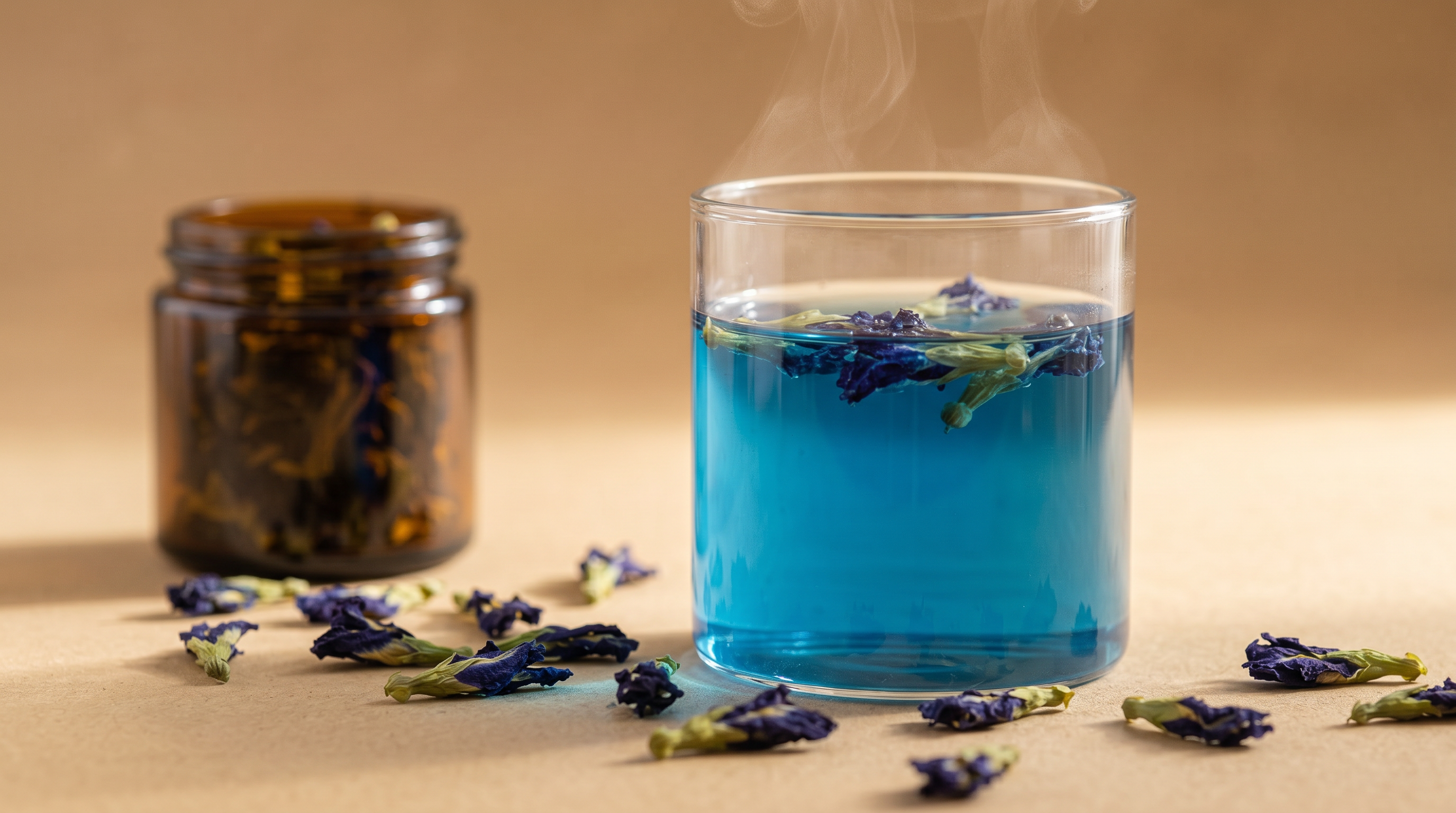

This is part of our Ultimate Blue Lotus Guide.
TL;DR — Blue lotus tea is a water- or milk-based infusion of dried Nymphaea caerulea flowers, traditionally prepared to extract its primary alkaloids, nuciferine and apomorphine. Three reliable preparation methods exist: a classic hot infusion (10–15 minutes at 80–90 °C), an overnight cold infusion for a smoother alkaloid profile, and a milk-based "lotus chai" that may improve fat-soluble compound extraction. Total preparation time ranges from 15 minutes (hot tea) to 8–12 hours (cold brew). A cautious starting dose for new users is 3 g of dried flowers per cup; most ethnobotanical literature and community sources suggest 5–7 g for a casual evening session. Blue lotus should not be combined with alcohol, MAOIs, or prescription sedatives, and is not appropriate during pregnancy or breastfeeding.
Key points at a glance:
- What it is: A botanical infusion made from dried blue lotus (Nymphaea caerulea) flowers, consumed for centuries across various cultures.
- Three primary methods: Hot tea, cold infusion, and milk-based "lotus chai" — each with a distinct alkaloid-extraction profile and onset curve.
- Preparation time: 15 minutes (hot) to overnight (cold infusion).
- Hedged dosage: 3 g for a first session; 5–7 g for typical casual use; above 10 g per session is not recommended without prior familiarity with the plant.
- Safety first: Contraindicated with MAOIs, prescription sedatives, blood pressure medication, and during pregnancy or breastfeeding. Not suitable before driving.
What Is Blue Lotus Tea?
Blue lotus tea is an aqueous or milk-based infusion prepared from the dried flowers and petals of Nymphaea caerulea, a water lily native to the Nile basin and parts of South and Southeast Asia. The plant's primary bioactive compounds — the aporphine alkaloids nuciferine and apomorphine — are extracted during steeping and consumed in the resulting liquid.

Nuciferine
The use of blue lotus as a prepared beverage has deep historical roots. Ancient Egyptian iconographic evidence, including the famously detailed Nebamun pond garden frescoes (circa 1350 BCE, now housed in the British Museum), depicts lotus flowers alongside cups and vessels in ritual and festive contexts. Textual and archaeological sources also reference lotus combined with fermented wine and milk — suggesting that the Egyptians understood, on some practical level, that liquid extraction was an effective preparation method.
In contemporary ethnobotanical practice, blue lotus tea occupies a distinct niche: it is approachable, easy to prepare at home, and allows for meaningful control over dosage in a way that smoking, for example, does not. It is most commonly consumed in the evening for its reported relaxation and mild dream-enhancing qualities.
Why Tea? (vs. Smoking, Tincture)
Different preparation methods produce meaningfully different experiences, largely due to variation in onset speed, alkaloid bioavailability, and duration. The table below summarises the key differences:
| Method | Onset | Duration | Best for |
|---|---|---|---|
| Hot tea | 30–45 min | 2–4 hours | Evening relaxation, mild effect |
| Cold infusion | 1–2 hours | 3–5 hours | Smoother, deeper relaxation |
| Milk-based ("lotus chai") | 30–45 min | 2–4 hours | Improved alkaloid extraction (fat-soluble) |
| Tincture | 15–30 min | 2–3 hours | Precise dosing, long shelf life |
| Smoking | 5–10 min | 30–60 min | Quick effect, less traditional |
Tea preparation occupies a practical middle ground. It is slower than smoking and tincture, but more forgiving for newcomers, more aligned with traditional preparation methods, and considerably easier to adjust in terms of quantity and concentration. For anyone approaching blue lotus with a ritual or wellness framework, a carefully prepared cup of tea is typically the most coherent starting point.
Recipe 1 — Classic Hot Blue Lotus Tea (DE: Klassischer Heißaufguss)
This is the most accessible entry point. Keep the process slow and deliberate — rushing any step tends to produce a noticeably weaker result.
You will need:
- 3–5 g dried Nymphaea caerulea flowers (3 g for a first session)
- 250 ml filtered water
- Fine mesh strainer or tea strainer
- Optional: 1 tsp raw honey, a squeeze of lemon
Method:
- Measure your flowers. Start with 3 g for a first experience; 5 g is appropriate once you understand how your body responds. Whole dried flowers are preferable to pre-ground material — they retain volatile compounds longer.
- Heat your water to 80–90 °C. This is the single most important technical detail in this recipe. Do not bring the water to a full boil — boiling temperatures (100 °C) are known to degrade heat-sensitive alkaloids, particularly nuciferine. Use a temperature-controlled kettle, or boil water and allow it to rest uncovered for 3–4 minutes before pouring.
- Steep for 10–15 minutes, covered. Covering the vessel during steeping is essential. Blue lotus contains volatile aromatic compounds that will escape with rising steam if the cup is left open, reducing both the sensory quality and the potency of the final tea.
- Strain through a fine mesh. Remove all plant material thoroughly.
- Add honey or lemon if desired. Honey softens the slightly earthy, faintly floral bitterness of the tea. A small squeeze of lemon can brighten the flavour and may marginally improve nuciferine solubility in water.
- Drink slowly over 10–15 minutes. Effects build gradually over 30–45 minutes. There is no value in rushing.
What to expect: Most users report a gentle onset of relaxation, mild mood elevation, and — if consumed 60–90 minutes before bed — increased vividness in dreams. The experience is generally described as subtle rather than overwhelming.
Recipe 2 — Cold Infusion (DE: Kaltauszug)
The cold infusion method is slower and requires planning ahead, but many experienced users consider it the most refined preparation. Cold water extraction is gentler on heat-sensitive compounds, potentially preserving a broader alkaloid profile.
You will need:
- 5 g dried Nymphaea caerulea flowers
- 500 ml cold filtered water
- Glass jar with lid
- Fine mesh strainer
Method:
- Place 5 g of dried blue lotus flowers into a clean glass jar.
- Add 500 ml of cold, filtered water.
- Seal and refrigerate for 8–12 hours — overnight is the practical standard.
- Strain through a fine mesh strainer, pressing gently on the plant material to extract remaining liquid.
- Drink at room temperature or warm very gently (keep well below 80 °C to preserve the cold-extraction benefit).
Why this works: Nuciferine and apomorphine are moderately sensitive to heat. Cold water extraction proceeds more slowly but avoids thermal degradation, and some ethnobotanical practitioners argue the resulting liquid has a noticeably fuller, more rounded quality. Onset is slower — expect 1–2 hours to initial effect — but the overall arc tends to be longer and smoother than a hot-tea preparation. This method is particularly well-suited to an evening ritual: prepare your infusion in the morning, refrigerate through the day, and consume in the early evening.
Recipe 3 — Milk-Based "Lotus Chai" (DE: Milchaufguss)
This is the most complex of the three core preparations, and the one most frequently described in ethnobotanical literature as the approach closest to attested ancient practice. Whole milk — or a high-fat plant milk — provides a matrix in which fat-soluble alkaloids can dissolve more readily than in water alone.
You will need:
- 250 ml whole cow's milk, or oat milk with a minimum 3% fat content
- 4–5 g dried Nymphaea caerulea flowers
- Optional: 1 cardamom pod, lightly crushed; 1 small cinnamon stick; a pinch of freshly grated nutmeg
- Raw honey to sweeten
Method:
- Combine the milk and dried blue lotus flowers in a small saucepan.
- Add any optional spices at this stage.
- Heat the mixture gently to approximately 80 °C — a low simmer with occasional small bubbles at the edge of the pan. Do not bring to a full boil.
- Maintain this temperature for 15 minutes, stirring occasionally. Keep the pan covered between stirs.
- Remove from heat and strain through a fine mesh into a mug or cup.
- Stir in raw honey to taste while the liquid is still warm.
Why this is considered the most effective extraction: Archaeological and textual sources reference lotus prepared in both fermented wine and milk in ancient Egyptian and South Asian contexts. Fat-soluble compounds require a lipid medium for optimal solubility. In practical terms, most experienced users report that a milk-based preparation at equivalent flower quantities produces a noticeably fuller response than a plain hot-water tea. If you are working with a limited quantity of dried material and want reliable results, this is the method to use.
Dosage Guidance (Hedged — Personal Experimentation)
Dosage with blue lotus tea is not a precise science. The alkaloid content of dried flowers varies depending on growing conditions, harvest timing, storage quality, and preparation method. The figures below reflect the approximate consensus across ethnobotanical literature and community-reported anecdotal practice (including r/BlueLotus, r/herbalism, and Erowid experience reports). They are starting points, not prescriptions.
| Experience level | Recommended starting quantity | Method |
|---|---|---|
| First time | 3 g | Hot tea |
| Casual evening use | 5 g | Hot tea or cold infusion |
| Deeper relaxation | 7–10 g | Milk-based preparation |
| Above 10 g per session | Not recommended without substantial prior experience | — |
The most important principle is to start low and evaluate your personal sensitivity before increasing quantity. Blue lotus is not a plant with a notably dangerous dose ceiling in most healthy adults, but the variance in individual response — and the variance in dried material quality — is wide enough that caution on the first occasion is simply sensible practice.
When to Drink: Timing and Setting
The context in which you consume blue lotus tea shapes the experience considerably:
- 60–90 minutes before bed is the most commonly recommended timing for those seeking relaxation and sleep support.
- Avoid combining with alcohol — both produce CNS sedation, and the additive effect is difficult to predict and generally undesirable.
- Avoid combining with prescription sedatives, MAOIs, or strong sleep medications — see the Safety section below.
- Plan for 4+ hours before any driving or operating machinery. The sedative component of nuciferine is not compatible with tasks requiring full alertness.
- Setting matters. Blue lotus tea is best consumed in a quiet, familiar environment. Dim lighting, minimal noise, and no obligations for the next few hours create the conditions in which the plant's subtler qualities are most noticeable.
What Users Report: Themes from Community Sources
The following is a synthesis of recurring themes from public community discussion — including r/BlueLotus, r/herbalism, and Erowid experience archives — and should be understood as anecdotal, not clinical:
- Mild euphoria and physical relaxation are the most commonly reported effects, typically beginning 30–45 minutes after a hot-tea preparation and somewhat later with cold infusion.
- Vivid or more memorable dreams are frequently noted when blue lotus is consumed 60–90 minutes before sleep. This aligns with apomorphine's known activity at dopamine receptors involved in REM modulation.
- Mood lift is consistently described as "gentle" and "warm" — not comparable in intensity to pharmacological interventions, but meaningfully pleasant in context.
- Combination preferences vary: chamomile, lavender, and valerian are popular additions for sleep-oriented preparations; mint or rose are favoured for lighter daytime teas (at lower doses).
- Quality of source material is cited repeatedly as the single largest variable in outcomes. Improperly stored, old, or adulterated dried flowers consistently produce disappointingly mild results, regardless of preparation method.
Storage of Dried Flowers
Proper storage has a direct and significant effect on tea quality:
- Store dried Nymphaea caerulea flowers in an airtight container, kept in a cool, dark, dry location — away from heat sources, direct sunlight, and humidity.
- Whole flowers retain alkaloid potency considerably longer than ground material. If possible, store flowers whole and grind or crush immediately before preparation.
- Use within 12 months of harvest/purchase for optimal potency. Older material is not necessarily unsafe, but alkaloid content diminishes meaningfully over time.
- amama's blue lotus is packaged to support extended shelf life and sourced from suppliers who meet our lab-testing standards for purity and botanical identity.
Common Mistakes to Avoid
- Boiling the water. The single most common preparation error. 100 °C water degrades alkaloids. Target 80–90 °C and keep it there.
- Steeping for under 10 minutes. Insufficient steeping time means under-extraction, regardless of water temperature. Be patient.
- Using heavily chlorinated tap water. Chlorine affects flavour and may interact with plant chemistry. Filtered water is always preferable.
- Combining with alcohol on a first session. Assessing your baseline response to blue lotus requires a clean context. Introduce only one variable at a time.
- Drinking on a very full stomach without accounting for slower absorption. A full stomach delays absorption — sometimes usefully for a slower, gentler onset, but occasionally leading users to mistakenly consume more before the first dose has taken effect.
Safety and Contraindications
Do not consume blue lotus tea if you are pregnant or breastfeeding, if you are taking MAOIs (including some antidepressants), prescription sedatives or anxiolytics, blood pressure medication, or if you have a diagnosed heart condition. Nuciferine and apomorphine both exhibit dopaminergic and adrenergic activity that can interact with several categories of psychiatric and cardiovascular medication. If you are uncertain about interactions with your current medication or health status, consult a qualified medical professional before use.
Blue lotus tea is an ethnobotanical preparation with a long history of traditional use. It is not a medical treatment and is not intended to diagnose, treat, cure, or prevent any condition.
For a detailed breakdown of the pharmacology behind these compounds, see our Nuciferine — Compound Profile.
Where to Source Quality Blue Lotus
The difference between a well-prepared tea from high-quality dried material and one made from poorly stored or adulterated flowers is, by consistent community report, dramatic. amama curates lab-tested Nymphaea caerulea flowers from ethical suppliers committed to sustainable harvesting and accurate botanical identification. Browse our Blue Lotus collection for whole dried flowers, extracts, and tinctures — all sourced with preparation quality in mind.
Related Reading
- Ultimate Blue Lotus Guide — the full-depth reference for everything Nymphaea caerulea
- Blue Lotus Effects — what the alkaloids do and how they interact with the body
- Blue Lotus Preparation Methods — broader overview including smoking, tinctures, and wine infusions
- Is Blue Lotus Safe? — a grounded look at contraindications, drug interactions, and legal status
Last updated: April 2026. Educational content only. Not medical advice. amama products are traditional botanicals, not for medical use.
Further Reading
- The Ultimate Guide to Blue Lotus
- Blue Lotus Effects
- Blue Lotus Preparation
- Is Blue Lotus Safe?
- Is Blue Lotus Legal?
→ Nuciferine Compound Profile — chemistry & pharmacology