

plants
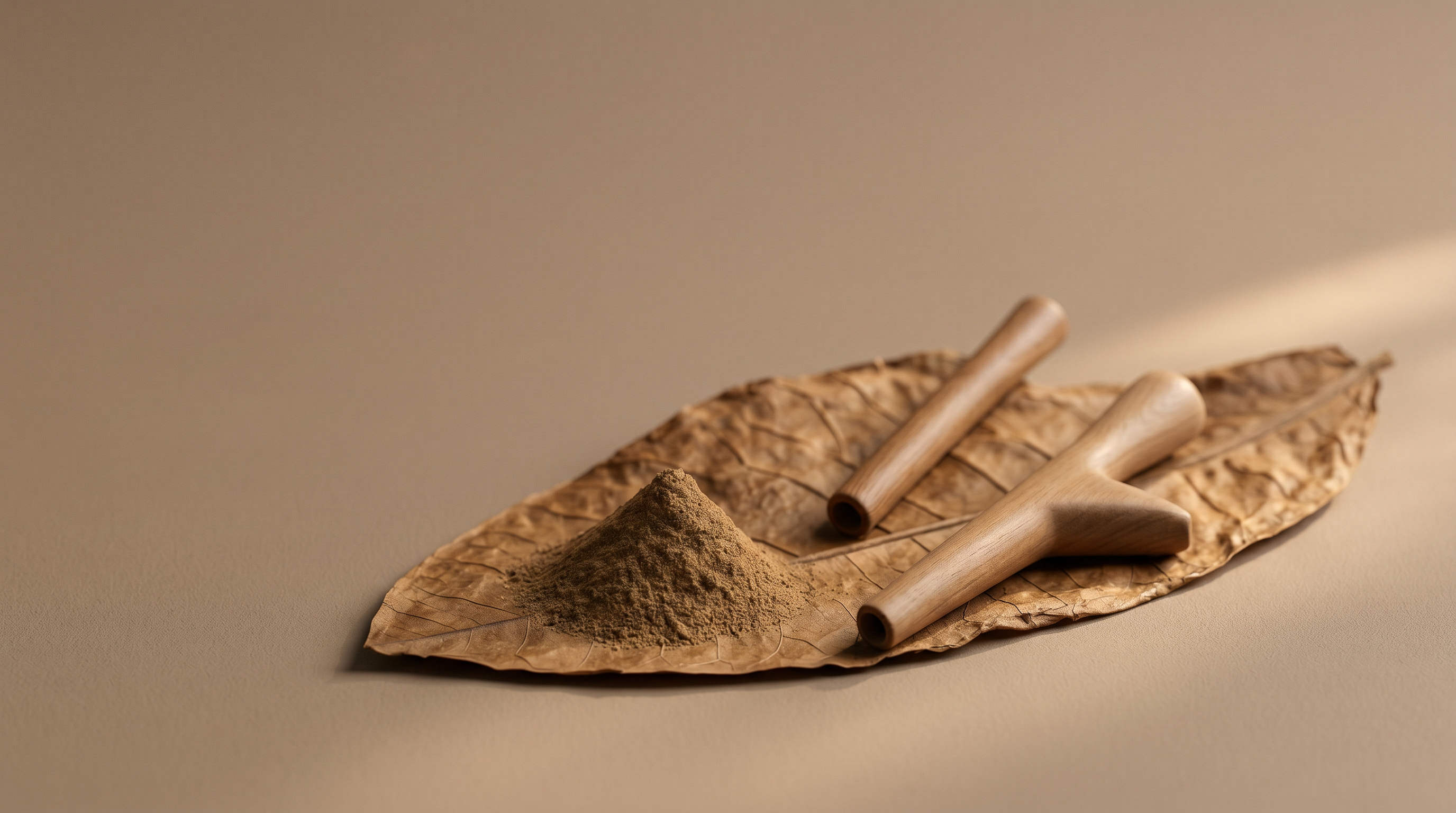

Rapé Experience and Risks: What Beginners Should Know
This article is part of our Rapé Guide. TL;DR Typical first use: Intense pressure impulse in the nose and forehead, a brief mental "reset", followed by a sense of grounding and stillness — acute effects last 5–30 minutes. Normal vs. critical: Tearing, dizziness, and mild nausea are to be expected. Persistent chest pain, shortness of breath, or loss of consciousness are signals to stop — if in doubt, call emergency services. Contraindications: Heart conditions, pregnancy, MAO inhibitors, and certain psychiatric medications rule out use. Addiction potential: Nicotiana rustica contains a multiple of the nicotine found in common tobacco plants. Regular, uncontrolled use can lead to dependence. Safe start: Very small portion, sitting upright, calm setting, accompanied by an experienced person — and plan for at least 30 minutes of rest afterwards. First Use: What Is Typically Experienced Users from different traditions and cultural backgrounds consistently report a similar progression. Rapé is not a gradual experience — its effects set in immediately and follow a recognisable three-phase structure. The intensity can surprise first-time users, even though the overall duration is comparatively short. First 30 Seconds The moment of insufflation — whether via the Kuripe (self-application) or the Tepi (administered by another person) — is immediate and unmistakable. Users report an intense pressure sensation in the nasal mucosa, which often spreads to the forehead, eyes, and temples. Many describe it as a kind of brief "freezing" of thoughts — a moment in which mental noise abruptly falls silent. Intense pressure sensation in the nasal mucosa, often also in the forehead and eyes "Reset" sensation — thoughts fall briefly silent Tearing possible, sometimes involuntary sneezing Elevated heart rate due to rapid nicotine absorption This first phase is pharmacologically attributable primarily to the rapid uptake of nicotine through the well-vascularised nasal mucosa. Nicotiana rustica — the Mapacho tobacco used in Rapé — is understood by current research to contain a multiple of the nicotine concentration found in commercially available tobacco plants (Nicotiana tabacum). More on the mechanisms of action: Rapé Effects. 1–5 Minutes In the second phase, autonomic reactions occur. These are not signs of a problem, but an expression of the body's intensive processing of nicotine and the accompanying plant constituents: Sweating, sensation of heat in the face Mild dizziness, brief disorientation Possible nausea, rarely vomiting Salivation, occasionally tingling in the hands or feet Vomiting — known in the practice of the Yawanawá, Huni Kuin, Kuntanawa, and other peoples of the western Amazon basin as Purga — is traditionally understood not as an undesirable side effect, but as a sign of physical and spiritual purification. Pharmacologically, it reflects the emetic effect of high nicotine doses, mediated via chemoreceptors in the brainstem. Both interpretive frameworks are not mutually exclusive. Pyridine alkaloid · Nicotiana rustica & N. tabacum nicotine 3-[(2S)-1-methylpyrrolidin-2-yl]pyridine Molecular formula: C10H14N2 Molecular weight: 162.23 g/mol CAS: 54-11-5 Compound profile: nicotine → 5–30 Minutes: Afterglow Once the acute autonomic activation subsides, many users report what stays with them most strongly: Grounded, focused feeling Mental stillness — an absence of rumination and inner noise Possible emotional release: tears, a gentle sense of being moved, a feeling of having "arrived" Circulation gradually normalises This phase is not psychedelic — there are no visions, no hallucinations, no profound perceptual alterations in the sense of classical entheogens. Rapé is used deliberately in ceremonial tradition as a grounding and focusing tool, including as preparation for or conclusion of an Ayahuasca session. From the archive Nicotiana rustica — Aztec tobacco (mapacho) Nicotiana rustica in flower — the Amazonian "mapacho" tobacco used as the base for traditional rapé. Wikimedia Commons · CC BY-SA What Is Considered "Normal" — and When to Stop One of the most important reference points for first-time users is the distinction between expected physical reactions and genuine warning signals. Normal — no cause for concern: Tearing and salivation Sweating, brief surge of heat Mild dizziness in the first few minutes Temporarily elevated heart rate Purge (controlled vomiting) Burning or tingling in the nasal mucosa Critical — stop use immediately: Persistent severe chest pain or pressure on the heart Shortness of breath lasting more than one minute Loss of consciousness or pre-syncope (feeling of faintness with darkening vision) Persistent cardiac arrhythmia (irregular, very rapid, or intermittent pulse) Loss of vision or persistent visual disturbances Signs of an allergic reaction (rash, swelling, itching in the throat) ⚠️ In the event of critical symptoms: call emergency services immediately. Rapé contains pharmacologically relevant amounts of nicotine. Acute nicotine poisoning can be life-threatening. Common Beginner Mistakes Many unpleasant or distressing experiences can be avoided with simple preparation. The most common mistakes on first use: Too large a portion — The most common and consequential mistake. First contact with highly concentrated Nicotiana rustica tobacco should be extremely small. Incorrect body posture — Sitting upright is essential. Do not use while standing (circulatory risk in the event of dizziness) or lying down (risk of inhaling liquid). Alcohol, cannabis, or a heavy meal immediately beforehand — any of these combinations increases the risk of intense autonomic reactions. First use without accompaniment — Not necessarily an experienced ceremony facilitator, but at least one person who is familiar with the product and can respond clearly in an emergency. Use under stress or in an unsettled environment — Rapé tends to amplify the current mental state rather than dissolve it. Those who begin in a state of agitation may experience a more intense reaction. Physical activity or driving immediately afterwards — The circulatory system needs time to stabilise. No driving, no demanding sport, no important appointments directly after use. Contraindications Important note: Rapé contains high concentrations of nicotine. The following groups of people should not use it — not even in small doses, and not even on a single occasion. A traditional kuripe — the V-shaped pipe used for self-administering rapé. Cardiovascular conditions: History of heart attack, angina pectoris, cardiac arrhythmias, uncontrolled high blood pressure Pregnancy and breastfeeding: Nicotine crosses the placenta and passes into breast milk Acute mental health crises: Rapé is not a tool for crisis situations Active use of: - MAO inhibitors (MAOI, RIMA) — this applies for up to 24 hours after an Ayahuasca ceremony, as Ayahuasca contains harmaline-based MAO inhibitors - Certain SSRIs / SNRIs — consultation with the treating physician required - Anticoagulants (e.g. warfarin, apixaban, rivaroxaban) - Stimulants such as methylphenidate or amphetamine derivatives — additive cardiovascular stress Diabetes mellitus: Nicotine affects insulin sensitivity and can alter blood glucose levels Glaucoma: Nicotine may increase intraocular pressure This list does not claim to be exhaustive. If in doubt: consult a general practitioner or pharmacist. The Addiction Question: Nicotine and Rapé This is a subject that must be approached directly and honestly. Nicotine is among the most strongly dependence-producing substances that have been scientifically studied — comparable in its dependence dynamics to a range of classical addictive substances, and in certain dimensions even more pronounced. Rapé contains Nicotiana rustica, a tobacco plant with a nicotine content that current evidence suggests is significantly higher than that of commercially available tobacco. Traditional, ceremonial use — a few times per year, in a deliberate ritual context, as practised by communities such as the Yawanawá, Huni Kuin, or Katukina — is fundamentally different from a daily pattern of use. Dependence arises through frequency, dose, and the absence of an intentional framework. Risk indicators for emerging dependence: Use multiple times daily Use "in passing", without clear intention or conscious framing Reaching for Rapé in response to stress, boredom, or low mood Difficulty getting through a day without it Gradual increase in dose to achieve the same effect Use increasingly outside any ceremonial or conscious context If one or more of these patterns sound familiar: take a break. Nicotine dependence is not harmless even without smoking — the health effects concern the cardiovascular system, glucose regulation, and long-term neurochemical balance. Anyone who feels they have lost control over their frequency of use can find counselling resources at the Bundeszentrale für gesundheitliche Aufklärung (bzga.de) and at rauchfrei.de. When a Prior Medical Consultation Is Advisable A conversation with a doctor before first use is generally recommended if: There is a personal or family history of heart conditions A long-term medication is being taken Pre-existing conditions from the contraindication list above are relevant Previous strong reactions to nicotine, snuff, or tobacco smoke are known There is general uncertainty about one's own tolerability Recommendation for the conversation: Describe Rapé clearly as a nicotine-containing plant powder — not as a remedy, not as medicine. The treating physician needs to be able to classify it pharmacologically, not culturally. Safe First Use: Step by Step Preparation (24 hours before): No alcohol, no tobacco; light meal at least two hours before use Choose a setting: Quiet, sheltered space; no disturbances; no driving or demanding activity planned afterwards Ensure accompaniment: Ideal Further Reading Rapé Guide Rapé Effects Rapé Ceremony → Nicotine Compound Profile — chemistry & pharmacology
Learn moreRapé Varieties Compared: Caneleiro, Parica, Imdurana and More
This article is part of our Rapé Guide. Rapé (pronounced "ha-PEH") is not a uniform product. Every blend is the result of a centuries-old tradition — shaped by the knowledge of a specific people, the properties of a specific tree, and the intention of a specific ceremony. Anyone who asks which rapé is the "best" is ultimately asking the wrong question: what matters is which variety suits one's own practice, context, and level of experience. This overview introduces the most important varieties comparatively — from classically mild blends for beginners to more powerful mixtures for experienced users. TL;DR Rapé is not a uniform product: every variety has its own effect profile, determined primarily by the tree ash used. The most well-known bases are Tsunu, Caneleiro, Parica, Imdurana, Murici, Cumaru, and Pau Pereira — each with its own botanical and traditional context. Many blends are tribe-specific and reflect the healing traditions of peoples such as the Yawanawá, Huni Kuin, Kuntanawa, Nukini, or Katukina. amama carries three Brazilian rapé extracts: Caneleiro (mild, daytime), Parica (focusing), and Imdurana (grounding, evening). Beginners are best served starting with mild varieties such as Caneleiro or Tsunu; experienced users can vary their choice purposefully depending on intention. What Determines the Character of a Rapé? Two factors decisively shape every blend: 1. The Tobacco Base Most traditional rapé blends are based on Nicotiana rustica — the so-called Mapacho. According to available studies, this plant contains 5–10 times more nicotine than commercially available tobacco (Nicotiana tabacum) and forms the pharmacologically most active component of the blend. Some traditions use mixtures of various N. rustica strains or vary the ratio of tobacco to ash — which significantly influences the intensity of nicotine uptake and the overall profile. Nicotine is the primary active compound; small amounts of additional alkaloids such as anabasine and nornicotine are also present. Pyridine alkaloid · Nicotiana rustica & N. tabacum nicotine 3-[(2S)-1-methylpyrrolidin-2-yl]pyridine Molecular formula: C10H14N2 Molecular weight: 162.23 g/mol CAS: 54-11-5 Compound profile: nicotine → 2. The Tree Ash The true character-defining element of every rapé is the tree ash used. Each tree species brings its own plant compounds, alkalises the mixture in different ways, and lends the blend a specific sensory quality — ranging from mild-aromatic to warm-woody to sharp-clarifying. Many ash sources hold their own ritual significance within their respective cultures and were used in a healing context even before their integration into rapé blends. Optional Additives In some traditions, additional plants are incorporated: mint species, regional medicinal herbs, or — in certain Huni Kuin blends — small proportions of the Banisteriopsis caapi vine. These additives are rare and originate from specific ceremonial traditions; they are not characteristic of rapé in general. From the archive Nicotiana rustica — Aztec tobacco (mapacho) Nicotiana rustica in flower — the Amazonian "mapacho" tobacco used as the base for traditional rapé. Wikimedia Commons · CC BY-SA The Most Important Tree Species at a Glance Tsunu (Platycyamus regnellii) Tsunu is considered the classic among rapé bases — widely used, balanced, and comparatively mild. The Tsunu tree is a legume from the forests of Brazil; its ash forms the reference base in many indigenous blends. Users report a clear, centering quality without pronounced intensity. Mapacho (Nicotiana rustica) tobacco leaves at the Takiwasi center, Tarapoto, Peru. For beginners, Tsunu is often the recommended starting variety: it conveys a representative impression of the fundamental effects of a traditional rapé without having more extreme characteristics. Many experienced practitioners return regularly to Tsunu blends — as a calm anchor in their practice. Caneleiro (Nectandra spp. and related Lauraceae) "Caneleiro" is the Portuguese term for various cinnamon-scented tree species of the laurel family (Lauraceae), native to the Brazilian Amazon. The ash of these trees gives the rapé a characteristically mild, slightly aromatic scent — warm, distantly reminiscent of cinnamon. Users describe Caneleiro rapé as gently energising without having a stimulating effect. Reports from practice suggest that this variety may support clarity and mild focus — well suited for daytime use. No clinical studies on the effects of Caneleiro blends are available. amama carries Caneleiro Rapé Extract — a traditionally prepared blend from Brazilian production and a good starting point for one's own practice. Parica (Anadenanthera spp. – wood ash) The term "Parica" requires careful contextualisation. Anadenanthera peregrina and A. colubrina are primarily known for their seeds, which contain bufotenine and other tryptamines and form a completely separate context as a ceremonial substance (Yopo). This seed context must be strictly distinguished from rapé. In rapé blends, only the bark or wood ash of the tree is used. This ash has a fundamentally different profile from the seeds; a significant tryptamine content cannot be assumed on the basis of available data. The finished Parica rapé is described as strongly focusing and mentally clear. Parica blends are closely associated with the tradition of the Yawanawá from the Brazilian state of Acre — one of the most well-known rapé-producing peoples of Brazil. In the Yawanawá tradition, rapé serves to prepare for healing ceremonies, for spiritual alignment, and for focus work. amama carries Parica Rapé Extract — for users with some prior experience. Imdurana (Aspidosperma cf. polyneuron) Imdurana refers regionally to tree species of the genus Aspidosperma (Apocynaceae), a species-rich genus of the Amazon basin. The wood ash of these trees is considered particularly heavy and warm — a character that is reflected in the finished blend. Further Reading Rapé Guide Rapé Effects Buying Rapé → Nicotine Compound Profile — chemistry & pharmacology
Learn more
Buying Rapé: What Really Matters When Making Your Choice
This article is part of our Rapé Guide. TL;DR — The Key Points at a Glance Quality rapé is recognisable by its fine, even consistency, characteristic smell, and complete provenance information — no reputable supplier leaves questions about the supply chain unanswered. The supply chain matters more than the price: Rapé is an indigenous product rooted in the living ceremonial traditions of Amazonian peoples — fair compensation for the producing collectives is not optional. Variety is considerable: Caneleiro, Parica, Imdurana, Tsunu, and Murici differ markedly in character and context of use; the choice should be made consciously. amama carries a curated range of rapé extracts with documented provenance, laboratory testing, and a direct relationship with Brazilian producer collectives — orderable within Germany and throughout the EU. Legally unproblematic in Germany: Rapé blends made from Nicotiana rustica and tree-ash extracts fall under neither the BtMG nor the NpSG; purchase and possession for ethnobotanical use is legal. What Matters When Buying Rapé Anyone who wants to buy rapé faces a decision that goes far beyond personal preference. Rapé (pronounced "ha-PEH") is not a generic product — it is a traditional medicine of the western Amazonian peoples, passed down through generations, whose quality depends directly on the integrity of the entire supply chain. The following five criteria help you decide responsibly and in an informed way. Ethical Supply Chain The most important question when buying rapé is not "How cheap is it?" — but rather: Do the indigenous collectives who produce this material benefit from it fairly? Rapé is traditionally made by peoples such as the Yawanawá, Huni Kuin (Kaxinawá), Kuntanawa, Nukini, Apurinã, Katukina, and other groups in the Brazilian state of Acre and neighbouring regions. Production is labour-intensive: Nicotiana rustica (Mapacho) is dried and ground to the finest powder, tree barks and leaves are burned to ash, and the mixture is assembled according to time-honoured proportions. This knowledge is cultural heritage — not an industrial recipe. Reputable suppliers name: the name of the people or collective that produced the variety the region of origin (typically Acre, Brazil, or adjacent areas) wherever possible, information on fair-trade-like conditions or direct partnerships Warning signs of problematic sourcing: extremely low prices (below 8–10 EUR per 10 g), no provenance information whatsoever, no tribal attribution, vague formulations such as "from Brazil" with no further detail. Freshness and Consistency Rapé is a hygroscopic powder — it attracts moisture and loses quality with poor storage. High-quality material is recognisable by: Even, fine consistency — no clumping, no coarse particles, no gritty crunch Variety-typical smell — Caneleiro faintly recalls cinnamon and wood, Tsunu is earthy and astringent, Murici is sharp and clarifying, Parica has a pronounced tobacco depth Clean, preferably airtight packaging — small quantities in well-sealed jars or aluminium tins are the standard among responsible suppliers For storage, the rule is: cool, dry, protected from light. Under these conditions, opened containers are typically usable for six to twelve months based on experience; older material loses aromatic intensity but is not necessarily unusable. Laboratory Testing and Purity From the archive Nicotiana rustica — Aztec tobacco (mapacho) Nicotiana rustica in flower — the Amazonian "mapacho" tobacco used as the base for traditional rapé. Wikimedia Commons · CC BY-SA Nicotiana rustica contains an estimated five to ten times more nicotine than commercial tobacco (Nicotiana tabacum). Beyond that, pesticide contamination or heavy metals from contaminated soil are a real risk in some growing regions — especially where the sources are unknown or uncontrolled. Pyridine alkaloid · Nicotiana rustica & N. tabacum nicotine 3-[(2S)-1-methylpyrrolidin-2-yl]pyridine Molecular formula: C10H14N2 Molecular weight: 162.23 g/mol CAS: 54-11-5 Compound profile: nicotine → Reputable suppliers therefore provide laboratory reports (CoA – Certificate of Analysis) documenting at minimum residues and microbiological contamination. amama tests all rapé varieties in its range for purity; the relevant documentation is available upon request. A reminder is warranted here: due to the high nicotine content, rapé is contraindicated in cases of heart disease, pregnancy, breastfeeding, and when taking MAO inhibitors or certain SSRI preparations. When in doubt about tolerability, medical consultation is recommended before use. Choice of Variety The range of available rapé varieties is considerable — they differ according to the tree ash used, tobacco content, and the overall intensity of character. Our varieties article offers a detailed overview; here is a compact summary as a guide: Variety Character Particularly suited for Caneleiro Mild, gently energising, lightly aromatic Beginners, daytime use, calm focus Parica Strongly focusing, clear energy Concentration work, meditation, experienced users Imdurana Warming, grounding, intense Evening use, grounding after intense experiences Tsunu Classically balanced, smoky-earthy Standard in many traditions, universally applicable Murici Clarifying, sharp, cooling Experienced users, mental clarity The choice of variety is personal — user reports suggest that beginners find their way into the practice more easily with milder blends (e.g. Caneleiro) than with strongly focusing variants. Price and Unit Size Rapé is typically sold in units of 5 g, 10 g, or 25 g. A realistic market range for ethically sourced, laboratory-tested material is approximately 15–60 EUR per 10 g — depending on the variety, the rarity of the base material, and the complexity of production. Significantly lower prices are a clear warning sign: they indicate either unclear provenance, absent testing, or productions in which indigenous producers are not fairly compensated. Rapé Rapé is a sacred Amazonian shamanic snuff — a fine powder traditionally made from Nicotiana rustica tobacco combined with the ashes of various medicinal trees. Used for centuries by indigenous peop… Imdurana Rapé Extract Sold out Parica Rapé Extract Sold out Caneleiro Rapé Extract From €5.00 → Shop the collection The amama Approach: What We Do Differently amama is a Berlin address for ethnobotanical products — born from the desire to offer traditional plant materials with the care they deserve. Our rapé range includes no mass-produced goods: every variety we carry has a documented supply chain, a known origin, and has been laboratory-tested for purity. We are transparent — about prices, sources, and what we do (not yet) know. If we have no reliable information about the provenance of a variety, we do not carry it. That reduces our selection, but makes it dependable. And: we understand rapé for what it is — a ceremonial plant medicine with deep cultural roots, not a lifestyle product. Traditional mapacho (Nicotiana rustica) preparation in the Peruvian Amazon. Currently Available at amama Caneleiro Rapé Extract The Caneleiro rapé is based on the tree ash of the Caneleiro tree (related to cinnamon, Brazilian rainforest), combined with fine Mapacho tobacco. The character is mild and gently energising — users report a calm focus without overwhelming intensity. Traditionally produced in line with the practices of Brazilian Amazonian peoples. Recommended as an entry-level variety or for regular daytime use. Caneleiro Rapé Extract at amama Parica Rapé Extract Parica is one of the more strongly focusing varieties in the range. Parica tree ash is a classic component in rapé traditions closely connected with Yawanawá practices. Studies suggest that Parica extracts may contain specific alkaloids; the effect is typically described by users as clear and concentrated. Better suited for experienced users. Parica Rapé Extract at amama Imdurana Rapé Extract Imdurana rapé is distinguished by its warming, grounding character. The ash of the Imdurana tree is considered balancing and earth-connected in various Amazonian traditions. Users frequently report a feeling of stability and presence after use — which is why this variety is often chosen in the evening or following more intense experiences. Imdurana Rapé Extract at amama Our selection Rapé Rapé is a sacred Amazonian shamanic snuff — a fine powder traditionally made from Nicotiana rustica tobacco combined with the ashes of various medicinal trees. Used for centuries by indigenous peop… Imdurana Rapé Extract Sold out Parica Rapé Extract Sold out Caneleiro Rapé Extract From €5.00 → Shop the collection What You Also Need: Tepi or Kuripe Rapé is not smoked — it is administered as a snuff powder through specially crafted pipes into the nasal passages. There are two traditional tools for use: Kuripe — V-shaped pipe for self-administration: one end in the mouth, the other at the nostril Tepi — longer, curved pipe for administration by a second person (ceremonial use) High-quality pieces are handcrafted from wood, bamboo, or bone. The quality and fit of the tool significantly affect the experience. All details on selection and correct handling in the Tepi & Kuripe article. First Use: What Beginners Should Know For people without prior experience, a very cautious start is recommended. Experienced practitioners traditionally speak of small portions — often described figuratively as the size of a grain of rice per nostril. A second portion should only be considered after the first has fully subsided. Practical guidance for first use: Seated, in a quiet environment — no physical activity immediately before or after Have water available — nasal discharge and increased saliva are normal reactions Ideally with an experienced companion, or at minimum after thorough preparation Do not drive or operate machinery in the first 20–30 minutes after use The effect (5–20 minutes) is typically described by users as an intense moment of pressure followed by mental clarity and grounding — not psychedelic, not visionary. More on how the effects work in the article Rapé Effects and on user accounts in the article Rapé Experience. Buying Legally in Germany Rapé blends made from Nicotiana rustica and tree-ash extracts are legal in Germany — they are listed under neither the Narcotics Act (BtMG) nor the New Psychoactive Substances Act (NpSG). amama sells rapé exclusively for ethnobotanical and ceremonial-cultural use — not as a tobacco product within the meaning of the Tobacco Tax Act, and not as a medicinal product. Shipping is available within Germany and to the EU — discreet and fast. Please nonetheless observe the country-specific regulations of your country of residence when purchasing from outside your EU member state. Full details on the legal situation in the article Rapé Legal Status. Back to the Overview ← Back to the Rapé Guide · Rapé Varieties Compared · Tepi & Kuripe · Rapé Range at amama Last updated: April 2026. This content is for informational purposes only and does not constitute medical advice. Rapé products from amama are intended for ethnobotanical and ceremonial-cultural use — not a medicinal product, not a tobacco product within the meaning of German tobacco tax law. Further Reading Rapé Guide Rapé Varieties Rapé Legal Status → Nicotine Compound Profile — chemistry & pharmacology
Learn moreIs Rapé Legal in Germany? Legal Status and EU Comparison 2026
This article is part of our comprehensive Rapé Guide. TL;DR — The key points at a glance Rapé is legal in Germany — neither BtMG nor NpSG list Nicotiana rustica or tree ash as controlled substances Possession and purchase are legally safe when the product is declared as an ethnobotanical collector's item or traditional natural product — not as smoking tobacco Nicotine is subject to its own regulations under commercial tobacco law; Rapé does not fall under the Tobacco Products Regulation, as it is not intended for smoking In most EU countries, Rapé is legal or tolerated; exceptions include France and Scandinavia, which have stricter tobacco legislation Ethical sourcing from indigenous communities is not a legal but a moral imperative — and part of the amama supply chain The Short Answer Rapé is legal in Germany. The Amazonian snuff powder contains no substances listed under the Narcotics Act (BtMG) or the New Psychoactive Substances Act (NpSG). Neither Nicotiana rustica — the tobacco species used in Rapé — nor the tree ashes used in its preparation (Tsunu, Caneleiro, Imdurana, Murici, and others) are classified as narcotics or new psychoactive substances in Germany. Possession, purchase, and sale of Rapé in Germany are legally safe, provided the product is correctly declared: as an ethnobotanical product or traditional natural product — not as a tobacco product for smokers and not as a food or medicinal product. What Distinguishes Rapé from Controlled Substances To understand the legal classification, a comparison is helpful. Rapé does not contain: DMT (dimethyltryptamine) — a non-marketable substance listed under BtMG Annex I, found for example in certain ayahuasca preparations Harmine or harmaline — MAO-inhibiting beta-carbolines contained in Banisteriopsis caapi, also subject to the BtMG in Germany Psilocybin or mescaline — hallucinogenic compounds for which an explicit BtMG listing exists NpSG-listed designer drugs or synthetic cannabinoids What Rapé does contain is legally unproblematic: Nicotiana rustica (a tobacco plant, not controlled), ash from various tree species (not controlled), and occasionally additional plant ingredients such as peppermint, tonka bean (Cumaru), or dried medicinal plants — all without BtMG or NpSG relevance. Rapé is not psychedelic and not hallucinogenic. It does not produce altered states of consciousness within the meaning of the NpSG. The primary active compound is nicotine — a naturally occurring substance with its own regulatory framework, explained further below. More on the effects profile: Rapé Effects. Nicotine: A Regulated but Not Prohibited Substance There is an important legal nuance here that is frequently misunderstood. Nicotine itself is not prohibited in Germany. It is, however, regulated within the context of tobacco law and food law. The Tobacco Tax Act (TabStG) and the Tobacco Products Regulation (TabErzV) apply to products intended for smoking or oral tobacco consumption that are industrially processed — cigarettes, fine-cut tobacco, snus, nicotine pouches. Rapé does not fall into this category, for several reasons: It is not intended for smoking — it is used as a nasal snuff powder It is not an industrially processed tobacco product, but a traditionally handcrafted ceremonial botanical It is not marketed as a consumer recreational product, but as an ethnobotanical collector's item with cultural and documentary value Suppliers such as amama explicitly declare Rapé as an ethnobotanical product — in accordance with its actual context of use: the cultural, ceremonial tradition of the Yawanawá, Huni Kuin, Katukina, and other indigenous peoples of the western Amazon basin. Pyridine alkaloid · Nicotiana rustica & N. tabacum nicotine 3-[(2S)-1-methylpyrrolidin-2-yl]pyridine Molecular formula: C10H14N2 Molecular weight: 162.23 g/mol CAS: 54-11-5 Compound profile: nicotine → Nicotiana rustica contains significantly higher nicotine concentrations than commercially available tobacco (Nicotiana tabacum) — a pharmacologically relevant difference that matters to users, but does not establish a separate classification under German law. Detailed information on this can be found in the Nicotine Substance Profile. From the archive Nicotiana rustica — Aztec tobacco (mapacho) Nicotiana rustica in flower — the Amazonian "mapacho" tobacco used as the base for traditional rapé. Wikimedia Commons · CC BY-SA EU Comparison: Legal Status in Ten Countries The legal situation across Europe is largely consistent — with individual exceptions attributable primarily to national tobacco law. Country Status Note Germany ✅ Legal As an ethnobotanical product; no BtMG/NpSG relevance Netherlands ✅ Legal Established ethnobotanical market; widely available Austria ✅ Legal Comparable to Germany; traditional natural product status Switzerland ✅ Legal Natural product status; no specific regulation France ⚠️ Grey Area State tobacco monopoly (SEITA successor) can complicate import and distribution; no explicit ban Italy ✅ Legal No specific restrictions known Spain ✅ Legal Active retreat and ceremonial scene, particularly in Catalonia Portugal ✅ Legal Open drug policy; active ayahuasca and Rapé retreat scene United Kingdom ✅ Legal Check post-Brexit import rules for tobacco products; no BtMG equivalent Sweden / Norway ⚠️ Restrictive Strict national tobacco and snus legislation; personal import formally legal, commercial distribution more restricted Note: Legal frameworks may change. For binding information, consulting a lawyer admitted to practice in the respective country is recommended. This article does not constitute legal advice. Legal Status in Brazil, the Country of Origin Rapé is not a prohibited product in Brazil — it is part of the cultural heritage of indigenous peoples and enjoys a special protected status as such. FUNAI (Fundação Nacional dos Povos Indígenas, the Brazilian indigenous affairs authority) and ANVISA (Agência Nacional de Vigilância Sanitária, the Brazilian health authority) regulate various aspects of trade in traditional plant products. Special protective provisions apply to indigenous communities that produce Rapé and use it within their ancestral territory, safeguarding the right to cultural and ceremonial practices. The international export of Rapé from Brazil is possible, but is subject to Brazilian customs regulations as well as the import rules of the destination country. Ethically operating importers such as amama carefully document the supply chain — from the indigenous community through to the final product. CITES, Species Protection and Ethical Supply Chain Neither Nicotiana rustica nor the tree species used in Rapé — including Tsunu (Platycyamus regnellii), Caneleiro, Imdurana, Murici, and Cumaru — are listed under the Convention on International Trade in Endangered Species (CITES). There are therefore no CITES-related trade barriers. However, this does not mean that species protection is a non-issue. With growing Western demand for specific Rapé varieties, overexploitation of certain tree species is a realistic risk — particularly for slow-growing species. Ethical sourcing is therefore not merely a legal obligation but above all a moral imperative. amama sources all Rapé products through collectives with documented connections to indigenous communities of the Yawanawá, Kuntanawa, Nukini, and other peoples of the state of Acre (Brazil). Fair compensation, transparency regarding harvest quantities, and active support for indigenous self-determination are integral parts of the sourcing policy. Shipping and Import Regulations for Private Customers Within the EU: Shipping Rapé is legally unproblematic. As an ethnobotanical product without BtMG or NpSG relevance, it can be shipped within the EU single market without special authorisation and ordered by private individuals for personal use. Mapacho (Nicotiana rustica) tobacco leaves at the Takiwasi center, Tarapoto, Peru. International shipping from Brazil: Legal, but the customs authority of the receiving country may inspect shipments. Correct declaration as "ethnobotanical plant material" or "traditional botanical product", along with complete customs documentation, is critical. United Kingdom: Following Brexit, separate rules apply to imports from EU countries. Since Rapé is not declared as a tobacco product in the commercial law sense, the UK's tobacco-specific import restrictions are generally not applicable — this should be verified on a case-by-case basis. What Buyers in Germany Should Know Anyone purchasing Rapé in Germany should pay attention to the following points: Minimum age: amama requires a minimum age of 18 years. Due to its nicotine content, Rapé is explicitly not suitable for minors. Correct declaration: Products should be declared as an ethnobotanical collector's item or traditional natural product — not as smoking tobacco or a dietary supplement. No healing claims: Rapé is not a licensed medicinal product. Suppliers who advertise with specific therapeutic effect claims are operating in a legal grey area (Heilmittelwerbegesetz, HWG — the German Act on Advertising in the Health Sector). Laboratory testing: Reputable suppliers provide certificates of analysis that rule out pesticide residues, heavy metals, and microbiological contamination. Be aware of nicotine content: Nicotiana rustica contains a multiple of the nicotine amount found in commercially available tobacco products. Individuals with heart conditions, during pregnancy or breastfeeding, and people taking MAO inhibitors or certain SSRIs should not use Rapé. Further information in the Rapé Buying Guide. amama Products: Traditional Rapé Extracts from Brazil Collection Rapé Rapé is a sacred Amazonian shamanic snuff — a fine powder traditionally made from Nicotiana rustica tobacco combined with the ashes of various medicinal trees. Used for centurie… → Shop the collection All Rapé blends at amama — including the Caneleiro Rapé Extract, the Parica Rapé Extract, and the Imdurana Rapé Extract — are declared as ethnobotanical products, sourced through indigenous collectives, and comply with the legal requirements for the German and European market described here. Our selection Rapé Rapé is a sacred Amazonian shamanic snuff — a fine powder traditionally made from Nicotiana rustica tobacco combined with the ashes of various medicinal trees. Used for centuries by indigenous peop… Imdurana Rapé Extract Sold out Parica Rapé Extract Sold out Caneleiro Rapé Extract From €5.00 → Shop the collection Further Reading Rapé Guide: Everything About the Amazonian Snuff Powder Rapé Effects: What Happens in the Body? Rapé Ceremony: Application and Context Tepi and Kuripe: The Application Tools Rapé Varieties Compared Rapé Experience Reports Nicotine: Substance Profile Last updated: April 2026. This content is for informational purposes only and does not constitute medical or legal advice. For specific legal questions, please consult a licensed lawyer in the relevant country. Further Reading Rapé Guide Buying Rapé Rapé Experience & Risks → Nicotine Compound Profile — chemistry & pharmacology
Learn moreThe Rapé Ceremony: Tradition, Process and Safety
This article is part of our Rapé Guide. TL;DR The Rapé ceremony is a living ritual practice of numerous indigenous peoples of the western Amazon basin — not a recreational activity, but a sacred act with deep cultural roots. Indigenous origins: Peoples such as the Yawanawá, Huni Kuin, Kuntanawa, Nukini, Apurinã, Katukina, Shanenawa and Matsés each maintain their own distinct ceremonial styles and Rapé formulas. Tools: The Tepi (partner-based application) and the Kuripe (self-application) structure the ceremonial process. Set & Setting: Mental preparation, intention-setting and a calm, safe framework are not optional extras, but constitutive elements of a responsible practice. Safety: Rapé contains highly concentrated nicotine from Nicotiana rustica. The ceremony is contraindicated for cardiovascular conditions, pregnancy, and use of MAOIs or SSRIs. Neoshamanism vs. tradition: The spread of Rapé in Europe calls for a reflective approach to cultural appropriation, facilitator quality and respect for the communities of origin. Indigenous Roots: Who Practises Rapé? Rapé — pronounced "ha-PEH" — is not a new wellness invention. It is a millennia-old ceremonial tool used by numerous indigenous communities in the western Amazon basin, primarily in the Brazilian state of Acre as well as in adjacent regions of Peru and Colombia. The peoples involved are diverse, and their Rapé traditions differ considerably from one another: Yawanawá (Acre, Brazil): The Yawanawá are regarded as one of the best-known guardians of the Rapé tradition. Their ceremonies are closely interwoven with Uni (Ayahuasca) and encompass extended singing rituals (Mariri songs), body painting and multi-day fasts. Rapé serves here for grounding, spiritual cleansing and making contact with ancestors. Huni Kuin / Kaxinawá (Acre/Peru): The Huni Kuin people possess a rich tradition of ceremonial songs (Icaros) and use Rapé as an integral component of healing rituals and as preparation for Nixi Pae (Ayahuasca). Their Rapé formulas frequently include Tsunu ash and selected herbs. Kuntanawa (Acre, Brazil): A smaller people with a particularly intensive tradition of herbal knowledge. Kuntanawa Rapé is considered comparatively mild and is also employed during community conversations and decision-making processes. Nukini (Acre, Brazil): The Nukini combine Rapé ceremonies with Pajé practices (shamanic work) and use it specifically in diagnostic sessions. Apurinã (Amazonas, Brazil): In the Apurinã tradition, Rapé has a pronounced social function: sharing the snuff tobacco with elders is a sign of respect and connection. Katukina (Acre/Amazonas, Brazil): The Katukina are known as the original guardians of Kambo, yet Rapé also plays an essential role in their ceremonies — often in combination with other plant medicines. Shanenawa (Acre, Brazil): Shanenawa ceremonies are known for their connection with song and healing plants. Rapé is used here for Limpieza — spiritual cleansing. Matsés / Mayoruna (Peru/Brazil): The Matsés, also known as the "Cat People," use Rapé particularly in preparation for hunting: for sharpening the senses, focusing the mind and communicating with the forest spirit. In all of these traditions, Rapé is not an isolated product but is embedded within a comprehensive cosmological and healing understanding. It is traditionally: used as preparation or grounding before and after Ayahuasca ceremonies, employed in Limpiezas (spiritual cleansing rituals), used to concentrate and sharpen the senses before hunting, incorporated in community rituals such as births and rites of passage, and shared during consultations with elders and leaders. Rapé in the Western World: From the 1990s onwards, Brazilian neoshamanic centres — including those associated with religious organisations such as Santo Daime and União do Vegetal — began introducing Rapé into broader spiritual contexts. In European Ayahuasca communities it found wider acceptance from the turn of the millennium; since the 2010s there have also been standalone Rapé ceremonies in Europe, detached from the Ayahuasca context. This development is not without tension: questions of cultural appropriation, facilitator qualification and respect towards the communities of origin arise here with full weight. From the archive Nicotiana rustica — Aztec tobacco (mapacho) Nicotiana rustica in flower — the Amazonian "mapacho" tobacco used as the base for traditional rapé. Wikimedia Commons · CC BY-SA Set and Setting The concept of "set" (inner disposition) and "setting" (outer framework) — familiar from psychedelic research — is equally relevant to the Rapé ceremony, even though Rapé is not considered a psychedelic. Pyridine alkaloid · Nicotiana rustica & N. tabacum nicotine 3-[(2S)-1-methylpyrrolidin-2-yl]pyridine Molecular formula: C10H14N2 Molecular weight: 162.23 g/mol CAS: 54-11-5 Compound profile: nicotine → Setting: Ideally, a Rapé ceremony takes place in a quiet, tidy space — whether outdoors in nature or in a shielded interior room. Disturbances should be avoided. Cushions, an upright and dignified posture, and the provision of fresh water and, if necessary, a bowl are part of the basic equipment. Many practitioners light Palo Santo or incense for space clearing. Set: Mental preparation is equally important. The central question is: Why am I taking Rapé today? Formulating a concrete intention — whether clarity, grounding, letting go or a prayer — gives the experience direction and depth. On the day of the ceremony, experienced facilitators typically recommend: abstaining from alcohol, light or no meals in the hours beforehand, avoiding intense digital stimuli, a quiet preparation through meditation, movement or writing down notes on one's own intention. The Sequence of a Typical Rapé Ceremony The following sequence describes a frequently practised form of the ceremony as it is encountered in European contexts with neoshamanic influences. It makes no claim to universal validity — the diversity of indigenous traditions cannot be reduced to a single template. 1. Preparation of the Space The facilitator prepares the space: incense (Palo Santo, Copal or frankincense), water, a bowl, sitting cushions. Sometimes plants, feathers or other sacred objects are arranged. The space is kept in silence. 2. Setting of Intention Participants and facilitator take time together for a brief silence or an opening prayer. Each participant is invited to formulate — inwardly or aloud — a question or intention. This anchors the experience. 3. Tepi Application (Two Persons, Traditional) The recipient sits upright, spine straight, both feet on the ground. The facilitator fills the Tepi — a long, curved pipe — with a small portion of Rapé. Traditionally the application begins in the left nostril, which in some traditions is associated with the receptive, "feminine" side; the right then follows. The recipient exhales fully and holds the breath briefly. The facilitator blows in one powerful, steady breath — not in short bursts, but as a conscious gesture of transmission. The Tepi should rest gently but securely against the nostril. 4. Integration (5–20 Minutes) After the application, an immediate and intense sensation occurs: pressure in the nose and head, a strong tingling, tearing of the eyes, and sometimes coughing or clearing of the throat. These reactions are regarded in the tradition as cleansing — physiologically they reflect the mucosal irritation and rapid nicotine absorption. Water should be on hand; expelling saliva into a bowl is customary. Silence is essential during this phase. The recipient remains seated, breathes calmly and observes the inner experience without judgement. The main effects typically subside after 5–20 minutes. 5. Closing and Gratitude After the integration phase, typically only a few words are exchanged — a brief sharing of the experience, a word of thanks to the plant, the tradition and the people who have preserved the knowledge. If appropriate, further incense follows, or — within corresponding ceremonial frameworks — another plant medicine. Tepi vs. Kuripe: A Comparison of Tools Tool Application Context Tepi Long curved pipe; a second person blows Rapé into the recipient's nostril Ceremonial, partner-based; traditionally considered a more intense experience due to the external force of the facilitator Kuripe V-shaped pipe; one opening at the mouth, the other at one's own nostril Personal practice, everyday or individual use; one's own breath determines the dosage Both tools have their legitimate place. The Tepi is the classic ceremonial instrument — the transmission through another person is regarded in many traditions as essential, because it embodies trust, presence and connection. The Kuripe allows for a self-directed, regular practice without a facilitator. Further information on selecting, cleaning and handling both tools: Tepi & Kuripe — Tools of Rapé Practice. Rapé in the Context of Other Plant Medicines In the traditions of origin, Rapé rarely stands alone. It is frequently part of a continuum of ritual practices: Before and after Ayahuasca: Rapé serves for grounding and centring before an Ayahuasca ceremony, as well as for recollection and grounding afterwards. This combination is widespread in Santo Daime, União do Vegetal and in many neoshamanic circles. With Sananga (eye drops from Tabernaemontana undulata): A common sequence in Huni Kuin and Yawanawá contexts: Rapé for centring, then Sananga for "cleansing of sight." Both plants produce intense but brief sensations. With Kambo (frog secretion of the giant monkey frog Phyllomedusa bicolor): Rapé is occasionally used before a Kambo session for concentration and focusing. With Mambe (roasted coca leaf powder): In peoples such as the Uitoto and other Colombian groups, Mambe is used during long community conversations and council gatherings together with Rapé. ⚠️ Important Safety Notice: The combination of Rapé with MAO-inhibiting plants — in particular Ayahuasca (Banisteriopsis caapi) and Iboga — creates specific pharmacological interaction risks. Nicotine is partially metabolised via MAO-A; when MAO breakdown is inhibited, elevated nicotine levels in the blood may occur. Such combinations should take place exclusively under the guidance of experienced, qualified facilitators with prior medical consultation. When a Rapé Ceremony Is Contraindicated Rapé contains highly concentrated nicotine from Nicotiana rustica — with a nicotine content estimated to be five to ten times higher than in commercial tobacco blends. This is not marginal information; it is the central pharmacological fact that underlies the following contraindications: A traditional kuripe — the V-shaped pipe used for self-administering rapé. Cardiovascular conditions: Coronary heart disease, cardiac arrhythmias, uncontrolled high blood pressure — the acute nicotine load may trigger critical reactions. Pregnancy and breastfeeding: Nicotine crosses the placenta and is demonstrably embryotoxic. Absolutely contraindicated. Use of MAO inhibitors: Both classical antidepressants and plant-based MAO inhibitors (e.g. the Ayahuasca combination) may give rise to interactions. Use of certain SSRIs and anticoagulants: A medical consultation is strictly required in these cases. Acute psychiatric crises: In cases of active psychosis, severe dissociation or acute suicidality, a ceremonial framework without therapeutic support is not appropriate. First experience alone without a facilitator: Anyone applying Rapé for the first time should not do so alone. The intensity of the sensations and possible cleansing reactions require experienced accompaniment. A detailed overview of the pharmacology of effects and associated risks is provided in our article: Rapé Effects — What Happens in the Body? Finding an Authentic Facilitator In Europe — including Germany — there are facilitators who offer Rapé ceremonies, frequently in circles associated with Ayahuasca and consciousness work. The legal situation is nuanced: Rapé itself is legal in Germany (Nicotiana rustica and wood ash blends are listed in neither the BtMG nor the NpSG), yet ceremonial frameworks often exist in an institutional grey area, as they are not clearly regulated either as therapy or as a spiritual service. More detail on this can be found in the article on the Rapé Legal Situation in Germany. The following characteristics suggest a reputable facilitator: Verifiable connection to indigenous teachers: Training or long-term Dieta practice in Yawanawá, Huni Kuin or Kuntanawa lineages is a positive sign. Their own multi-year practice with an ongoing teacher relationship — not self-taught via YouTube. Binding contraindication screening before the ceremony — in writing or through a thorough conversation. No promises of healing: Rapé does not heal. Reputable facilitators state this clearly. No charismatic hierarchy issues: Excessive power imbalances, group dynamics or financial opacity are red flags to watch for. Consent and self-determination: The recipient may decline or stop at any time. This is non-negotiable. Rapé in Self-Application with the Kuripe Many people also practise Rapé alone — with the Kuripe, in a self-created morning stillness, as part of a personal meditation or reflective practice. This is possible and can be meaningful, provided certain points are observed: Respectful engagement means keeping the plant's origins in mind even during solo practice. Intention remains central. Anyone using Rapé as a quick "reset button" between appointments has left the ceremonial logic behind. Routinisation and risk of dependence: Nicotine is one of the most addictive psychoactive substances known. Anyone applying Rapé multiple times daily runs the risk of developing a nicotine dependence that has become entirely detached from the ceremonial context. Regular reflection — Why am I using Rapé today? How often? With what effect? — is therefore not an optional form of self-reflection, but a necessary corrective. The Rapé Collection at amama Collection Rapé Rapé is a sacred Amazonian shamanic snuff — a fine powder traditionally made from Nicotiana rustica tobacco combined with the ashes of various medicinal trees. Used for centurie… → Shop the collection Our selection Rapé Rapé is a sacred Amazonian shamanic snuff — a fine powder traditionally made from Nicotiana rustica tobacco combined with the ashes of various medicinal trees. Used for centuries by indigenous peop… Imdurana Rapé Extract Sold out Parica Rapé Extract Sold out Caneleiro Rapé Extract From €5.00 → Shop the collection amama carries a carefully curated selection of traditional Brazilian Rapé extract blends — including Caneleiro Rapé Extract, Parica Rapé Extract and Imdurana Rapé Extract. All products are offered as ethnobotanical collector's items for educational and research purposes, not for medicinal or commercial tobacco purposes. Further information on the product range: Rapé Buy Guide — What to Look For and Rapé Varieties Overview. Back to the Overview ← Back to the Rapé Guide · Rapé Effects · Experience Reports · Tepi & Kuripe · Legal Situation Last updated: April 2026. This content is for informational purposes only and does not constitute medical advice. Rapé contains nicotine in high concentration. For health-related questions, consult a medical professional. Further Reading Rapé Guide Rapé Effects Rapé Experience & Risks → Nicotine Compound Profile — chemistry & pharmacology
Learn moreRapé Effects: Pharmacology, Sensations and Duration
This article is part of our Rapé Guide. TL;DR — The Key Points at a Glance The primary active compound is nicotine from Nicotiana rustica (Mapacho) — which contains 5–10× more nicotine than commercial tobacco. Effects onset within seconds — nasal absorption through the mucous membrane is significantly faster than the oral or inhalation route. Two phases: an acute phase (0–5 minutes, intense physical sensations) and an afterglow (5–30 minutes, grounding and focus). Physical and mental effects: increased heart rate, mental stillness, grounded concentration, possible emotional release — no hallucinations, no psychedelic effect. Safety note: Rapé contains highly concentrated nicotine. Contraindicated in heart conditions, pregnancy, MAO inhibitors and certain SSRIs. Pharmacology: How Rapé Works in the Body Nicotine as the Primary Active Compound The pharmacologically most significant component of Rapé is nicotine — a naturally occurring alkaloid of the plant Nicotiana rustica, known in many Amazonian traditions by the name "Mapacho." While commercial tobacco varieties (Nicotiana tabacum) typically have a nicotine content of 1–3%, N. rustica reaches values of up to 9–14%. This represents a 5- to 10-fold higher concentration — a difference that is fundamental to understanding the intensity of Rapé's effects. Nicotine acts primarily as an agonist at nicotinic acetylcholine receptors (nAChR), which are widely distributed in both the central and peripheral nervous systems. Binding to these receptors triggers a cascade of physiological responses: Activation of the sympathetic nervous system: Heart rate and blood pressure rise briefly; adrenaline and noradrenaline are released from the adrenal glands. Dopamine release in the mesolimbic system: Nicotine stimulates the brain's reward system — this is experienced in the tradition as an intense "reset" moment in which the stream of thought momentarily ceases. Increased cortical arousal: nAChR activation in prefrontal regions is associated with enhanced capacity for concentration and readiness to respond. The Role of Tree Ash: pH Modulation and Absorption Kinetics A pharmacologically significant but often overlooked component of Rapé is the ash of various trees — Tsunu, Caneleiro, Murici, Pau Pereira, Cumaru and others, depending on the tradition and producing community. This ash is not an inert filler. Tree ash is strongly alkaline and raises the pH of the Rapé powder. Nicotine preferentially exists in its free base form at higher pH — and it is precisely this form that is absorbed far more efficiently through mucous membranes. This principle is well known from tobacco research: it explains why traditional products such as snus or certain betel quids are deliberately buffered to be alkaline in order to optimise nicotine uptake. For Rapé, this means concretely: the addition of tree ash considerably accelerates and intensifies the absorption of nicotine through the nasal mucosa. Since the nasal mucosa is richly vascularised and presents a short diffusion distance to the bloodstream, the effects of Rapé onset significantly faster than with smoked or orally ingested nicotine. Further Alkaloids in Nicotiana rustica In addition to nicotine, N. rustica contains further alkaloids in smaller concentrations, including anabasine and nornicotine. Both also bind to nAChR, albeit with lower affinity than nicotine. Their pharmacological role in the overall picture of Rapé's effects has not yet been systematically investigated. Some authors suggest that the interplay of these compounds contributes to the characteristic quality of the effect — however, this remains speculative and cannot currently be substantiated. From the archive Nicotiana rustica — Aztec tobacco (mapacho) Nicotiana rustica in flower — the Amazonian "mapacho" tobacco used as the base for traditional rapé. Wikimedia Commons · CC BY-SA What Users Report: Effect Phases in Practice The following descriptions are based on anecdotal reports from users as well as on transmitted interpretations of indigenous communities of the western Amazon — including the Yawanawá, Huni Kuin, Kuntanawa, Nukini and Katukina. These are neither clinically validated statements nor therapeutic promises. Pyridine alkaloid · Nicotiana rustica & N. tabacum nicotine 3-[(2S)-1-methylpyrrolidin-2-yl]pyridine Molecular formula: C10H14N2 Molecular weight: 162.23 g/mol CAS: 54-11-5 Compound profile: nicotine → Phase 1 — Acute (0–5 Minutes) Immediately after application, most users report a sequence of intense sensations: Intense pressure in the nasal mucosa and forehead region: The powder exerts an immediate physical presence. Many describe this as a wave that rises and spreads through the head. Brief silencing of thoughts: Users report a moment of mental stillness — an interruption of the internal stream of dialogue. In the tradition of the Yawanawá and Huni Kuin, this is interpreted as a "cleansing of the mind" or grounding into the here and now. Autonomic reactions: Increased heart rate, mild sweating, salivation and increased tear production are common. These reactions are a direct consequence of nicotine-mediated sympathetic activation. Mild nausea or dizziness (particularly on first use): In numerous Amazonian traditions, this effect is interpreted as "Limpieza" — spiritual cleansing. Pharmacologically, it is a classic nicotine-induced reaction, caused by activation of nAChR in the vomiting centre of the medulla oblongata. Phase 2 — Afterglow (5–30 Minutes) After the acute phase subsides, users frequently describe a characteristic state: Grounded, focused experience: Consciousness feels clearer, attention more stable. Many report a feeling of "settling" — as though inner restlessness had dissolved. Reduced mental "noise": Thought spirals or rumination temporarily decrease. This effect can be pharmacologically linked to nicotine-mediated modulation of prefrontal nAChR, though it remains individually variable. Possible emotional release: Some users report an emotional release — crying, a feeling of gratitude, or a sense of relief that is difficult to put into words. In ceremonial contexts, this is actively acknowledged as part of the healing process. Gradual normalisation of circulation: Heart rate and blood pressure slowly return to baseline values. Important note: Rapé is not a psychedelic. Neither hallucinations nor visual distortions nor altered states of consciousness in the sense of classical psychedelic substances occur. The effects remain physical and mental — intense, but grounded. Comparison with Other Nicotine Products Property Rapé (N. rustica + ash) Snuff (commercial) Cigarettes (N. tabacum) Snus Nicotine concentration Very high (5–10× N. tabacum) Medium Medium-low Medium-high Route of absorption Nasal (mucous membrane) Nasal (mucous membrane) Pulmonary (lungs) Oral (mucous membrane) Onset of effects Very fast (seconds) Fast (a few minutes) Fast (seconds) Slow (minutes) Intended use Ceremonial / traditional Recreational Recreational Recreational Typical duration of effect 5–30 minutes 30–60 minutes 5–15 minutes 30–60 minutes Addiction potential High (nicotine) High High High This comparison makes clear: compared with most commercial nicotine products, Rapé has a higher nicotine load combined with very rapid absorption — a combination that demands the mindful, conscious and respectful handling that indigenous traditions have emphasised for generations. Effect Profiles by Variety Within the diverse world of Rapé blends, experienced users report characteristic qualitative differences depending on the tree ash used and any additional plants. These assessments are anecdotal in nature and not pharmacologically standardised — they reflect the accumulated experience of users and the oral traditions of the respective producing community: Caneleiro: Described as mild and gentle; said to produce an even, lightly energising afterglow. Frequently recommended as an accessible introduction. Parica: Users report a pronounced focus effect, clear thought structure and a certain sharpness of perception. Imdurana: Described as warming and deeply grounding; frequently used in connection with meditative practices or prayer. Tsunu: Considered the "classic" Rapé variety — balanced, powerful, traditionally used in a wide range of contexts. Murici: Clarifying and sharp in sensation; users associate this variety with a distinct moment of cleansing. The variability of effect profiles is pharmacologically explained by two factors: the differing alkalinity of the respective ash (with a direct influence on nicotine uptake and kinetics) and possible secondary compounds from the plant materials used — the latter being scientifically barely investigated. A detailed overview of varieties and their traditional backgrounds is provided in our article Rapé Varieties: An Overview. Our selection Rapé Rapé is a sacred Amazonian shamanic snuff — a fine powder traditionally made from Nicotiana rustica tobacco combined with the ashes of various medicinal trees. Used for centuries by indigenous peop… Traditional mapacho (Nicotiana rustica) preparation in the Peruvian Amazon. Imdurana Rapé Extract Sold out Parica Rapé Extract Sold out Caneleiro Rapé Extract From €5.00 → Shop the collection Dosage and Course of Effects Ceremonial dosage is guided by the transmitted practices of indigenous Amazonian communities: typically one small portion per nostril — approximately comparable in quantity to a grain of rice or less. For first-time users, even significantly smaller amounts are recommended in order to assess the body's individual response. Application is made exclusively using two traditional tools: Tepi: A long, curved blowpipe section through which a second person blows the Rapé into the nostrils of the recipient. In ceremonial contexts, this is the preferred method, as it encompasses trust and relational connection. Kuripe: A V-shaped pipe for self-application — the user directs the powder with a single breath from the mouth into both nostrils simultaneously. Rapé is not smoked, not swallowed and not consumed in any other way. The exclusively nasal application is an integral part of ceremonial practice and pharmacologically significant for the course of effects. A complete guide to handling both tools can be found in the article Tepi and Kuripe: Application and Meaning. Safety Notes: What Must Be Observed ⚠️ Contraindications — please read carefully before use Due to the high nicotine concentration in Rapé, clear contraindications exist: Heart conditions and high blood pressure: Nicotine acutely and markedly increases heart rate and blood pressure. Rapé is not suitable for individuals with existing cardiovascular conditions. Pregnancy and breastfeeding: Nicotine crosses the placental barrier and passes into breast milk. Any form of nicotine exposure is contraindicated during these phases of life. MAO inhibitors (e.g. harmala alkaloids in Ayahuasca, certain antidepressants): The combination of nicotine with MAO inhibitors can lead to dangerous blood pressure spikes and cardiovascular reactions. In many Amazonian ceremonies, Rapé is traditionally used before the intake of Ayahuasca — nevertheless, caution is always warranted and medical consultation is strongly recommended in any case of doubt. Certain SSRIs and other psychoactive medications: Interactions are possible. In case of doubt, seek medical advice before use. Acute Reactions: What to Do Nausea, dizziness and heavy salivation on first use are common and are regarded in the tradition as part of the cleansing process. Pharmacologically, they reflect the response of a nervous system unaccustomed to nicotine. The recommendation: remain seated calmly, breathe consciously, spit out the saliva (do not swallow). If the reaction persists or is severe, use should be discontinued immediately. Addiction Potential Nicotine is one of the most strongly addictive psychoactive substances known. This risk exists regardless of the route of administration — regular nasal use can also lead to nicotine dependence. The traditionally ceremonial, non-everyday use of Rapé in the communities of origin is no coincidence: it protects against habituation and preserves the sacred character of the plant. More on user experiences, risks and cultural context: Rapé Experiences and Risks. On the legal situation in Germany: Rapé and German Law. Back to the Overview ← Back to the Rapé Guide · Ceremony and Application · Varieties: An Overview Last updated: April 2026. This content is for informational purposes only and does not constitute medical advice. Rapé is not a medicinal product and is not intended for the diagnosis, treatment or prevention of any disease. What Users Report — Anecdotal Themes from Erowid & Reddit The following synthesises recurring themes from Erowid experience reports and community discussion on Reddit (r/RapeHead, r/Ayahuasca, r/PsychonautRoundtable). These are self-reported, hedged accounts — not clinical findings. Common themes in first-person reports Immediate "reset" sensation: Many users describe a sharp pressure followed by a sudden mental quieting — "like a hard reboot for the head" is a common phrasing on Reddit. Emotional release: Spontaneous tears, sighs, or yawning are frequently mentioned, even outside of formal ceremony — interpreted in indigenous traditions as limpieza (cleansing). Post-effect clarity: A 20-60 minute window of "settled" focus after the acute peak is widely reported, with users describing it as conducive to journaling, meditation, or quiet conversation. Variety between blends: Erowid reports often emphasise that the differences between Caneleiro, Parica, and Tsunu blends are "real and noticeable" — not a placebo effect, but tied to specific sensations and intensities. Physical reactions: Increased heart rate, sweating, occasional nausea, and tearing up are described as normal first-time responses; reports consistently flag that these subside within minutes. Caveats raised by the community The nicotine dose is significant. Users with low nicotine tolerance report stronger vegetative responses — this is consistently framed as "respect the medicine, start small." Reddit threads regularly warn against routine, casual use; the consensus is that rapé works best in intentional, ceremonial contexts. Multiple Erowid reports stress combining rapé with MAOI-containing plants (ayahuasca, syrian rue) without expert facilitation as risky — and recommend medical clearance for anyone with cardiac concerns. Note: These themes are paraphrased from publicly accessible discussion; we do not link to specific reports to protect contributor anonymity. Read the source communities directly to form your own picture. Further Reading Rapé Guide Rapé Ceremony Rapé Varieties Rapé Experience & Risks → Nicotine Compound Profile — chemistry & pharmacology
Learn moreRapé: The Ultimate Guide to Sacred Amazonian Snuff
TL;DR — The Key Points at a Glance Rapé (pronounced "ha-PEH") is a traditional shamanic snuff from the western Amazon Basin, used for centuries by indigenous peoples in ceremonial and spiritual contexts. It is not smoked, but blown into the nasal cavity through specially crafted pipes — the tepi or kuripe. What it is: A finely ground mixture of Nicotiana rustica (mapacho tobacco) and the ash of various sacred Amazonian trees — not an ordinary tobacco product. Origin: Western Amazon Basin — Acre (Brazil), Peru, Colombia — rooted in the traditions of the Yawanawá, Huni Kuin, Kuntanawa, Katukina, Apurinã, and other peoples. Main ingredients: Nicotiana rustica (mapacho) as the primary nicotine carrier, tree ash as an alkaline vehicle and bearer of tradition, and occasionally additional medicinal plants. Application: Exclusively nasal — administered with the tepi (ceremonial pipe, blown by a second person) or the kuripe (V-shaped pipe for self-application). Traditional significance: Grounding, spiritual cleansing, focus, prayer, healing rituals — not a recreational substance, but a sacred medicine of indigenous peoples. Legal status in Germany: Rapé blends are legal in Germany — Nicotiana rustica and tree ashes are listed neither in the BtMG nor in the NpSG. It is sold as a traditional ethnobotanical. Availability at amama: amama.space offers three traditional rapé extracts from Brazilian sources: Caneleiro, Parica, and Imdurana. From the archive Nicotiana rustica — Aztec tobacco (mapacho) Nicotiana rustica in flower — the Amazonian "mapacho" tobacco used as the base for traditional rapé. Wikimedia Commons · CC BY-SA What Is Rapé? Rapé — correctly spelled with an accent over the "e", pronounced "ha-PEH" — is a fine, dry powder made from ground Nicotiana rustica and the ash of various sacred Amazonian trees. The term derives from the Portuguese word for snuff. In the English-speaking context, it is important to note that "Rapé" (with accent) refers to this ceremonial plant preparation — it should not be confused with the English word "rape" (without accent), which denotes sexual violence. The correct spelling with the accent is not a mere formality in this context, but a matter of respect toward the cultural origins of the preparation. Shop rapé at amama: Browse our Rapé collection → — Caneleiro, Parica & Imdurana extracts, traditional Amazonian blends. Rapé is not tobacco in the Western sense. When people think of snuff, they may picture a sterile, sprinkle-on powder passed around the salons of 18th-century Europe to stimulate the nasal mucosa. Rapé is something fundamentally different: it is a complex, handcrafted plant preparation made by indigenous masters (pajés or curandeiros) according to traditional recipes — sometimes the result of days of ritually accompanied work. Every blend carries the character of the tree used, the land in which it grows, and the intention of the maker. The pharmacologically most active component of rapé is nicotine. Nicotiana rustica — the tobacco species used in rapé, also known as "mapacho" — contains an estimated five to ten times more nicotine than commercially cultivated Nicotiana tabacum, the species processed in commercial cigarettes. This makes rapé a pharmacologically highly potent preparation that should not be handled carelessly. At the same time, rapé is more than the sum of its chemical components. In the traditions of the peoples who created it, it is a tool for inner alignment, spiritual cleansing, and communication with the plant world. This dual horizon — the biophysical and the sacred — is indispensable for understanding rapé adequately. Origins: The Indigenous Traditions of the Amazon The Western Amazon Basin as the Region of Origin The geographic home of rapé is the western Amazon Basin, with a focus on the Brazilian state of Acre, as well as adjacent regions of Peru and Colombia. This region is one of the most biologically and culturally diverse on Earth — and simultaneously one of the most threatened. The peoples who developed and preserved rapé traditions are numerous and culturally distinct. The best known include: Yawanawá (Acre, Brazil) — one of the most thoroughly documented peoples in the international neo-shamanic context; Yawanawá rapé is today one of the best-known varieties worldwide. Huni Kuin / Kaxinawá (Acre, Brazil) — one of the largest indigenous peoples of Acre, known for their work with ayahuasca (Nixi Pae) and rapé as a complementary medicine. Kuntanawa — a smaller people of Acre who are actively reviving their rapé tradition after a long period of cultural suppression. Nukini — also based in Acre, with their own rapé craft and botanical recipes. Apurinã — widespread along the Juruá River; their rapé tradition is closely connected with hunting rituals and the protection of territory. Katukina — known through their connection with kambo (Phyllomedusa bicolor) and an independent line of rapé. Shanenawa — a people of Acre with a strong revivalist movement in the area of traditional medicine. Matsés (Peru/Brazil) — known for unusual botanical mixtures; their rapé tradition differs significantly from the Acrean lines. Shipibo-Konibo (Peru) — a major ayahuasca tradition in which rapé plays a complementary role. It is crucial to emphasize: these peoples are not a monolithic group, and "rapé" is not a single uniform product. Each community has its own recipes, rituals, seasonal practices, and oral traditions. What they share is the basic structure — Nicotiana rustica and tree ash — as well as an understanding of rapé as a living, spiritual preparation. Pyridine alkaloid · Nicotiana rustica & N. tabacum nicotine 3-[(2S)-1-methylpyrrolidin-2-yl]pyridine Molecular formula: C10H14N2 Molecular weight: 162.23 g/mol CAS: 54-11-5 Compound profile: nicotine → How Rapé Came to Europe The spread of rapé beyond the Amazon began in the context of the globalizing ayahuasca movement of the 1980s and 1990s. Brazilian syncretic churches such as the União do Vegetal (UDV) and Santo Daime, which use ayahuasca as a sacrament, created international networks through which other Amazonian medicines also became known. During the 2000s, increasing numbers of European participants traveled to retreats in Peru and Brazil; many brought rapé home with them as part of their experience. Today rapé is well established in the European ethnobotanical community. In Germany — and especially in Berlin with its vibrant alternative culture — rapé can be found in ethnobotanical shops, at private ceremonies, and in professionally led medicine circles. amama.space, based in Berlin-Neukölln, sources its rapé products directly from Brazilian indigenous collectives and places emphasis on a traceable, ethical supply chain. Ingredients: What Is in Rapé? The composition of rapé appears simple at first glance, but is extraordinarily complex on closer inspection. Component Source Function Nicotiana rustica (mapacho) Traditionally cultivated, potent tobacco species Primary carrier of nicotine and minor alkaloids; pharmacological core Tree ash (e.g. Tsunu, Murici, Pau Pereira, Cumaru, Caneleiro, Imdurana, Parica) Burned bark, wood, or leaves of sacred trees Alkalizing the mixture; pH regulation of nicotine uptake; traditional "spirit" of the respective tree Optional medicinal plants Mint (Mentha spp.), ayahuasca vine (Banisteriopsis caapi), cumaru (Dipteryx odorata), and others Tradition- and blend-specific; aromatherapeutic or complementary components of effect Nicotiana rustica: Mapacho, the "Great Tobacco" Nicotiana rustica is not the tobacco plant known from cigarettes. It belongs to the same genus as the cultivated species Nicotiana tabacum, but is far superior to it in terms of nicotine content: while commercial tobacco products show nicotine concentrations of around 1–3% of dry weight, N. rustica typically contains between 9 and 14%. Some studies report values of up to 16%. In the Amazonian tradition, the plant is called "mapacho" — a term that conveys reverence and sacredness. Mapacho is not a recreational substance; it is a teacher. In shamanic contexts, it is regarded as an independent plant being with protective and cleansing properties. In addition to nicotine, N. rustica contains further alkaloids such as nornicotine and anabasine, whose pharmacological effects in the context of rapé remain insufficiently researched. For a detailed examination of the substance chemistry, see the nicotine substance article. The Tree Ash: Chemistry Meets Cosmology The ash is what makes rapé what it is. Without it, rapé would be nothing more than dried, pounded mapacho powder. The ash of specific trees is obtained by traditional methods: the bark or wood is burned, the ash collected, sifted, and ground. This process is ritually accompanied and shaped by a deep knowledge of the respective plants. From a purely chemical perspective, the ash acts as an alkaline vehicle: it raises the pH of the mixture, which promotes the release of free nicotine base from its salt form. Free nicotine base is absorbed through the nasal mucosa more rapidly and efficiently than the salt form. The same logic underlies the traditional coca practice, in which lime (from shell lime or limestone) is added to the coca leaf. From the perspective of tradition, the ash transfers the "spirit" of the tree — its protective quality, its character, its medicine. These two explanatory frameworks do not contradict one another; they describe different aspects of the same reality. Effects: What Do Users Report? Important note: The following descriptions are based on user reports and traditional oral traditions. They do not constitute medical statements and should not be understood as therapeutic claims. Rapé is not a psychedelic. It does not produce visual phenomena, altered states of consciousness in the sense of LSD or psilocybin, dissociation, or hallucinations. Anyone seeking rapé for these purposes will be disappointed — and should direct their focus elsewhere. What rapé does reliably produce are strong, immediate physical and psychological responses, which users frequently describe as profound. Immediate Phase of Effect (0–5 minutes) Within seconds of application, users report an intense feeling of pressure in the nose and sinuses — often described as a "reset" or "cleansing." The eyes water, the nasal mucosa responds with secretion, and in some cases brief coughing or gagging may occur. This phase is physically intense and can be uncomfortable, particularly during the first application. Simultaneously, a rapid rise in blood nicotine levels sets in, which may lead to an elevated heart rate, mild sweating, and increased saliva production. Nausea is possible at unfamiliar doses or in first-time users; in traditional contexts this is interpreted as purga — a cleansing reaction. Acute Phase of Effect (5–20 minutes) As the initial physical intensity subsides, many users report a state of heightened mental clarity, presence, and grounding. Thoughts that had previously been circling or flooding the mind seem to settle. Some describe a sharpening of sensory perception; others describe emotional relief, including brief bouts of crying that are subsequently experienced as cathartic. Studies suggest that nicotine binds to nicotinic acetylcholine receptors in the brain, thereby briefly modulating attention and cognitive acuity. The speed of the nasal absorption route — compared, for example, with smoking — may contribute to the particular quality of rapé's effects. Residual Phase (30–60 minutes) Many users describe a baseline feeling of calm, focus, and presence persisting for up to half an hour to a full hour after application. This phase is often experienced as the genuinely valuable meditation time — the period in which silence, prayer, or inner work seems particularly accessible. The complete, differentiated article on effects can be found here: Rapé Effects — Detailed Overview. The Rapé Ceremony Rapé in a ceremonial context is far more than the administration of a substance. In the traditions of the Yawanawá, Huni Kuin, and related peoples, the rapé ceremony is a sacred act — a moment of alignment between person, plant, and the invisible fabric of nature. Ceremonial rapé applications frequently take place within larger medicine frameworks — before or after ayahuasca ceremonies, for grounding after intense inner processes, as a standalone healing session, or as preparation for important decisions and life situations. Context (set and setting) is just as significant as the substance itself. Experienced facilitators (curandeiros, pajés, or trained ceremony leaders in the European context) work with the tepi — the long, gently curved ceremonial pipe — and administer rapé to participants with corresponding intention, preparation, and aftercare. Between the one who administers and the one who receives, a ritually bound connection arises that many participants experience as deeply meaningful. For more on the ceremony, preparation, integration, and ethical aspects: Rapé Ceremony — Full Guide. Application: Tepi and Kuripe Rapé is applied exclusively nasally — never smoked, eaten, or drunk. There are two traditional tools for application: The Tepi (Ceremonial Pipe) The tepi is a long, gently curved pipe, typically crafted from bamboo, bone, or reed. One person — the giver — fills one end of the tepi with a small portion of rapé, places it against the nostril of the receiving person, and blows the substance into one nasal opening with a single, focused, calm breath. The same is then done for the other side. The tepi is the tool of ceremonial practice, of mutual giving and receiving. An important ethical rule: rapé is never blown without the explicit consent of the receiving person. Surprise applications are unacceptable from both a traditional and a modern ethical perspective. The Kuripe (Self-Application Pipe) The kuripe is a V-shaped pipe that allows rapé to be self-administered: one end is held to the nostril, the other to the mouth. A focused exhalation propels the substance into the nasal cavity. The kuripe is the tool of personal practice — for meditation, morning rituals, or those moments when no tepi partner is present. On dosage guidance: Rapé portions are small — comparable in volume to a small pine nut seed. For first contact, a cautious approach is recommended: less is more. Both nostrils should be served equally in order to maintain sensory balance. Detailed instructions and care for the tools: Tepi & Kuripe — Guide. Rapé Varieties: An Overview The variety of rapé blends is considerable. Each tree ash lends a blend its own character — in terms of aroma, energy, and the subjectively perceived quality of effect. The following are some of the best-known varieties: Caneleiro The ash of the caneleiro tree (Ocotea spp. or related Lauraceae) is considered mild and yet remarkably clear. Caneleiro rapé is described by many users as accessible and energizing — well suited as an introduction to morning rituals or meditation preparation. amama offers a Caneleiro Rapé Extract from the Brazilian tradition. Parica Parica (Schizolobium parahyba or also Virola species — depending on the tradition) belongs to the more concentrated, mentally activating varieties. In the Yawanawá tradition, parica rapé is particularly well known. Users report a sharpening, focusing character — well suited for directed inner work. amama offers a Parica Rapé Extract. Imdurana Imdurana rapé is considered warm, grounded, and body-centered. The ash of the imdurana tree (Brosimum acutifolium) lends the blend a heavy, rooting quality. Many users reach for imdurana after intense ceremonies or stressful periods as an anchor back into the body. amama offers an Imdurana Rapé Extract. Tsunu Tsunu (Platycyamus regnellii) is one of the most classic tree ashes and is found in many traditional rapé recipes. It is considered balanced — neither particularly stimulating nor heavy — and is often the first rapé people encounter in practice. Mapacho (Nicotiana rustica) tobacco leaves at the Takiwasi center, Tarapoto, Peru. Murici Murici (Byrsonima crassifolia) is known for its clarifying quality — particularly in the area of the head and upper respiratory tract. Murici rapé is traditionally associated with clarity, seeing, and mental order. A more in-depth comparison of all varieties can be found here: Rapé Varieties — Full Overview. Legal Status in Germany A frequently raised topic is the question of the legal classification of rapé in Germany. The answer is clear: Rapé blends are legal in Germany. Neither Nicotiana rustica nor the tree ashes used (tsunu, murici, caneleiro, parica, imdurana, and others) are listed in the Narcotics Act (BtMG) or the New Psychoactive Substances Act (NpSG). There are no sales prohibitions or possession restrictions for these plants and plant preparations as such. Important nuances: Nicotine itself is regulated in the context of tobacco products for smoker consumption by the German Tobacco Act and EU directives. Rapé does not fall into this category — it is a traditional ethnobotanical plant preparation used as a snuff powder, not a smoking product. amama.space sells rapé expressly as a traditional ethnobotanical for ceremonial or collector purposes, not as a tobacco product for smokers and not as a food or medicinal product. Due to the high nicotine content, sales are in practice restricted exclusively to adults (18+). The full legal analysis, including EU context and cross-border questions: Rapé Legal Status in Germany — Full Analysis. Safety and Risks ⚠️ Safety notice — please read in full before using rapé. Rapé contains very high nicotine concentrations. Nicotiana rustica surpasses commercially available tobacco in this regard by a considerable multiple. In people without nicotine tolerance, even a small portion may trigger intense autonomic reactions: racing heart, sweating, nausea, dizziness, and elevated blood pressure. These reactions are physically unpleasant and may, in rare cases, pose a risk in individuals with pre-existing conditions. Contraindications — Rapé is not suitable for: Heart conditions, cardiac arrhythmias, heart failure — the nicotine bolus delivered through nasal absorption is rapid and strong; cardiovascular strain cannot be ruled out. Uncontrolled high blood pressure — nicotine briefly elevates blood pressure and heart rate. Pregnancy and breastfeeding — nicotine crosses the placental barrier and is detectable in breast milk; there is a risk to the unborn child or newborn. Concurrent use of MAO inhibitors — this applies in particular to people who are about to participate in or have recently attended an ayahuasca ceremony (ayahuasca contains MAO inhibitors such as harmine and harmaline); the combination may significantly alter the nicotine profile. Certain SSRIs and other serotonergic substances — the interaction has not been fully researched; caution is advised. Epilepsy or a tendency toward seizures — high nicotine doses may theoretically influence the seizure threshold. Addiction Potential Nicotine is one of the most addictive substances known. Regular rapé use may build up a nicotinic dependency — even when the context is ceremonial. This is a serious limitation that is underrepresented in many neo-shamanic discourses. In traditional indigenous contexts, rapé is as a rule not consumed daily and without restraint; the embedding in ceremonial structures acts as a natural framework. Outside these structures, this framework is absent — full personal responsibility rests with the user. First Application: Recommendations Ideally, rapé should be experienced for the first time in a guided, safe environment — with an experienced person who is familiar with both the effects and the tools. Small portions, patience, no pressure, and sufficient time afterward for rest and integration. Buying Rapé: What amama Offers amama.space, based in Berlin-Neukölln, carries three traditional rapé extracts from Brazilian sources in its range. All products are sold as traditional ethnobotanicals — not as a tobacco product, not as a food, and not as a medicinal product. The products at a glance: Caneleiro Rapé Extract — mild, clarifying, accessible Parica Rapé Extract — focusing, activating, from a Yawanawá-adjacent tradition Imdurana Rapé Extract — grounded, warm, body-centered All blends come from collectives with a traceable supply chain to indigenous communities in Acre, Brazil. No synthetic additives, no industrial processing. Sales exclusively to adults. Our selection Rapé Rapé is a sacred Amazonian shamanic snuff — a fine powder traditionally made from Nicotiana rustica tobacco combined with the ashes of various medicinal trees. Used for centuries by indigenous peop… Imdurana Rapé Extract Sold out Parica Rapé Extract Sold out Caneleiro Rapé Extract From €5.00 → Shop the collection For the full product overview, prices, and availability: Buy Rapé at amama. A general buying guide with quality criteria and sources can be found here: Rapé Buying Guide — What to Look For. Experience Reports: How Do Users Describe Their First Encounter? Experience reports — sometimes called "trip reports," although this term is somewhat misleading in the case of rapé — can help calibrate expectations and provide a sense of the range of possible experiences. Users report everything: brief, intense moments of clarity; experiences of emotional liberation; plain physical nausea with no spiritual dimension whatsoever; and deep silence. One's own experience is always individual and unpredictable. Context, disposition, dose, blend, and the presence of an accompanying person all play a role. Selected, annotated experience reports can be found in: Rapé Experience Reports. Related Topics from the amama Universe Rapé is part of a wider world of traditional botanical substances that amama curates and documents. If you would like to broaden your horizons: **Iboga — The Ultimate Guide**: Tabernanthe iboga is the sacred plant of the Bwiti tradition in Gabon and Cameroon. A completely different botanical universe — but equally deep in its cultural roots. **Kratom — The Ultimate Guide**: Mitragyna speciosa from Southeast Asia — traditionally used by workers and in healing contexts, today one of the most widely discussed ethnobotanical substances in Europe. **Blue Lotus — The Ultimate Guide**: Nymphaea caerulea, the sacred plant of ancient Egypt — for meditative and relaxing contexts. Frequently Asked Questions (FAQ) Is rapé the same as ordinary snuff? No. Ordinary snuff (such as snus, naswar, or European snuff tobacco) is an industrial product made from Nicotiana tabacum with added substances. Rapé is a handcrafted, traditional plant preparation made from Nicotiana rustica and tree ash — without industrial additives, developed within a cultural and ritual context. Can I use rapé daily? From a pharmacological perspective, daily use carries considerable addiction potential due to the high nicotine content. From a traditional perspective, rapé is a ceremonial tool, not a daily ritual — at least not in the doses and with the intensity of a first application. Many people who work with rapé report a gradual integration over time into gentle morning or meditation rituals — using very small portions, with a substantial interval since the last application. This is a question of personal maturity, not a general recommendation. Can I combine rapé with ayahuasca? Rapé is frequently used in combination with ayahuasca in traditional contexts — for grounding, cleansing, and focusing. At the same time, ayahuasca contains MAO inhibitors (harmine, harmaline) that may influence the metabolism of nicotine. Anyone attending ayahuasca ceremonies should discuss this question with the experienced facilitator leading the ritual. Self-directed, uncontrolled combination is not advisable. Where can I buy rapé in Berlin? amama.space, based in Berlin-Neukölln and with an online shop at amama.space, is one of the few German addresses offering ethically sourced rapé from traditional Brazilian sources. In addition, there are European ethnobotanical mail-order suppliers. A full guide can be found here: Rapé Buying Guide. Does rapé have a taste? Rapé has an earthy, partly bitter, partly smoky taste — depending on the tree ash. Since it is applied nasally, the taste is less dominant than with oral preparations; however, many users report an aftertaste at the back of the throat (via the nasopharyngeal passage). This article is the central reference point for all rapé content on amama.space. In-depth treatments of individual topics can be found in the linked spoke articles: Effects · Ceremony · Tepi & Kuripe · Varieties · Legal Status · Buying Guide · Experiences Last updated: April 2026. This content is for informational purposes only and does not constitute medical advice. Rapé products from amama.space are sold as traditional ethnobotanicals for ceremonial or collector purposes — not as medicinal products, not as tobacco products for consumers within the meaning of the Tobacco Act, and not as food. Sales exclusively to persons aged 18 and over. Further Reading Rapé Effects Rapé Ceremony Rapé Legal Status Buying Rapé Rapé Varieties Rapé Experience & Risks → Nicotine Compound Profile — chemistry & pharmacology
Learn more