

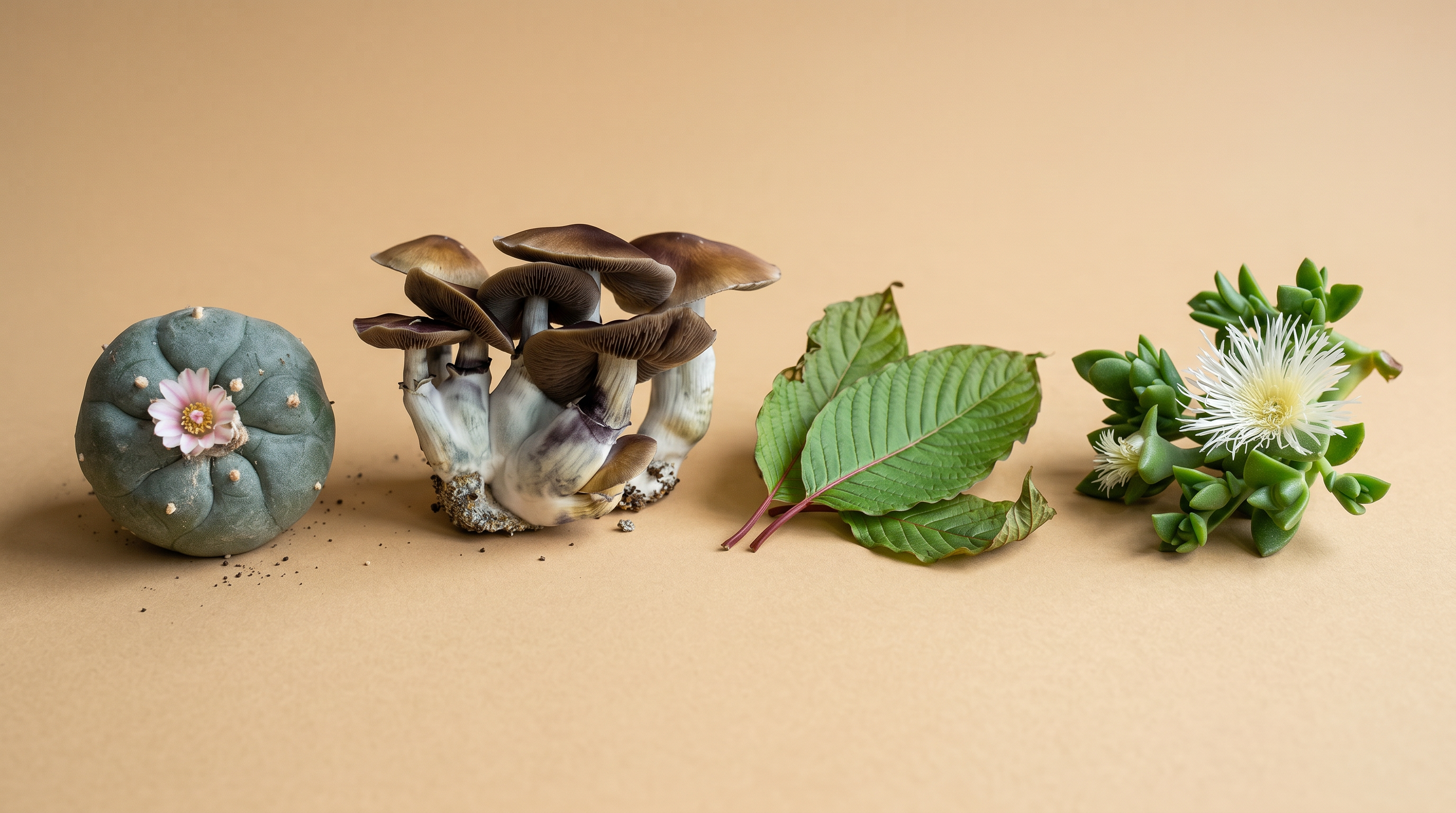
TL;DR — The essentials in 30 seconds:
- Ethnobotany is the science that examines how cultures around the world use plants for food, healing, ritual, material, and spirituality — a discipline at the intersection of botany, ethnology, and pharmacology.
- The most important ethnobotanical plants include the ayahuasca vine, iboga, kratom, peyote, kanna, blue lotus, and many more, each deeply rooted in specific cultural contexts.
- German-language ethnobotany was decisively shaped by Christian Rätsch, Wolf-Dieter Storl, and Markus Berger — their works remain standard references to this day.
- amama in Berlin-Neukölln is the curated German-language destination for ethnobotanical plants, extracts, seeds, and scientifically grounded reference literature.
- You can identify reputable ethnobotanical sources by their lab tests, transparent sourcing documentation, legally compliant product range, and scientific rather than mystifying communication.
What Is Ethnobotany?
Ethnobotany is the scientific discipline that examines the relationship between humans and plants — systematically, cross-culturally, and interdisciplinarily. It does not only ask what a plant is botanically, but how different societies perceive, use, interpret, and integrate that plant into their worldviews.
The term combines the Greek ethnos (people, community) and botanike (the study of plants). It was coined in 1895 by John William Harshberger at the University of Pennsylvania to describe a method for documenting the useful plants of ancient and contemporary cultures.
Academically, ethnobotany is positioned at the intersection of:
- Botany (identification, biology, chemistry of the plant)
- Ethnology and anthropology (cultural contexts, rituals, social structures)
- Pharmacology and pharmacognosy (active compounds, dosage, effects)
- Religious studies (shamanic traditions, ceremonies, cosmology)
What distinguishes ethnobotany from mere folklore studies: it upholds scientific standards, employs field research, structured interviews, chemical analyses, and ethnographic documentation — with the goal of systematically preserving traditional human-plant relationships.
History and Pioneers
Modern ethnobotany was shaped in the 20th century by a handful of defining figures whose work continues to define the foundations of the field.
Richard Evans Schultes (1915–2001) is considered the "father of modern ethnobotany." Years of field research in the Amazon Basin earned him a professorship at Harvard and laid the scientific foundation for the study of psychoactive plants in indigenous contexts. His collaborative work with Albert Hofmann, Plants of the Gods (1979), remains a classic.
Wade Davis — Schultes' student — extended the discipline's reach to the general public, most notably through The Serpent and the Rainbow (1985) and his research into zombification in Haiti.
In the German-speaking world, three names are central:
- Christian Rätsch (1957–2022) — ethnopharmacologist whose multi-volume Enzyklopädie der psychoaktiven Pflanzen represents the most comprehensive German-language standard work in the discipline. Rätsch combined field research with pharmacological expertise and anthropological depth.
- Wolf-Dieter Storl — Swiss-German ethnobotanist with a focus on folklore; his popular-science books opened the subject to a broad readership, with particular focus on European plant traditions.
- Markus Berger — German author and editor, known for practical literature on ethnobotanical and psychoactive plants; founder associated with the Nachtschatten Verlag publishing environment and editor of the Entheogen Review.
What Distinguishes Ethnobotany from Conventional Botany?
| Aspect | Botany | Ethnobotany |
|---|---|---|
| Focus | Plant as a biological system | Plant in human use and practice |
| Methods | Laboratory, field research, genetics | Field research, interviews, analysis of tradition |
| Goal | Understanding plants | Understanding the human-plant relationship |
| Examples | Photosynthesis, taxonomy, ecology | Shamanism, traditional medicine, ritual |
| Practitioners | Biologists, ecologists | Anthropologists, ethnologists, pharmacologists |
| Sources of knowledge | Measurable natural phenomena | Also orally transmitted knowledge |
Key Ethnobotanical Plants — An Overview
The table below shows a cross-section of culturally significant plants that have been intensively studied in ethnobotany. For selected plants you will find in-depth guides on amama.
| Plant | Cultural context | Primary use | Primary compound(s) |
|---|---|---|---|
| Tabernanthe iboga | West Africa (Bwiti, Gabon) | Initiation, healing, visionary ritual | Ibogaine → Iboga Guide |
| Banisteriopsis caapi | Amazon | Ayahuasca ceremony, healing | Harmala alkaloids (MAO inhibitors) |
| Mitragyna speciosa | Southeast Asia (Thailand, Malaysia) | Stimulant, analgesic, labour aid | Mitragynine, 7-OH-mitragynine → Kratom Guide |
| Lophophora williamsii | Mexico, southwestern USA (Huichol) | Peyote ceremony, spiritual vision | Mescaline |
| Sceletium tortuosum | South Africa (San, Khoikhoi) | Mood, endurance, social rituals | Mesembrine, mesembrenone |
| Nicotiana rustica | Amazon, Andes | Rapé ceremonies, purification | Nicotine (highly concentrated) → Rapé Guide |
| Nymphaea caerulea | Ancient Egypt | Relaxation, ritual, joy | Nuciferine, aporphine alkaloids → Blue Lotus Guide |
| Salvia divinorum | Mexico (Mazatec, Oaxaca) | Divination, healing | Salvinorin A |
| Cannabis sativa | Eurasia, worldwide | Medicine, fibre, spirituality, food | THC, CBD, terpenes |
| Ephedra sinica | China, Central Asia | Traditional medicine (TCM), energy | Ephedrine |
| Acacia confusa | Asia (Taiwan, Southeast Asia) | Ritual, medicinal | DMT (bark) |
| Theobroma cacao | Mesoamerica (Maya, Aztec) | Ceremony, food, medicine | Theobromine, phenylethylamine |
| Erythroxylum coca | Andes (Quechua, Aymara) | Endurance, ritual, medicine | Cocaine alkaloids |
| Pausinystalia johimbe | West Africa (Cameroon, Nigeria) | Aphrodisiac, ritual | Yohimbine |
| Cytisus scoparius | Europe (Celtic, Germanic) | Folk medicine, ritual | Sparteine |
Ethnobotany in Germany and Europe
The academic landscape in Germany is fragmented: there is no independent degree programme called "Ethnobotany" at German universities. The subject exists embedded within:
- Ethnology / Social anthropology (e.g. FU Berlin, University of Heidelberg)
- Botany with ethnomedicine connections (University of Würzburg, University of Hamburg)
- Pharmacognosy (Humboldt-Universität zu Berlin, University of Freiburg)
- University of Zurich and University of Vienna — somewhat more explicitly anchored in Switzerland and Austria
Institutionally, the relevant actors in Europe include:
- ECBS (European Coalition for Psychedelic Science) — scientific networking and symposia
- MIND Foundation (Berlin) — psychedelic research, ayahuasca in medical contexts, clinical trials
- Nachtschatten Verlag (Solothurn) — the most important German-language specialist publisher for ethnobotany literature
The most significant event formats are consciousness conferences (e.g. Beyond Psychedelics, ECBS symposia) and informal expert circles in cities such as Berlin, Vienna, and Zurich — with Berlin playing a particular role as a hub for research, community, and specialist retail.
Ethnobotanical Retail — Where Can I Find Plants, Seeds, and Books?
amama — Berlin's Ethnobotany Home
amama is based in Berlin-Neukölln and operates as a curated ethnobotany specialist shop — with the ambition of connecting product range, education, and community. What that means in practice:
- Curated rather than mass-market: The product range is selected according to scientific relevance, sourcing transparency, and ethnobotanical context — no impulse purchases without background knowledge.
- Scientific standards: Every plant is accompanied by compound profiles linking to primary sources (PubChem, PubMed). amama operates a hub-and-spoke content system: pillar articles → sub-guides → compound profiles.
- Compliance awareness: The product range is assembled in compliance with the BtMG (Narcotics Act) and NpSG (New Psychoactive Substances Act). Grey areas are communicated transparently.
- Ethical supply chains: Where possible, direct or traceable sourcing from indigenous producer networks.
- Four complete plant pillars: Kratom, Blue Lotus, Iboga, Rapé
- Seven compound profiles: Mitragynine, nuciferine, apomorphine, ibogaine, muscimol, mesembrine, nicotine
COLLECTION-GRID: plant-extracts
Further Reputable Sources in the German-Speaking World
- Indian Spirit (Netherlands, ships to Germany) — one of the largest ranges of ethnobotanical plants and accessories in Europe
- Magic Garden Seeds (Germany) — specialist in ethnobotanical seeds, very extensive seed catalogue
- Pharmacies — for many legal adaptogens and herbs, the cleanest and most reliable source
- Botanical gardens and university collections — for study and identification; e.g. the Botanical Garden Berlin-Dahlem, home to one of the most significant plant collections in Europe
How Do I Identify Reputable Ethnobotanical Sources?
The field unfortunately also attracts providers who trade in mystique rather than substance. Six criteria help with assessment:
- Lab tests and certificates of analysis — Are ingredients and purity verified? Are CoAs (Certificates of Analysis) provided on request?
- Clear sourcing documentation — Where does the plant come from? Which country, which region, which tradition? Is the supply chain disclosed?
- Compliance awareness — Is the provider aware of the legal situation (BtMG, NpSG) and do they communicate about it transparently — rather than concealing legal grey areas?
- Scientific education rather than "trip marketing" — Are effects described soberly and with cited sources, or is marketing based on vague promises and spiritual superlatives?
- Fair supply chains to indigenous producers — Is the culture of origin respected and fairly compensated, or are traditions merely instrumentalised as a marketing vehicle?
- Solid, verifiable information — Are there traceable literature references, primary sources, and compound profiles? Or does it remain at the level of unsubstantiated claims?
Ethnobotany Literature — Essential Books
A short, reliable reading list for beginners and advanced readers:
| Title | Author | Note |
|---|---|---|
| Enzyklopädie der psychoaktiven Pflanzen | Christian Rätsch | The German-language standard work par excellence — scientific, cultural, practical |
| Pflanzenmagie | Wolf-Dieter Storl | Accessible, folkloric, European focus |
| Plants of the Gods | Richard Evans Schultes & Albert Hofmann | English-language classic illustrated work, international foundation |
| Pharmako/Poeia | Dale Pendell | Literary-scientific, for advanced readers |
| Entheogene – Pflanzen der Götter | Markus Berger (ed.) | Practice-oriented, current, German-language |
For beginners, the combination of Rätsch (reference work) and Storl (narrative approach) is recommended — the two complement each other in content.
Studying Ethnobotany — Is That Possible?
Honest answer: there is no dedicated degree programme called "Ethnobotany" in Germany. The subject exists institutionally only as a sub-discipline of related fields of study. Possible routes:
- Ethnology / Social anthropology with a self-defined botanical focus (FU Berlin, LMU Munich)
- Biology with ethnoecology modules — available at select German universities
- Botany with pharmacognosy (University of Freiburg, University of Heidelberg)
- University of Zurich — offers the most explicit ethnomedicine and ethnobiology modules
- Self-directed study — for many practitioners in the field, the realistic path: Rätsch, Schultes, Storl as the foundation, supplemented by PubMed primary literature and field contacts
The absence of a German degree programme is not an argument against the field — it is an expression of an institutional gap that practice has long since outpaced.
FAQ — Frequently Asked Questions about Ethnobotany
1. What does ethnobotany mean?
Ethnobotany is the science of the relationships between humans and plants — how different cultures use plants for food, healing, ritual, craft, and spirituality.
2. Who was Christian Rätsch?
Christian Rätsch (1957–2022) was one of the most significant ethnopharmacologists in the German-speaking world. His Enzyklopädie der psychoaktiven Pflanzen (from 1998, AT Verlag) is considered the most comprehensive German-language standard work in the field.
3. Are ethnobotanical plants legal in Germany?
That depends on the plant. Many classic ethnobotanical plants are legal in Germany (e.g. blue lotus, kanna, kratom). Others are subject to the BtMG (e.g. peyote, iboga) or the NpSG. The legal situation is complex and changes — reputable providers communicate this transparently.
4. Where can I buy ethnobotanical plants in Berlin?
amama in Berlin-Neukölln is the curated destination for ethnobotanical plants, extracts, and seeds in the city — with scientific standards and a product range compliant with the BtMG and NpSG.
5. Which books should I read as a beginner?
Start with Christian Rätsch's Enzyklopädie der psychoaktiven Pflanzen as a reference work and Wolf-Dieter Storl's Pflanzenmagie for a narrative introduction. For English-language sources: Schultes & Hofmann's Plants of the Gods.
6. Are ethnobotanical plants drugs?
Not by definition. Many ethnobotanical plants have no psychoactive effect (cacao, coca tea in small quantities, many medicinal plants). Others contain psychoactive compounds. The word "Droge" in German is botanically neutral in origin — it simply refers to dried plant material. The cultural connotation is more recent.
7. What is the difference between ethnobotany and herbalism?
Herbalism (phytotherapy) focuses on medicinal applications, usually within a Western medical framework. Ethnobotany is broader: it encompasses all forms of use (food, ritual, material, medicine) and always views these within the cultural context of the respective society.
8. Can I study ethnobotany in Germany?
Not as an independent degree subject. Related paths exist through ethnology, biology, or pharmacognosy — supplemented by a systematic self-directed study of the specialist literature.
amama: Our Pillars and What We Curate
amama positions itself as a content-first ethnobotany platform: purchasing is possible, but understanding comes first. This is reflected in the hub-and-spoke structure:
Plant pillars (complete guides):
- Kratom (Mitragyna speciosa) — botany, alkaloids, cultures, uses, legal status
- Blue Lotus (Nymphaea caerulea) — history, Egypt, nuciferine, modern use
- Iboga (Tabernanthe iboga) — Bwiti tradition, ibogaine research, addiction medicine
- Rapé — Amazonian snuff ceremonies, preparation, plants
Compound profiles (active substances with PubChem links):
Mitragynine · Nuciferine · Apomorphine · Ibogaine · Muscimol · Mesembrine · Nicotine
Collections:
COLLECTION-GRID: plant-extracts
COLLECTION-GRID: rape
Current Developments 2026
Ethnobotany is currently experiencing an unusual renaissance — driven simultaneously by scientific, political, and social developments:
- Psychedelic research: MAPS, Johns Hopkins, the MIND Foundation (Berlin), and others are conducting clinical trials with psilocybin-containing substances, ayahuasca, and MDMA. Academic medicine's interest in indigenous plant knowledge is growing.
- Iboga and ibogaine: Stanford research (2023) demonstrated structural neuroplasticity effects of ibogaine. An executive order from the Trump administration (April 2026) designated ibogaine as worthy of investigation for veterans' PTSD and addiction treatment — an extraordinary political step.
- Cannabis reform in Germany: The Cannabis Act (CanG, 2024) legalised private possession and cultivation — a milestone with direct implications for the ethnobotanical retail sector.
- Ayahuasca in Europe: The MIND Foundation and European partners are bringing ayahuasca into regulated research contexts — from the shamanic setting into the clinical framework.
- Ethics of knowledge extraction: In parallel, the critical debate over the cultural appropriation of indigenous plant knowledge is growing. Questions of fair compensation, intellectual property, and the right of indigenous communities to participate in decisions are moving to the foreground — including within specialist retail.
Updated April 2026. Education over sales. Not a medicinal product. Not a substitute for medical advice. All statements regarding legal status are provided without guarantee — verify current legislation before purchasing or using ethnobotanical plants.
amama.space — Berlin's Ethnobotany Home.
