

plants
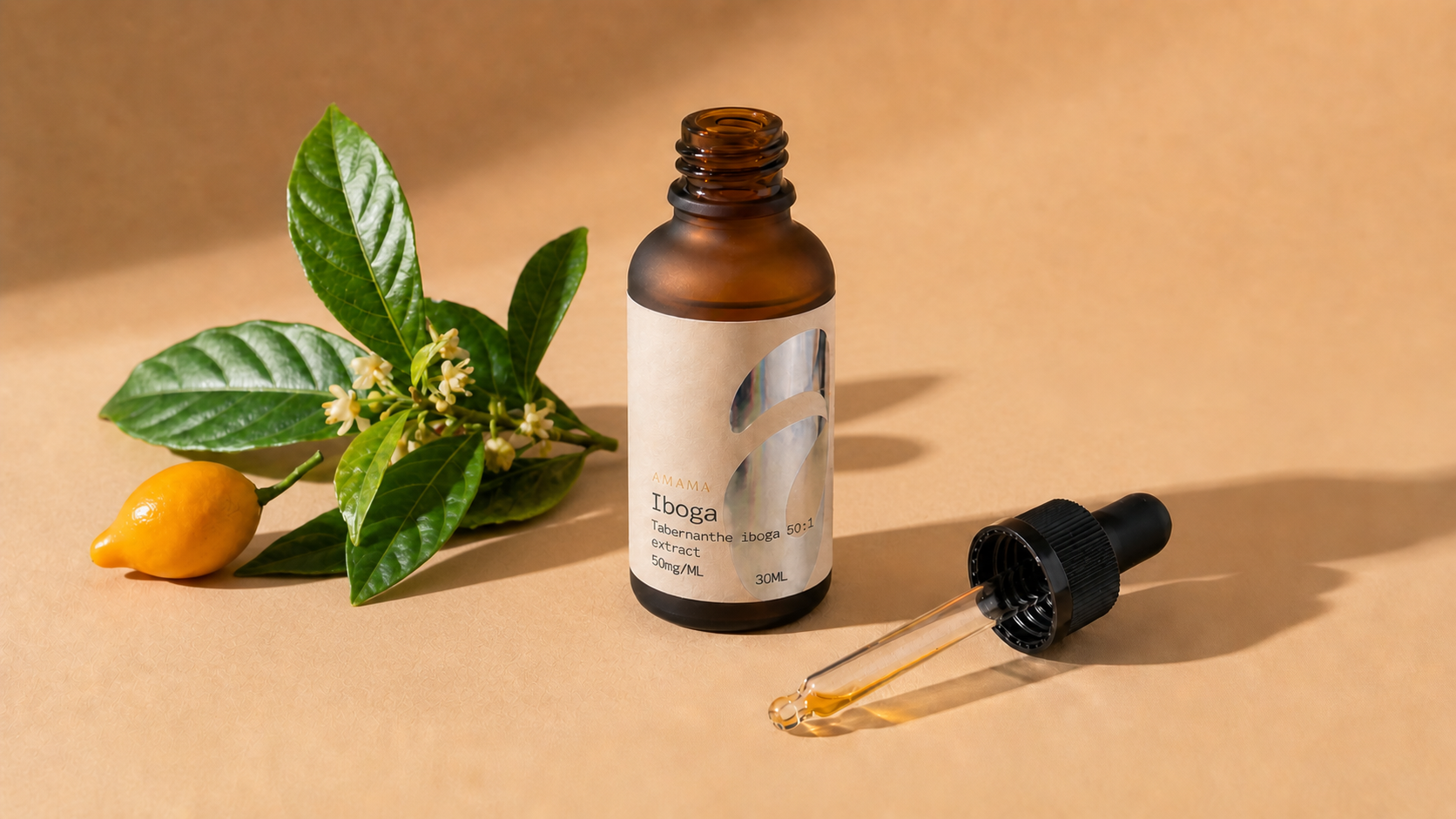

Iboga: The Ultimate Guide (Effects, Constituents & Legal Status)
TL;DR — Iboga in brief: Iboga (Tabernanthe iboga) is a Central African shrub of the dogbane family (Apocynaceae), whose root bark contains the indole alkaloid ibogaine. For centuries, iboga has been the sacrament of the Bwiti religion of Gabon (UNESCO Intangible Cultural Heritage since 2022). In recent years, iboga has moved into the focus of modern neuroscience through studies on addiction, PTSD, and depression — most recently through the 2023 Stanford study and the US Executive Order of April 2026. Indole alkaloid · Tabernanthe iboga Ibogaine (1R,15R,17S,18S)-17-ethyl-7-methoxy-3,13-diazapentacyclo[13.3.1.02,10.04,9.013,18]nonadeca-2(10),4(9),5,7-tetraene Molecular formula: C20H26N2O Molecular weight: 310.4 g/mol CAS: 83-74-9 Read more about Ibogaine → What it is: Root bark of the shrub Tabernanthe iboga, primary alkaloid ibogaine (CAS 83-74-9). Origin: Gabon, Cameroon, Republic of Congo — sacred use in the Bwiti tradition. Effects: Ibogaine acts on serotonin reuptake, NMDA receptors, kappa-opioid and sigma-2 receptors — mechanistically unique, not comparable to classical psychedelics. Research: Stanford 2023 (Cherian et al., Nature Medicine), MAPS studies, Texas Ibogaine Initiative (USD 100 million, 2025). Legal status DE: Legal — neither Tabernanthe iboga nor ibogaine are listed under the BtMG or NpSG (as of April 2026). Not approved as a medicine or food. Safety: Cardiac risks (QT prolongation) — without medical pre-screening, iboga can potentially be life-threatening in approximately 1 in 300 cases. At amama: Iboga root bark as a traditional ethnobotanical / collector's item — not for consumption, not as medicine. From the archive Tabernanthe iboga — botanical specimen · Ji-Elle · 2018-05-24 Tabernanthe iboga plant at the Meise Botanic Garden, Belgium. Jardin botanique de Meise · CC BY-SA 3.0 What is Iboga? Iboga refers to the low-growing shrub Tabernanthe iboga (Baill., 1889) of the Apocynaceae family (dogbanes) — related to periwinkle (Vinca), oleander, and Rauwolfia serpentina. The plant reaches 1–2 meters in height, grows in the understory of Central African rainforests, and bears yellow-orange, edible fruits. The medicinally and culturally relevant part of the plant, however, is the root bark, in which the characteristic indole alkaloids are concentrated. The terminological distinction is important: Iboga = the entire plant or the prepared root bark (traditional context). Ibogaine = the isolated primary alkaloid (pharmacological/clinical context). In the Fang language of Gabon, the plant is called "eboka" — a term that encompasses both the plant and the sacrament prepared from it. According to ethnobotanical estimates, the Mitsogho and Fang of Gabon have used iboga for at least several centuries, possibly longer, as medicine, as a hunting aid (in low doses for alertness), and above all as a spiritual sacrament. Botanically noteworthy: The Apocynaceae are an alkaloid-rich family. Many of its members produce complex indole and monoterpene alkaloids — from vincristine (oncology) to reserpine (blood pressure) to ibogaine itself. Iboga is not an isolated case, but part of a pharmacologically dense plant family. Indole alkaloid · Tabernanthe iboga Ibogaine (1R,15R,17S,18S)-17-ethyl-7-methoxy-3,13-diazapentacyclo[13.3.1.02,10.04,9.013,18]nonadeca-2(10),4(9),5,7-tetraene Molecular formula: C20H26N2O Molecular weight: 310.4 g/mol CAS: 83-74-9 Compound profile: Ibogaine → Origin: The Bwiti Tradition The Bwiti religion is the cultural heart of iboga use. It originated among the Mitsogho in central Gabon and spread in the 19th and 20th centuries to the Fang and other ethnic groups. Today, Bwiti is a recognized religion of Gabon with its own temples, priests (nganga), and liturgy. In 2022, the Bwiti tradition was recognized by UNESCO as Intangible Cultural Heritage of Humanity — a cultural-political milestone. The Initiation At the center of Bwiti practice stands the initiation (bwete), a multi-day ritual in which the initiate ingests a high dose of iboga root bark. The ceremony follows a precise structure: Preparation: Days to weeks of diet, purification, questions posed to the community. The rite: Ingestion of the root bark in a temple (mbandja), accompanied by ngombi harp, ritual chants, and the fire. The journey: Effects set in after 30–60 minutes and last 12–36 hours; the initiate experiences intense visionary phases, followed by deep introspection. The return: The community accompanies the initiate, interprets visions, and integrates the experience into the social context. The Bwiti context differs fundamentally from any recreational use: here iboga is a sacrament, not a drug — embedded in centuries of traditional knowledge, the cardiac experiential wisdom of the initiates, and a ritual framework that reduces risks. Western Reception European pharmacologists first mentioned iboga at the end of the 19th century. Systematic research began with Léon Pales (1950s, colonial ethnobotany of Gabon) and intensified in the 1960s through work on alkaloid chemistry. Chilean psychiatrist Claudio Naranjo (1969) published the first Western clinical observations on the therapeutic use of low ibogaine doses. The decisive impulse for addiction research, however, came through Howard Lotsof (1962), who accidentally discovered the craving-interrupting effect on himself and patented it in the 1980s. The Active Compounds: Ibogaine and Its Companion Alkaloids Property Value Scientific name Tabernanthe iboga (Baill., 1889) Family Apocynaceae (dogbanes) Primary alkaloid Ibogaine, CAS 83-74-9 Molecular formula C₂₀H₂₆N₂O (MW 310.43 g/mol) PubChem CID 3689 Other alkaloids Noribogaine, tabernanthine, ibogamine, coronaridine Ibogaine content in root bark approx. 3% of dry mass Origin Central Africa — Gabon, Cameroon, Congo Traditional use Bwiti religion (initiation rite) Legal status (DE) Legal — listed under neither BtMG nor NpSG Ibogaine: An Alkaloid with a Unique Profile Ibogaine is an indole alkaloid of the tryptamine type — structurally, then, distantly related to serotonin, DMT, or psilocin, but pharmacologically fundamentally different. While classical psychedelics act primarily as 5-HT2A agonists, ibogaine binds to several receptor systems simultaneously: Serotonin reuptake inhibition (SERT): similar to SSRIs, but considerably more complex. NMDA receptor antagonism: comparable to ketamine — relevant for neuroplasticity and addiction mechanisms. Kappa-opioid activity: partial agonist — involved in dysphoria, but also in reset mechanisms. Sigma-2 receptor affinity: a still poorly understood target, possibly relevant for the visionary quality. nAChR modulation: effects on nicotinic acetylcholine receptors, which supports the reports on smoking cessation. From this polyreceptor profile arises the "neuronal reset" hypothesis (Alper, 2012; Glick & Maisonneuve): ibogaine is said to "recalibrate," as it were, dopaminergic reward pathways that are dysregulated in chronic substance use. Studies suggest that a single ibogaine exposure raises the release of neurotrophic factors (GDNF, BDNF) in the ventral tegmentum — a plausible mechanism for the reported long after-effect. Noribogaine: The Long Breath Ibogaine is metabolized in the liver via CYP2D6 into noribogaine (12-hydroxyibogamine). Noribogaine is pharmacologically active, acts more strongly at SERT, and has a significantly longer half-life than ibogaine itself. The often-reported "after phase" of days to weeks following a ceremony is largely attributed to noribogaine. Clinically relevant: CYP2D6 poor metabolizers (~7% of Europeans) break down ibogaine more slowly — an additional safety factor that should be clarified before any ceremonial use. Companion Alkaloids In addition to ibogaine, iboga root bark contains a complex alkaloid spectrum: Tabernanthine — structurally close to ibogaine, lower potency. Ibogamine — milder effect, possibly involved in antiarrhythmic effects (subject of current research). Coronaridine — with its own pharmacological profile, investigated among other things for antiplasmodial activity. These companion alkaloids are the reason why proponents of the "Total Alkaloid Extract" (TA) prefer the whole plant over pure ibogaine HCl — the classic phyto-argument of synergy. However, clinical evidence for this is limited; Stanford and most modern studies work with pure ibogaine. From the archive Iboga root bark pieces · Kim Gjerstad · 2011-11-22 Dried root bark pieces of Tabernanthe iboga — the primary traditional preparation used in Bwiti ceremony. Wikimedia Commons · CC BY-SA 4.0 Effects: What Do Users Report? For context: the following descriptions draw on ethnographic reports (Fernandez, 1982), clinical observations from retreat centers, and case reports — not clinical efficacy claims. Every person responds individually. Two phases of a complete ceremonial iboga experience are reported: Phase 1 — Acute visionary phase (approx. 4–18 hours) Users describe this phase as "flood" or "flooding": Sets in 30–90 minutes after ingestion. Pronounced, often autobiographical image sequences — memories, life themes, inner scenes. Frequently with eyes closed; many find open eyes overwhelming. Strong physical dimension: ataxia, motor restlessness or blockade, nausea (interpreted as purification in the Bwiti tradition), auditory hyperacusis ("audio brain"). Qualitatively not euphoric — users emphasize the serious, often confrontational character. Phase 2 — Reflective phase (approx. 18–36+ hours) Visions fade, alertness remains high — sleep usually only possible after 24–48 hours. Introspective analysis of what was experienced, emotional processing. Reported: reduced substance cravings (especially for opioids, nicotine, alcohol), emotional clarity, altered self-image. After-effect: Many users report an "open window phase" of 2–6 weeks, during which behavioral changes come more easily — presumably noribogaine-mediated. Traditional ceremonial dose vs. microdose Ceremonial dose (flood): high in Bwiti rituals, taken over hours, always under ritual supervision. Microdose range: considerably lower, non-visionary, reported in some communities for mental clarity and mood modulation. Scientific evidence for this is very limited; the cardiac risks exist at low doses as well. In-depth article: Iboga effects in detail. Iboga & Addiction: What the Research Shows Modern research on ibogaine focuses on three indications: opioid dependence, PTSD/trauma, and depression/anxiety. Stanford 2023 — the breakthrough The study Cherian et al., Nature Medicine (2024, online 2023) examined 30 US veterans with Traumatic Brain Injury (TBI) and PTSD who received a single ibogaine treatment combined with intravenous magnesium (as QT protection) in Mexico. Results: Significant reduction in PTSD, depression, and anxiety symptoms. Sustained improvement over months following a single session. Improvements in neuropsychological functions (executive function, processing speed). No serious cardiac events under the magnesium protocol and screening. The study is small and uncontrolled — but the effect sizes and persistence make it one of the most frequently cited pieces of evidence for further RCTs. MAPS, HAI, GITA MAPS (Multidisciplinary Association for Psychedelic Studies) conducts observational studies and is planning RCTs. The HAI program (Healing Addiction with Ibogaine) collects long-term data from retreat contexts. The Global Ibogaine Therapy Alliance (GITA) published clinical guidelines in 2015 (screening, dosing, monitoring) — still the de facto standard among reputable providers today. The Opioid Context Ibogaine shows a property that no other known molecule offers: it interrupts acute opioid withdrawal within hours, without itself acting as an opioid agonist. The clinical hypothesis: ibogaine and noribogaine "reset" dopaminergic reward pathways that are dysregulated by chronic opioid use. For those affected by years of heroin or fentanyl dependence, this is revolutionary — which is why Texas in 2025 made USD 100 million available for clinical ibogaine research, the largest single investment in psychedelic research in US history. In depth: Iboga & Therapy — research and protocols. Comparison with classical psychedelics: Iboga vs. Psilocybin. Legal Status in Germany and Europe Germany: Legal — but not a medicine As of April 2026: Neither Tabernanthe iboga (plant, root bark) nor ibogaine are listed in any schedule of the Narcotics Act (BtMG, Schedules I–III). The New Psychoactive Substances Act (NpSG) also does not cover ibogaine — its substance-group definition targets synthetic cannabinoids, cathinones, phenethylamines, and certain tryptamines, but does not cover the iboga alkaloid profile. Consequence: The purchase, possession, and sale of iboga root bark as a traditional ethnobotanical are legal in Germany. However: Ibogaine is not approved as a medicine (neither in DE nor EU-wide). Iboga is not approved as a food (novel food status unclear; consumption is not a permissible purpose). Medical marketing claims (healing promises) are not permitted (HWG, LMIV). amama sells iboga exclusively as a traditional botanical collector's item / ethnobotanical, not for consumption and not for medicinal use. Details and sources: Iboga & Legal Status Germany 2026. Europe overview Country Status Germany Legal (neither BtMG nor NpSG) Netherlands Legal — active treatment centers in the Amsterdam area Portugal Legal — retreat clinics, incl. Tabula Rasa Retreat (Sintra) Spain Gray area — retreats exist (e.g. Madera Sagrada, Órgiva) Switzerland Prohibited — listed as a controlled substance Austria Gray area — not explicitly listed, but medicines law applies France Prohibited (since 2007) Belgium Prohibited United Kingdom Prohibited (Psychoactive Substances Act 2016) Ireland Prohibited Norway Prohibited Sweden Prohibited German-speaking people interested in a supervised ibogaine treatment travel in practice predominantly to the Netherlands or to Portugal. USA: The Trump Executive Order (April 2026) Internationally, the largest regulatory upheaval in decades is underway: until now, ibogaine has been Schedule I in the USA (illegal). On April 18, 2026, President Trump signed an Executive Order accelerating FDA review of ibogaine. The context: Texas Ibogaine Initiative (2025): USD 100 million for research, initiated by ex-governor Rick Perry and W. Bryan Hubbard. Joe Rogan discussed ibogaine in JRE #2477 (April 1, 2026) with Rick Perry and Hubbard; Rogan was present at the signing at the White House. In the days before, Rogan texted Trump on the topic; Trump's reported response: "Sounds great. Do you want FDA approval? Let's do it." Consequence: FDA fast-track for Phase 2 and Phase 3 studies, expected approval decision 2028–2030. The European EMA typically follows US precedent with a 2–4 year delay — a possible EU approval is conceivable in the early 2030s at the earliest. Safety and Risks ⚠ SAFETY NOTICE — CARDIAC RISK: Ibogaine can prolong the QT interval and in rare cases lead to life-threatening cardiac arrhythmias (Torsades de Pointes). According to GITA guidelines and published case series, the risk of a potentially fatal event is approximately 1 in 300 cases without cardiological pre-screening. Ceremonial or therapeutic use mandatorily requires: ECG, electrolyte status (magnesium, potassium), medication screening, medical monitoring. Concrete risk factors QT prolongation: Ibogaine prolongs the QT interval in a dose-dependent manner. Risk: Torsades de Pointes, cardiac arrest. Electrolyte disturbances: Low magnesium or potassium potentiates the risk — the reason modern protocols (Stanford) co-administer IV magnesium. CYP2D6 status: Poor metabolizers have elevated ibogaine levels. Concomitant medication: Contraindicated in particular are - SSRIs/SNRIs/MAO inhibitors (serotonin syndrome risk), - Opioids (QT and respiratory depression), - Antiarrhythmics, antipsychotics, certain antibiotics (QT-additive), - Stimulants. Pre-existing conditions: Heart disease, long QT syndrome, hepatic insufficiency, severe psychiatric disorders (especially psychoses) are contraindications. Why retreat centers work the way they do Reputable centers in the Netherlands and Portugal require before a treatment: ECG, blood count, liver metabolite test, medication history, psychiatric assessment. During the session: continuous ECG monitoring, intravenous access, medical presence. Precisely this effort explains the safety record of scientific studies in contrast to unsupervised self-experimentation. amama and iboga: clear positioning amama sells iboga root bark exclusively as a traditional ethnobotanical / collector's item. We: do not sell as a medicine, do not sell as a food, make no healing promises, recommend no consumption dosages, refer those with a therapeutic concern to accredited treatment centers in the Netherlands or Portugal. Buying Iboga: What amama Offers As a Berlin ethnobotanical smartshop (online: amama.space, in-store in Berlin-Neukölln), we carry selected iboga products with traceable origin: Iboga root bark (Tabernanthe iboga) — ethically sourced, ideally from sustainable cultivation (not from wild collection of the endangered wild population in Gabon). Laboratory analysis for identity and contaminants. Traceable sourcing — documented supply chain. Declaration as a traditional ethnobotanical, not for consumption. Our selection Iboga Tabernanthe iboga is a perennial rainforest shrub native to Central Africa, particularly Gabon and Cameroon, where it has been used for centuries in Bwiti initiation ceremonies. The root bark… → Shop the collection Full collection: COLLECTION: iboga Related Topics The deeper spokes to this guide: Iboga effects in detail — phases, mechanism, user reports. Iboga & Legal Status Germany 2026 — BtMG, NpSG, Europe overview, US update. Iboga & Therapy — Stanford study, MAPS, treatment centers. Iboga vs. Psilocybin — mechanism, duration, fields of use. Related ethnobotanicals at amama: → Ibogaine Compound Profile — chemistry, pharmacology & references In Which Forms Is Iboga Typically Available? Iboga is encountered in several formats — each with different alkaloid concentration, handling, and traditional alignment. Root bark shavings The traditional Bwiti format. Ibogaine concentration ~3% of dry weight. Closest to original ceremonial preparation. Iboga powder (gemahlen) Finely ground root bark. Same alkaloid concentration as shavings; easier to weigh and homogenise. Iboga capsules Pre-measured root-bark powder in capsules. Convenient for reference dosing or microdosing protocols. Iboga tincture / tropfen Alcohol- or glycerine-based liquid extract. Variable concentration; quality verification matters. Ibogaine HCl / extract Isolated alkaloid in salt form. The most potent format and the form used in clinical research and treatment centers. Räucherwerk / incense Some suppliers position iboga material as ceremonial incense. The pharmacological profile of combusted iboga differs significantly from oral preparation. What amama carries: when in stock, our iboga catalogue focuses on root-bark shavings and powdered root bark — closest to traditional preparation. We do not currently sell capsules, tinctures, or concentrated ibogaine extracts. Browse our Iboga collection → For chemistry, mechanism, and published research on the principal alkaloid: Ibogaine — Compound Profile →
Learn more
Kratom vs. Kanna: Two Plants Compared
TL;DR Botanical name Mitragyna speciosa (Korthals, 1839) Plant family Rubiaceae (coffee family) Origin Southeast Asia — Thailand, Malaysia, Indonesia (Borneo) Primary alkaloids Mitragynine (~66 %), 7-Hydroxymitragynine (~2 %) Available forms Powder, capsules, liquid extract Legal status (DE) Legal — not listed in BtMG or NpSG This is the seventh and final article in our kratom series. For the overarching context on Mitragyna speciosa, see the kratom guide. We will be publishing a standalone kanna pillar shortly — until then, this comparison offers the first key data points on Sceletium tortuosum. In brief Kratom and kanna are two of the most important legal ethnobotanicals on the German market. Both have documented traditional applications: kratom in Southeast Asia (Thailand, Malaysia, Kalimantan) as a tea or chewed leaf, kanna among the Khoisan in southern Africa as a fermented product (kougoed). Both are not listed under the Narcotics Act (BtMG) or the New Psychoactive Substances Act (NpSG). Despite these parallels, the two plants differ fundamentally in their pharmacology. Kratom primarily acts on the opioid system, kanna on the serotonin system. This difference determines when which plant makes sense — and when not. From the archive Mitragyna speciosa — Botanical Illustration (Korthals, 1839) · Pieter Willem Korthals · 1839 Original botanical plate from Korthals' 1839 scientific description of Mitragyna speciosa — the first formal classification of the kratom tree. Dutch Colonial Botanical Survey, Netherlands East Indies · Public Domain Mechanism compared Property Kratom (*Mitragyna speciosa*) Kanna (*Sceletium tortuosum*) Plant family Rubiaceae (coffee family) Aizoaceae (ice plant family) Origin Southeast Asia (Borneo, Thailand, Malaysia) Southern Africa (Karoo, South Africa) Primary active compound Mitragynine, 7-hydroxymitragynine Mesembrine, mesembrenone, mesembrenol Main mechanism Partial μ-opioid receptor agonist (G-protein bias) Serotonin reuptake inhibitor (SRI) + PDE4 inhibitor Secondary activity Adrenergic, serotonergic VMAT-2 modulation Effect profile Relaxing to activating (strain-dependent) Mood-lifting, social, clear Onset (oral) approx. 15–30 minutes approx. 20–45 minutes Duration approx. 3–5 hours approx. 2–4 hours Dependence potential Possible with long-term heavy use Low (according to current research) Legal status (DE) Legal (not listed in BtMG/NpSG) Legal (not listed in BtMG/NpSG) Combination with SSRIs Caution Contraindicated The table shows: kratom and kanna are not variants of the same principle, but two distinct pharmacological systems. For details on the kratom mechanism, see the article on mitragynine and the overview of kratom effects. Indole alkaloid · Mitragyna speciosa Mitragynine methyl (E)-2-[(2S,3S,12bS)-3-ethyl-8-methoxy-1,2,3,4,6,7,12,12b-octahydroindolo[2,3-a]quinolizin-2-yl]-3-methoxyprop-2-enoate Molecular formula: C23H30N2O4 Molecular weight: 398.5 g/mol CAS: 4098-40-2 Read more about Mitragynine Kratom: when is it the better choice? Kratom is suited — according to traditional and modern user reports — particularly for: Evening relaxation with red-vein strains like Red Mamba Physically oriented experience: users often describe a "body-heavy" quality that differs clearly from serotonergic substances Managing physical discomfort: in the Grundmann survey (2017, n=8,049), many participants cited physical discomfort management as a primary motivation Alkaloid complexity for experienced botany enthusiasts who appreciate the interplay of mitragynine, 7-OH-mitragynine, speciociliatine, speciogynine, and paynantheine Strain flexibility: White, Green, and Red Vein offer different profiles depending on the time of day Less suitable if you need to work with high concentration during the day, take SSRIs (theoretical serotonergic risk), or would need to combine with opioid medications or CNS depressants. Product Red 'Mamba' Kratom Extract Introducing the Red 'Mamba' Kratom Extract - a pure and powerful extract made from the finest Kratom leaves. Indulge in a smooth and satisfy… Sold out Kanna: when is it the better choice? Kanna (Sceletium tortuosum) has a distinctly different area of application. Users typically report: Daytime-usable mood lift without pronounced sedation Social ease: PDE4 inhibition and SRI activity are associated with reduced social tension Clear head: unlike kratom at higher doses, cognitive clarity is largely preserved according to user reports Mild focus support — a 2013 study (Terburg et al.) showed reduced amygdala reactivity under Zembrin extract in imaging Absolutely contraindicated: concurrent use of SSRIs, SNRIs, MAO inhibitors, or other serotonergic substances. The mesembrine mechanism makes kanna one of the few ethnobotanicals with a clear serotonin syndrome risk in such combinations. Interactions and safety Kratom — caution with: Opioid medications (additive effect at the μ-receptor) CNS depressants (benzodiazepines, alcohol, gabapentinoids) MAO inhibitors CYP3A4 and CYP2D6 inhibitors (metabolic interference) Kanna — contraindicated with: SSRIs (citalopram, sertraline, fluoxetine, etc.) SNRIs (venlafaxine, duloxetine) MAO inhibitors Triptans and other serotonergic agents Combination kratom + kanna: No strict pharmacological contraindication is documented in the literature, since the primary mechanisms of action (opioid vs. serotonin) do not directly overlap. However, studies on the combination are largely lacking. The indirect serotonergic activity of mitragynine could theoretically act additively in combination with kanna alkaloids. For new users, a combination is not advisable; experienced users should get to know only low amounts of both plants separately before considering combinations. For details on the legal framework for kratom, see the article Kratom legal in Germany. Practical decision aid If you … then rather kratom: Are looking for an evening, body-oriented botanical experience Want to make use of strain flexibility (White/Green/Red) Are interested in alkaloid diversity and traditional Southeast Asian preparations Are not on serotonergic medications If you … then rather kanna: Want mild mood support during the day Are looking for social ease and a clear head Prefer a lighter, shorter duration of effect Do not take serotonergic medications Our selection Kratom Explore our selection of kratom products, a natural herb sourced from the Mitragyna speciosa tree, renowned for its ability to enhance wellness and promote a sense of balance and vitality.… Green 'Mamba' Kratom Extract From €38.00 White 'Mamba' Kratom Extract From €38.00 Red 'Mamba' Kratom Extract Sold out → Shop the collection For the kanna selection: Kanna at amama. Back to the guides Kratom pillar: The complete kratom guide Kratom spokes: Effects · Strains · Extracts · Legal status · Preparation · Research Kanna pillar: coming soon — until then see the kanna collection Related: Blue Lotus: the ultimate guide Sources Grundmann, O. (2017). Patterns of kratom use and health impact in the US — Results from an online survey. Drug and Alcohol Dependence, 176, 63–70. (n=8,049) Kruegel, A. C., & Grundmann, O. (2018). The medicinal chemistry and neuropharmacology of kratom: A preliminary discussion of a promising medicinal plant. Neuropharmacology, 134, 108–120. Terburg, D., Syal, S., Rosenberger, L. A. et al. (2013). Acute effects of Sceletium tortuosum (Zembrin), a dual 5-HT reuptake and PDE4 inhibitor, in the human amygdala. Neuropsychopharmacology, 38(13), 2708–2716. Gericke, N., & Viljoen, A. M. (2008). Sceletium — A review update. Journal of Ethnopharmacology, 119(3), 653–663. World Health Organization (2021). Critical Review Report: Kratom (Mitragyna speciosa), Mitragynine, and 7-Hydroxymitragynine. ECDD 44th Meeting — no recommendation for scheduling. Last updated: 2025. This article is intended solely to inform about traditional ethnobotanical use and the current state of research. No medical claims. amama products are not intended for human consumption and do not replace medical advice. If you are taking prescription medications — in particular opioids, benzodiazepines, SSRIs, SNRIs, or MAO inhibitors — consult a medical professional before using kratom or kanna. Further Reading Kratom Guide: The Complete Plant Profile Kratom Effects: Alkaloids & Mechanism of Action Kratom Legal Status in Germany & Europe 2026 → Mitragynine Compound Profile — chemistry & pharmacology
Learn more
Kratom & Research: Current Studies, Alkaloids and the State of Science
This article is Part 6 of 7 in our Kratom series and serves as the scientific anchor. For the overview, see the complete Kratom guide. TL;DR Mitragynine is the main alkaloid (~66%) and a partial μ-opioid receptor agonist with GPCR bias — a signaling profile that differs from classical opioids. The 2021 WHO review recommended no international scheduling of kratom. Grundmann (2017) provided the largest user data collection to date with 8,049 respondents; Singh et al. (2014) documented long-term use in Malaysia. 7-Hydroxymitragynine is a minor alkaloid, but significantly more potent at the MOR than mitragynine. Knowledge gaps: long-term clinical studies, optimal dose ranges, interaction profiles. Publication numbers have been rising steadily since 2017 — kratom is an active research field. Botanical name Mitragyna speciosa (Korthals, 1839) Plant family Rubiaceae (coffee family) Origin Southeast Asia — Thailand, Malaysia, Indonesia (Borneo) Primary alkaloids Mitragynine (~66 %), 7-Hydroxymitragynine (~2 %) Available forms Powder, capsules, liquid extract Legal status (DE) Legal — not listed in BtMG or NpSG From the archive Mitragyna speciosa — Botanical Illustration (Korthals, 1839) · Pieter Willem Korthals · 1839 Original botanical plate from Korthals' 1839 scientific description of Mitragyna speciosa — the first formal classification of the kratom tree. Dutch Colonial Botanical Survey, Netherlands East Indies · Public Domain The Main Alkaloids of Kratom The leaf of Mitragyna speciosa contains over 40 identified alkaloids. Their composition determines the pharmacological profile of any given preparation. A detailed profile page on mitragynine can be found here. Indole alkaloid · Mitragyna speciosa Mitragynine methyl (E)-2-[(2S,3S,12bS)-3-ethyl-8-methoxy-1,2,3,4,6,7,12,12b-octahydroindolo[2,3-a]quinolizin-2-yl]-3-methoxyprop-2-enoate Molecular formula: C23H30N2O4 Molecular weight: 398.5 g/mol CAS: 4098-40-2 Read more about Mitragynine Mitragynine Primary alkaloid, about 66% of the alkaloid fraction in the dried leaf. CAS number 4098-40-2, PubChem CID 3034396. In vitro and animal model studies characterize mitragynine as a partial agonist at the μ-opioid receptor (MOR) with GPCR bias — meaning it activates downstream signaling pathways differently from classical opioids (e.g., preferential G-protein activation over β-arrestin recruitment). This bias is discussed as a possible reason for a differing side effect profile. Additionally, mitragynine shows activity at α2-adrenergic receptors and serotonin receptors (5-HT2A, 5-HT2C) in in vitro assays. Important caveat: these findings stem predominantly from in vitro and animal studies. Human clinical data are limited. 7-Hydroxymitragynine (7-OH-M) Minor alkaloid, approximately 2% of total alkaloids, but significantly more potent at the MOR than mitragynine. 7-OH-M is also formed via metabolic conversion from mitragynine in vivo (CYP3A4-mediated). The ratio of mitragynine to 7-OH-M varies between preparations and extracts and may be a key determinant of the effect profile. Speciociliatine, Speciogynine, Paynantheine Secondary alkaloids with less well-studied pharmacology. Speciociliatine may act as a weak partial opioid agonist. Paynantheine and speciogynine contribute to the complex alkaloid fingerprint that distinguishes kratom from isolated mitragynine — a distinction often underestimated in pharmacological assessment. Key Studies Grundmann 2017 — The Largest User Survey Grundmann, O. (2017). Patterns of kratom use and health impact in the US — results from an online survey. Drug and Alcohol Dependence, 176, 63–70. DOI: 10.1016/j.drugalcdep.2017.01.011 Online survey of 8,049 kratom users in the US — the most extensive self-reported data collection to date. Key findings: Majority reported use for pain management, mood support, and accompanying opioid withdrawal. Most respondents reported mild or no side effects. Physical dependence was reported by a minority of long-term, high-dose users. Limitation: self-reported online survey, not a clinical study design — but nevertheless the most valuable snapshot of real-world usage patterns. Singh et al. 2014 — Traditional Users in Malaysia Singh, D., Müller, C. P., & Vicknasingam, B. K. (2014). Kratom (Mitragyna speciosa) dependence, withdrawal symptoms and craving in regular users. Drug and Alcohol Dependence, 139, 132–137. DOI: 10.1016/j.drugalcdep.2014.03.017 Study of traditional users in Malaysia — relevant because these individuals consume kratom in some cases for decades as a cultural practice. The authors document that dependence and withdrawal symptoms can occur with chronic high-dose use (daily, over years), though the withdrawal symptoms were generally less pronounced than with classical opioids. Vicknasingam et al. 2010 — Ketum as Harm Reduction Vicknasingam, B., Narayanan, S., Beng, G. T., & Mansor, S. M. (2010). The informal use of ketum (Mitragyna speciosa) for opioid withdrawal in the northern states of peninsular Malaysia. Journal of Ethnopharmacology, 127(2), 395–399. DOI: 10.1016/j.jep.2009.10.004 Ethnographic documentation of the traditional use of kratom tea (ketum) to manage opioid withdrawal symptoms in northern Malaysia. Important for understanding the cultural and harm-reduction context in which much of the evidence has emerged. Prozialeck et al. 2012 — Pharmacological Review Prozialeck, W. C., Jivan, J. K., & Bhatt, D. K. (2012). Pharmacology of kratom: an emerging botanical agent with stimulant, analgesic and opioid-like effects. Journal of the American Osteopathic Association, 112(12), 792–799. Foundational pharmacological review article covering alkaloid mechanisms, traditional use, and open clinical questions. Frequently cited as an entry-level reference. Kruegel & Grundmann 2018 — Modern Receptor Characterization Kruegel, A. C., & Grundmann, O. (2018). The medicinal chemistry and neuropharmacology of kratom: A preliminary discussion of a promising medicinal plant and analysis of its potential for abuse. Neuropharmacology, 134 (Part A), 108–120. DOI: 10.1016/j.neuropharm.2017.08.026 Detailed analysis of receptor pharmacology, including discussion of GPCR bias and its clinical implications. The 2021 WHO Review: A Significant Outcome The WHO Expert Committee on Drug Dependence (ECDD) conducted a pre-review on kratom at its 44th meeting in 2021. The outcome: The committee recommended not to proceed to a critical review and not to schedule kratom internationally. This is a significant science-policy outcome: kratom remains unregulated at the UN level, and the German legal situation (not listed under the BtMG or NpSG) is consistent with this international position. More on the legal context in our article on the legal situation in Germany. What this does not mean: It is not a recommendation or endorsement. The WHO explicitly noted that more research is needed — particularly on dependence potential, vulnerable populations, and clinical safety. Current Research Landscape The number of peer-reviewed publications on kratom has increased markedly between 2017 and 2025. Key research groups: University of Florida (Dr. Oliver Grundmann, Dr. Christopher McCurdy): ongoing pharmacological and clinical surveys. Johns Hopkins University (Dr. Albert Garcia-Romeu and colleagues): publications on usage patterns and dependence. University of Rochester, Columbia University: mechanistic work on GPCR bias and structure-activity relationships. Universiti Sains Malaysia (Dr. Darshan Singh): ethnopharmacological and long-term use studies. What We Don't Yet Know An honest overview of the evidence gaps: Area Status Long-term clinical studies in humans largely missing Optimal dose ranges for potential applications not established Interactions with other substances (CYP interactions) limited investigation Hepatotoxicity case reports exist, causality contested, rare Safety in pregnancy/lactation not known, use is explicitly not recommended Pharmacokinetics in humans partially characterized, incomplete The research situation on kratom is active, but far from what could be called complete. This is the honest state of affairs. Collection Kratom Explore our selection of kratom products, a natural herb sourced from the Mitragyna speciosa tree, renowned for its ability to enhance wellness and promote a sense of balance and v… → Shop the collection Back to the Guide Kratom Guide (Pillar) Kratom Effects in Detail Kratom Legal Situation Germany Mitragynine — Substance Profile Sources (complete) Korthals, P. W. (1839). Observationes de Nauclearum Indicarum. First description of Mitragyna speciosa, Dutch East Indies. Prozialeck, W. C., Jivan, J. K., & Bhatt, D. K. (2012). Pharmacology of kratom: an emerging botanical agent with stimulant, analgesic and opioid-like effects. Journal of the American Osteopathic Association, 112(12), 792–799. Hassan, Z., Muzaimi, M., Navaratnam, V., et al. (2013). From Kratom to mitragynine and its derivatives: Physiological and behavioural effects related to use, abuse, and addiction. Neuroscience & Biobehavioral Reviews, 37(2), 138–151. DOI: 10.1016/j.neubiorev.2012.11.012 Singh, D., Müller, C. P., & Vicknasingam, B. K. (2014). Kratom (Mitragyna speciosa) dependence, withdrawal symptoms and craving in regular users. Drug and Alcohol Dependence, 139, 132–137. DOI: 10.1016/j.drugalcdep.2014.03.017 Vicknasingam, B., Narayanan, S., Beng, G. T., & Mansor, S. M. (2010). The informal use of ketum (Mitragyna speciosa) for opioid withdrawal in the northern states of peninsular Malaysia. Journal of Ethnopharmacology, 127(2), 395–399. DOI: 10.1016/j.jep.2009.10.004 Grundmann, O. (2017). Patterns of kratom use and health impact in the US — results from an online survey. Drug and Alcohol Dependence, 176, 63–70. DOI: 10.1016/j.drugalcdep.2017.01.011 Kruegel, A. C., & Grundmann, O. (2018). The medicinal chemistry and neuropharmacology of kratom. Neuropharmacology, 134(A), 108–120. DOI: 10.1016/j.neuropharm.2017.08.026 Kruegel, A. C., Uprety, R., Grinnell, S. G., et al. (2019). 7-Hydroxymitragynine is an active metabolite of mitragynine and a key mediator of its analgesic effects. ACS Central Science, 5(6), 992–1001. DOI: 10.1021/acscentsci.9b00141 WHO Expert Committee on Drug Dependence (2021). 44th Meeting Report — Pre-Review of Kratom (Mitragyna speciosa), Mitragynine and 7-Hydroxymitragynine. Geneva: World Health Organization. PubChem CID 3034396 (Mitragynine) — National Center for Biotechnology Information, U.S. National Library of Medicine. Veltri, C., & Grundmann, O. (2019). Current perspectives on the impact of Kratom use. Substance Abuse and Rehabilitation, 10, 23–31. DOI: 10.2147/SAR.S164261 Last updated: 2025. This article is for educational purposes only and does not constitute medical advice. Kratom research is active and evolving — individual statements may be refined or revised by new studies. For health-related questions, please consult qualified medical professionals. Further Reading Kratom Guide: The Complete Plant Profile Kratom Effects: Alkaloids & Mechanism of Action Kratom Legal Status in Germany & Europe 2026 → Mitragynine Compound Profile — chemistry & pharmacology
Learn more
Kratom Preparation: Tea, Powder, Extract and More
This article is Part 5 of our seven-part Kratom Guide. It focuses on the practical methods by which Mitragyna speciosa has been prepared traditionally and is prepared today — from classic tea brewing to sublingual use of liquid extracts. TL;DR Tea is the recommended entry method — gentle, controllable, traditional. Water temperature 80–90 °C, do not boil: high heat can degrade alkaloids such as mitragynine. Toss & Wash is fast but flavour-challenging and less suitable for beginners. Yogurt or shake effectively mask the bitter taste in everyday use. Liquid extracts (e.g. Mamba) are intended for experienced users and act more quickly sublingually. Botanical name Mitragyna speciosa (Korthals, 1839) Plant family Rubiaceae (coffee family) Origin Southeast Asia — Thailand, Malaysia, Indonesia (Borneo) Primary alkaloids Mitragynine (~66 %), 7-Hydroxymitragynine (~2 %) Available forms Powder, capsules, liquid extract Legal status (DE) Legal — not listed in BtMG or NpSG From the archive Kratom leaf · ThorPorre · 2013-03-19 Kratom leaf detail — Mitragyna speciosa Wikimedia Commons · CC BY 3.0 Kratom as Tea (recommended for beginners) Tea preparation is the most traditional and at the same time most controlled way of using kratom. In the regions of origin in Southeast Asia — Thailand, Malaysia and Indonesian Kalimantan — Mitragyna speciosa has been consumed as an infusion for centuries (Hassan et al., 2013). Step-by-step instructions Measure the powder. Start with a low amount. The exact dosage depends on strain, individual sensitivity and experience — when in doubt, use less (see Kratom Effects). Heat water — but do not boil. The ideal temperature is 80–90 °C. Boiling water can thermally stress sensitive alkaloids. Using a thermometer is the safest bet; alternatively, switch off the kettle just before the boiling point or let it stand for 1–2 minutes after boiling. Add lemon juice (optional). A squeeze of lemon lowers the pH. Citric acid can support the extraction of the alkaloids, as these dissolve better in an acidic medium. Steep for 15–20 minutes. Stir occasionally. Longer steeping times extract more alkaloids but also intensify the bitter taste. Strain. A fine sieve, a coffee filter or a cotton tea bag separates the powder from the infusion. Season to taste. Honey, ginger, cinnamon or a piece of lemon zest soften the characteristic bitterness. Why tea makes sense for beginners Slow onset (20–30 minutes) — the body has time to respond. Easy to dose via the amount of powder infused. Gentler on the stomach than swallowing powder directly. Ritual character: The preparation itself creates mindfulness in handling the plant. Toss & Wash With this method, measured kratom powder is placed directly on the tongue and washed down with a liquid (water, juice). Advantages: No preparation time. Faster onset than with tea (approx. 15–25 minutes). No reduction through infusion — the entire alkaloid profile is preserved. Disadvantages: The taste is intensely bitter and earthy. The gag reflex may be triggered. Less precise control than with tea. Tips for minimising the gag reflex Take the powder in small portions (e.g. two half portions). Have a sip of the rinsing liquid in your mouth beforehand, then add the powder. Cold liquids make swallowing easier. Breathe deeply through the nose, not through the mouth. For the first contact with kratom, this method is not recommended. Kratom in Yogurt or a Shake Stirring it into yogurt or a protein shake is one of the most practical everyday methods, especially for regular users who want to mask the taste. Full-fat yogurt is recommended — fats may support the uptake of fat-soluble plant compounds. Banana, cocoa or nut butter additionally cover the bitterness. No citrus juices in combination with the yogurt method: the acid can cause milk protein to curdle (unfavourable visually and in taste). Stir well so that no lumps form. Absorption is somewhat slower than with tea or Toss & Wash because gastric emptying is delayed by the solid food component — this can result in more even kinetics. Kratom Extract (Mamba): Sublingual Use Liquid extracts such as the Mamba range are concentrated extractions and are aimed at experienced users. Application Place a measured portion (use the pipette or dosing cap) under the tongue. Hold for 30–60 seconds — the mucous membrane under the tongue is well supplied with blood, so that some of the alkaloids can be absorbed directly. Then swallow. Why sublingually? Sublingual absorption partially bypasses the first-pass metabolism in the liver. The subjective onset of effects is often described by users as 10–20 minutes — faster than with tea or Toss & Wash. Alternative: In juice Those who cannot tolerate the taste sublingually can add the portion to a small amount of juice or water and drink it. The onset is then somewhat slower, since absorption takes place predominantly in the gastrointestinal tract. Extracts are intended for experienced users, because the alkaloid concentration is significantly higher than with leaf powder. For beginners we recommend classic tea made from kratom powder. Traditional Methods from Southeast Asia In Malaysia, southern Thailand and Borneo, Mitragyna speciosa has been part of village life for generations (Singh et al., 2014; Vicknasingam et al., 2010). Chewing fresh leaves Agricultural workers in southern Thailand and Kedah (Malaysia) traditionally chew fresh kratom leaves — usually after removing the midrib. This method does not work with dried powder: fresh leaves contain sap that enables chewing, whereas dry powder just clumps up in the mouth. Village tea in Kalimantan In Borneo, whole leaves are simmered in water for hours, strained and often combined with other herbs. These teas are referred to as "ketum" or "biak-biak" and are drunk in social contexts — during communal work, in the fields, at gatherings. These preparations are more than method: they are part of a cultural fabric in which plant, work and community belong together. More on the origin of our leaves can be found in the section on kratom strains. From the archive Kratom Growing in Nanga Embaloh Village, West Kalimantan, Borneo · Rino PHd · 2023 Mitragyna speciosa in its native habitat in Nanga Embaloh Village, West Kalimantan (Borneo), Indonesia — the historical heartland of kratom cultivation and traditional use. Wikimedia Commons · CC BY-SA 4.0 From the archive Kratom tree · ThorPorre · 2013-03-19 Mature Mitragyna speciosa (kratom) tree in natural habitat Wikimedia Commons · CC BY 3.0 Comparison Table of Preparation Methods Method Difficulty Onset Recommended for Tea Easy 20–30 min Beginners Toss & Wash Medium 15–25 min Experienced In yogurt Easy 20–35 min Everyday use Liquid extract Easy 10–20 min Experienced Chewing fresh leaf Traditional 10–15 min — The onset times given are empirical values from user surveys (Grundmann, 2017) and can vary considerably from person to person. Storage and Shelf Life The quality of kratom stands and falls with storage. Mitragynine and the accompanying alkaloids are sensitive to light, heat, oxygen and moisture. Indole alkaloid · Mitragyna speciosa Mitragynine methyl (E)-2-[(2S,3S,12bS)-3-ethyl-8-methoxy-1,2,3,4,6,7,12,12b-octahydroindolo[2,3-a]quinolizin-2-yl]-3-methoxyprop-2-enoate Molecular formula: C23H30N2O4 Molecular weight: 398.5 g/mol CAS: 4098-40-2 Read more about Mitragynine Basic rules Store airtight (original packaging or a preserving jar). Store in the dark — UV light accelerates alkaloid degradation. Cool and dry — ideally at room temperature, not in the bathroom or above the stove. In very humid climates, a food-grade desiccant (silica gel) in the container can be useful. Shelf life Kratom powder generally remains qualitatively stable for 1–3 years when stored airtight and in the dark. Colour (rich green to olive green) and aroma are good indicators — a musty or stale smell indicates loss of quality. Liquid extracts (Mamba) are also stable over longer periods when stored properly; the exact shelf life is stated on the label. amama's packaging is designed for light protection and airtightness in order to preserve alkaloid stability over the storage period. Product Kratom Powder 150gram Sold out Product Green 'Mamba' Kratom Extract Introducing the Green 'Mamba' Kratom Extract in a convenient 30ml drop bottle - a pure and powerful extract made from the finest Kratom leav… From €38.00 → View product Back to the Guide Main article: Kratom: The Complete Guide Understanding strains: Red, Green, White — Kratom Strains Compared Effects and pharmacology: Kratom Effects Concentrated extractions: Kratom Extract Explained Our selection Kratom Explore our selection of kratom products, a natural herb sourced from the Mitragyna speciosa tree, renowned for its ability to enhance wellness and promote a sense of balance and vitality.… Green 'Mamba' Kratom Extract From €38.00 White 'Mamba' Kratom Extract From €38.00 Red 'Mamba' Kratom Extract Sold out → Shop the collection Sources Grundmann, O. (2017). Patterns of Kratom use and health impact in the US — Results from an online survey. Drug and Alcohol Dependence, 176, 63–70. Hassan, Z., Muzaimi, M., Navaratnam, V., et al. (2013). From Kratom to mitragynine and its derivatives: Physiological and behavioural effects related to use, abuse, and addiction. Neuroscience & Biobehavioral Reviews, 37(2), 138–151. Singh, D., Müller, C. P., & Vicknasingam, B. K. (2014). Kratom (Mitragyna speciosa) dependence, withdrawal symptoms and craving in regular users. Drug and Alcohol Dependence, 139, 132–137. Vicknasingam, B., Narayanan, S., Beng, G. T., & Mansor, S. M. (2010). The informal use of ketum (Mitragyna speciosa) for opioid withdrawal in the northern states of peninsular Malaysia and implications for drug substitution therapy. International Journal of Drug Policy, 21(4), 283–288. World Health Organization (2021). Expert Committee on Drug Dependence — Critical Review Report: Kratom (Mitragyna speciosa), mitragynine, and 7-hydroxymitragynine. Geneva: WHO. As of: 2025. This article is intended solely for botanical and cultural information. It does not constitute medical advice and is not an invitation to consume. Kratom is legal in Germany (not listed in the BtMG or NpSG), but is regulated differently in other countries. Persons with pre-existing conditions, pregnant or breastfeeding women, and persons taking medication should seek medical advice before any use of traditional plants. Further Reading Kratom Guide: The Complete Plant Profile Kratom Effects: Alkaloids & Mechanism of Action Kratom Strains: Red, Green & White Explained → Mitragynine Compound Profile — chemistry & pharmacology
Learn more
Kratom & Legal Status: Legal in Germany and the EU?
This article is part 4 of 7 of our comprehensive kratom guide. It addresses the question that should be settled before any purchase: What is the legal status of Mitragyna speciosa in Germany and the European Union? TL;DR Botanical name Mitragyna speciosa (Korthals, 1839) Plant family Rubiaceae (coffee family) Origin Southeast Asia — Thailand, Malaysia, Indonesia (Borneo) Primary alkaloids Mitragynine (~66 %), 7-Hydroxymitragynine (~2 %) Available forms Powder, capsules, liquid extract Legal status (DE) Legal — not listed in BtMG or NpSG Kratom and the BtMG The Narcotics Act (BtMG) regulates controlled substances in Germany. It consists of three annexes: Annex I: non-marketable narcotics Annex II: marketable but non-prescribable narcotics Annex III: marketable and prescribable narcotics Neither Mitragyna speciosa as a plant nor mitragynine or 7-hydroxymitragynine as pure substances are listed in any of the three annexes (as of the current version of the BtMG). In practical terms this means: cultivation, trade, import, possession and consumption of kratom do not fall under narcotics criminal law. Indole alkaloid · Mitragyna speciosa Mitragynine methyl (E)-2-[(2S,3S,12bS)-3-ethyl-8-methoxy-1,2,3,4,6,7,12,12b-octahydroindolo[2,3-a]quinolizin-2-yl]-3-methoxyprop-2-enoate Molecular formula: C23H30N2O4 Molecular weight: 398.5 g/mol CAS: 4098-40-2 Read more about Mitragynine The pharmacological classification of mitragynine as a partial µ-opioid receptor agonist with GPCR bias (see the article on mitragynine) does not automatically lead to a BtMG listing — this would require a formal inclusion decision by the legislator, which has not occurred to date. Kratom and the NpSG The New Psychoactive Substances Act (NpSG) was introduced in 2016 to regulate designer drugs and synthetic analogues as entire substance groups — such as synthetic cannabinoids or cathinones. The NpSG works with substance group definitions based on specific chemical core structures. Kratom alkaloids are based on the indole core structure of the Corynanthe alkaloids (Mitragyna belongs to the Rubiaceae family, the coffee plants). The annex to the NpSG lists specific substance groups — mitragynine and the other kratom alkaloids do not fall under these definitions. In addition, the NpSG generally does not focus on traditionally used natural substances with a long history of application. Kratom has been traditionally used in Southeast Asia for centuries (see kratom guide). European Union: Overview Kratom regulation is not harmonised across the EU. Each member state decides independently. The following overview is based on the most recent information available; changes are possible. Country Status Note Germany Legal Not in BtMG, not in NpSG Netherlands Legal Sold in smartshops among others Austria Not in the Narcotics Act No narcotic status France Not planned as narcotic As of last review Belgium Legal Not planned Czech Republic Legal Widespread trade Spain Legal Not planned Italy Regulated / banned On the narcotics list since 2016 Sweden Banned Mitragynine regulated Denmark Banned Prescription-only Finland Regulated Classified as a medicinal substance Poland Banned Since 2009 Lithuania / Latvia Banned In the narcotics catalogue United Kingdom (non-EU) Banned Falls under the Psychoactive Substances Act 2016 The EUDA (European Union Drugs Agency, formerly EMCDDA) monitors kratom through its monitoring system but has so far not issued a union-wide regulatory recommendation. How do I buy kratom legally in Germany? Since kratom does not fall under the BtMG or NpSG, trade operates within the scope of general consumer protection regulations. Established in practice are: Sale as a botanical product / incense (not as a food or medicinal product) Lab-tested goods with certificates of analysis for heavy metals, microbiology and pesticides Age verification from 18 years (industry self-standard, not a legal requirement under the BtMG) Transparent origin information on the cultivation region (e.g. Kalimantan / Borneo) amama offers kratom powder and extracts according to these standards. We organise in-store sales in Berlin-Neukölln and online shipping within Germany as a provider of botanical products within the applicable regulations. Our selection Kratom Explore our selection of kratom products, a natural herb sourced from the Mitragyna speciosa tree, renowned for its ability to enhance wellness and promote a sense of balance and vitality.… Green 'Mamba' Kratom Extract From €38.00 White 'Mamba' Kratom Extract From €38.00 Red 'Mamba' Kratom Extract Sold out → Shop the collection What changed in Thailand in 2021? Thailand plays a special role in the global kratom story: In 1943 the country was the first in the world to ban kratom — back then, as retrospective analyses show, less for health reasons than for fiscal ones: kratom was a cheap alternative to taxable opium among workers. In August 2021, kratom was removed from the Category V narcotics list in Thailand through an amendment to the Narcotics Act. Private cultivation, possession and consumption were decriminalised. In 2022 a dedicated Kratom Plant Act followed, establishing a regulated legal market. This regulatory step is globally relevant: a traditional country of origin has reversed its stance after nearly 80 years — a signal also being noted in the European discussion. From the archive Kratom Growing in Nanga Embaloh Village, West Kalimantan, Borneo · Rino PHd · 2023 Mitragyna speciosa in its native habitat in Nanga Embaloh Village, West Kalimantan (Borneo), Indonesia — the historical heartland of kratom cultivation and traditional use. Wikimedia Commons · CC BY-SA 4.0 From the archive Kratom tree · ThorPorre · 2013-03-19 Mature Mitragyna speciosa (kratom) tree in natural habitat Wikimedia Commons · CC BY 3.0 WHO review 2021: Pre-Review by the ECDD The WHO Expert Committee on Drug Dependence (ECDD) conducted a Pre-Review of kratom and the alkaloids mitragynine and 7-hydroxymitragynine at its 44th meeting (October 2021). The outcome: the committee found that there was insufficient evidence for a critical review with a view to an international scheduling recommendation. A Critical Review would have been the prerequisite for inclusion in the UN conventions on controlled substances. For the legal situation in Germany and Europe this means: there is no international obligation to regulate kratom under the UN drug conventions. National legislators retain full discretion. A contribution to Europe-wide regulatory stability — not mandatory, but in effect. A more in-depth discussion can be found in the spoke Kratom Research. Import from abroad Private import Since kratom is not a listed narcotic in Germany, there are no specific BtMG import restrictions for private individuals. For shipments from non-EU countries (e.g. directly from Indonesia), the general customs regulations apply: Declaration upon exceeding the exemption limits (€22 / €150 value) Import VAT Possibly customs duties on plant products Customs may open and inspect shipments on a random basis. Since kratom is not on a scheduled list, correct declaration as a botanical product / plant material should not lead to criminal consequences — this is, however, not a legal guarantee, as case-by-case decisions are possible. Commercial import Commercial import is subject to the regular requirements for plant raw materials and consumer goods: maximum residue limits for pesticides, microbiological limits, contaminant testing (heavy metals), correct declaration and, where applicable, product safety requirements. amama sources kratom from Kalimantan (Borneo) through established supply chains and has every batch lab-tested. Legal status is dynamic A few points for orientation: The legal situation can change. Individual EU countries (Italy, Poland, Sweden, Denmark, Finland) have already regulated or banned kratom. In Germany there have so far been no concrete legislative proceedings to include kratom in the BtMG or NpSG (as of the last review). National medicines authorities (in Germany the BfArM) are monitoring developments; single-substance preparations could fall under the Medicines Act if assessed accordingly. Anyone buying kratom legally should be aware that the status rests on not being listed — not on an active authorisation. Back to the guide Continue with the other spokes: Main guide: Kratom — The comprehensive guide Research: Kratom research — studies and pharmacology Preparation: Preparing kratom correctly Strains: Red, green and white veins compared Sources Narcotics Act (BtMG), current version, Annexes I–III. Federal Ministry of Justice. gesetze-im-internet.de/btmg New Psychoactive Substances Act (NpSG), current version with annex. Federal Ministry of Justice. gesetze-im-internet.de/npsg WHO Expert Committee on Drug Dependence (2021). Forty-fourth report. Pre-Review: Kratom (Mitragyna speciosa), mitragynine, 7-hydroxymitragynine. WHO Technical Report Series. Narcotics Act (No. 8), B.E. 2564 (2021). Thailand. Removal of kratom from Category V. Kratom Plant Act, B.E. 2565 (2022). Thailand. EUDA / EMCDDA — Kratom Drug Profile. European Union Drugs Agency. Tanguay, P. (2011). Kratom in Thailand: Decriminalisation and Community Control? Transnational Institute, Series on Legislative Reform of Drug Policies No. 13. Prozialeck, W. C. et al. (2019). Kratom Policy: The Challenge of Balancing Therapeutic Potential with Public Safety. International Journal of Drug Policy. Legal notice: This page is for information and does not constitute legal advice. Legal status can change — when in doubt, check with the competent authority or a specialist lawyer. Amama provides no medical recommendations. Last editorial review: 2025. Further Reading Kratom Guide: The Complete Plant Profile Kratom Extract: Potency, Types & Dosing Kratom vs. Kanna: A Comparative Guide → Mitragynine Compound Profile — chemistry & pharmacology
Learn more
Kratom Extracts: What They Are, How They Work and Why Mamba
This article is part of the amama Kratom Guide. While the main guide covers botany, effect profile and legal status, this one focuses on a specific product form: the liquid extract. Extracts are more concentrated than leaf powder and are aimed at users who are already familiar with Mitragyna speciosa. TL;DR A kratom extract is a concentrate of the alkaloids from the leaf of Mitragyna speciosa — significantly higher alkaloid density per milliliter than powder per gram. Liquid extracts are produced via water or alcohol extraction and subsequently concentrated; the goal is a consistent alkaloid profile. amama's Mamba line (Green, White, Red) comes from partner farms in Kalimantan (Borneo) and is lab-tested batch by batch (alkaloids, pesticides, heavy metals, microbiology). Extracts are not suitable for beginners. They are appropriate for experienced users who prefer precise, compact portions. Kratom is legal in Germany (not listed under the BtMG or NpSG). This does not release one from responsible use — especially with extracts. Botanical name Mitragyna speciosa (Korthals, 1839) Plant family Rubiaceae (coffee family) Origin Southeast Asia — Thailand, Malaysia, Indonesia (Borneo) Primary alkaloids Mitragynine (~66 %), 7-Hydroxymitragynine (~2 %) Available forms Powder, capsules, liquid extract Legal status (DE) Legal — not listed in BtMG or NpSG What is a kratom extract? A kratom extract is a concentrate of the alkaloids contained in the leaf. The dried leaf contains approximately 0.5–1.5% total alkaloids, with mitragynine making up the main share (~66%) and 7-hydroxymitragynine, speciociliatine, speciogynine and paynantheine present in smaller amounts (More on mitragynine). Indole alkaloid · Mitragyna speciosa Mitragynine methyl (E)-2-[(2S,3S,12bS)-3-ethyl-8-methoxy-1,2,3,4,6,7,12,12b-octahydroindolo[2,3-a]quinolizin-2-yl]-3-methoxyprop-2-enoate Molecular formula: C23H30N2O4 Molecular weight: 398.5 g/mol CAS: 4098-40-2 Read more about Mitragynine In an extract, this alkaloid fraction is separated from the plant ballast — cellulose, fibers, waxes — and concentrated. The result: a liquid or resin containing significantly more active molecules per unit volume than the raw material. "Concentrated" in practice means: a few drops or a few milliliters of a liquid extract can correspond to a portion of powder — depending on standardization and product. This makes application more compact but also requires more precision. From the archive Kratom leaf · ThorPorre · 2013-03-19 Kratom leaf detail — Mitragyna speciosa Wikimedia Commons · CC BY 3.0 How extracts are made There are two common extraction methods: Water extraction (decoction) The leaf powder is boiled or steeped in water — often slightly acidified with lemon juice or citric acid, since the alkaloids as salts are more water-soluble. The liquid is filtered, the plant residue removed, and the filtrate gently evaporated. Traditionally, this corresponds to the tea approach in Southeast Asia, only further reduced. Alcohol extraction (tincture principle) Ethanol efficiently dissolves both polar and non-polar alkaloids. After maceration, the mixture is filtered and the alcohol is removed under reduced pressure. The result is a concentrated extract, which is then often processed with water and vegetable glycerin into the final formulation. Standardization The goal of reputable production is for each batch to be comparable in alkaloid content. This is achieved through: Selection of raw material from the same regions and harvest windows HPLC measurement of mitragynine content per batch Adjustment of the final concentration to a target value Why the liquid format has advantages Consistency: with clean standardization, the alkaloid ratio per ml remains stable. Taste: the characteristically bitter powder flavor can be better masked in small volumes. Sublingual absorption: some of the alkaloids can be absorbed directly through the oral mucosa, which tends to accelerate onset. Travel compatibility: 30 ml vs. 150 g of powder — a practical difference. Details on classical preparation methods can be found in the article on Kratom preparation. Mamba Kratom Extract: amama's standard The Mamba line was developed to offer customers at the Neukölln store and in the online shop a liquid extract with traceable origin and tested quality. Three points are central: 1. Direct sourcing from Kalimantan (Borneo). Mitragyna speciosa traditionally grows in the lowland forests of Southeast Asia; Indonesian Kalimantan is today the most important cultivation region. amama works with partner farms that gently dry the leaf and separate harvests by vein color (green, white, red) — the basis of the three Mamba variants (see also: Kratom strains). From the archive Kratom Growing in Nanga Embaloh Village, West Kalimantan, Borneo · Rino PHd · 2023 Mitragyna speciosa in its native habitat in Nanga Embaloh Village, West Kalimantan (Borneo), Indonesia — the historical heartland of kratom cultivation and traditional use. Wikimedia Commons · CC BY-SA 4.0 From the archive Kratom tree · ThorPorre · 2013-03-19 Mature Mitragyna speciosa (kratom) tree in natural habitat Wikimedia Commons · CC BY 3.0 2. Lab testing of every batch. Tested are: Alkaloid profile (mitragynine, 7-hydroxymitragynine via HPLC) Pesticide residues Heavy metals (lead, cadmium, arsenic, mercury) Microbiology (total viable count, yeasts, molds, E. coli, salmonella) Certificates of Analysis (COAs) are available on request. 3. Direct customer feedback. The physical store in Neukölln allows Bernard and the team to talk with experienced users, iterate on formulations and fine-tune batch by batch — an advantage that pure online retailers rarely have. Product Green 'Mamba' Kratom Extract Introducing the Green 'Mamba' Kratom Extract in a convenient 30ml drop bottle - a pure and powerful extract made from the finest Kratom leav… From €38.00 → View product Product White 'Mamba' Kratom Extract 30ml Introducing the 'Mamba' Kratom Extract in a convenient 30ml drop bottle - a pure and powerful extract made from the finest Kratom leaves. In… Sold out Product Red 'Mamba' Kratom Extract Introducing the Red 'Mamba' Kratom Extract - a pure and powerful extract made from the finest Kratom leaves. Indulge in a smooth and satisfy… Sold out Extract vs. powder: when to use what? Criterion Powder Liquid extract (Mamba) Entry level Ideal for newcomers For experienced users Dosing Gradual control Precise, compact Taste Bitter, earthy Concentrated, small amount Onset approx. 15–30 min approx. 10–20 min (sublingual) Portability Practical, but bulky Very compact (30 ml) Price per portion Cheaper Higher, but less needed Standardization Varies by batch Adjusted to target value For entry we generally recommend kratom powder — it allows finer dosing steps and better self-observation. How do you use Mamba extract? Sublingual application A few drops under the tongue, hold for 30–60 seconds, then swallow. Some of the alkaloids are absorbed via the oral mucosa; the rest is absorbed gastrointestinally. With juice or water Citrus or ginger juices mask the bitter taste well. The acid slightly changes the absorption profile but is unproblematic. Start low Even experienced powder users should start with a very small amount the first time with extract and wait 45–60 minutes before re-dosing. The onset is faster and the concentration per volume is significantly higher than with powder. Do not combine with alcohol Both substances act on the central nervous system. From a harm-reduction perspective, the combination is clearly inadvisable, especially due to respiratory depression at higher doses. Also to be avoided: combinations with benzodiazepines, opioids, other sedating substances and — because of serotonergic overlap — with SSRIs/MAO inhibitors without medical consultation. A detailed discussion of the effect profile can be found in the article on kratom effects. Important notes for extracts No starting with extracts. Anyone who has never used kratom should begin with leaf powder. The dose-response curve can be better understood there. Tolerance builds faster. Due to the high alkaloid concentration, tolerance develops faster with regular extract use than with powder. That means: more needed for the same effect — a classic warning sign. No daily long-term use. Surveys of long-term users (Grundmann 2017; Singh et al. 2014) show that daily high doses over extended periods can be associated with dependence development and withdrawal symptoms. Extracts accelerate this risk. Occasional, deliberate use with breaks is the more responsible model. Harm reduction instead of denial. Honesty with oneself about frequency and occasion is more important than any outside recommendation. Collection Plant Extracts Our plant extracts are amongst our customer favorites. We're sure you'll love them, too! Kratom, Blue Lotus, Iboga, Kava. Always high in demand, so availability is limited. Get the… → Shop the collection Back to the guide Kratom Guide (Pillar) Kratom Strains: Green, White, Red Kratom Effects and Pharmacology Kratom Preparation: Tea, Toss & Wash, Extract Legal Status in Germany Our selection Kratom Explore our selection of kratom products, a natural herb sourced from the Mitragyna speciosa tree, renowned for its ability to enhance wellness and promote a sense of balance and vitality.… Green 'Mamba' Kratom Extract From €38.00 White 'Mamba' Kratom Extract From €38.00 Red 'Mamba' Kratom Extract Sold out → Shop the collection Sources Kruegel, A. C., & Grundmann, O. (2018). The medicinal chemistry and neuropharmacology of kratom: A preliminary discussion of a promising medicinal plant and analysis of its potential for abuse. Neuropharmacology, 134, 108–120. Grundmann, O. (2017). Patterns of kratom use and health impact in the US — Results from an online survey. Drug and Alcohol Dependence, 176, 63–70. Singh, D., Müller, C. P., & Vicknasingam, B. K. (2014). Kratom (Mitragyna speciosa) dependence, withdrawal symptoms and craving in regular users. Drug and Alcohol Dependence, 139, 132–137. Hassan, Z. et al. (2013). From Kratom to mitragynine and its derivatives: Physiological and behavioural effects. Neuroscience & Biobehavioral Reviews, 37(2), 138–151. WHO Expert Committee on Drug Dependence (2021). Pre-Review Report: Kratom (Mitragyna speciosa), mitragynine and 7-hydroxymitragynine. 44th Meeting, Geneva. This article serves exclusively for scientific-ethnobotanical information and does not constitute medical advice, therapeutic recommendation or usage instructions. Kratom is not listed under the BtMG or NpSG in Germany and is currently legal; this does not release one from personal due diligence. Additional note on extracts: Liquid extracts are expressly intended for experienced users. Anyone trying kratom for the first time should begin with leaf powder and seek medical advice in case of pre-existing conditions or chronic medications. Do not use during pregnancy, breastfeeding or in combination with other centrally acting substances. Last updated: 2025. Further Reading Kratom Guide: The Complete Plant Profile Kratom Strains: Red, Green & White Explained Kratom Legal Status in Germany & Europe 2026 → Mitragynine Compound Profile — chemistry & pharmacology
Learn more
Kratom Strains: Red, Green, White Vein and Extracts Compared
This article is part of our comprehensive kratom guide and examines the common classification of Mitragyna speciosa leaves by vein color as well as the resulting product categories — from traditional powder to modern liquid extracts. TL;DR The classification into red, green and white vein refers to the color of the leaf's central midrib and is of traditional origin. Gold and yellow varieties result from special drying or fermentation processes, not from separate plants. Users report: Red = relaxing, Green = balanced, White = activating — not yet conclusively proven scientifically. Extracts concentrate the alkaloids; faster onset, suitable only for experienced users. Regional names like Maeng Da or Borneo are often marketing, not botanical categorization. Botanical name Mitragyna speciosa (Korthals, 1839) Plant family Rubiaceae (coffee family) Origin Southeast Asia — Thailand, Malaysia, Indonesia (Borneo) Primary alkaloids Mitragynine (~66 %), 7-Hydroxymitragynine (~2 %) Available forms Powder, capsules, liquid extract Legal status (DE) Legal — not listed in BtMG or NpSG From the archive Kratom leaf · ThorPorre · 2013-03-19 Kratom leaf detail — Mitragyna speciosa Wikimedia Commons · CC BY 3.0 What does "vein color" mean? Vein color refers to the color of the midrib and fine leaf veins of a freshly picked kratom leaf. Traditionally, three basic types are distinguished: red, green and white. This classification comes from the growing regions of Southeast Asia — particularly Kalimantan (Borneo), Sumatra and the Malaysian regions — and has been used by local farmers over generations to sort leaves according to perceived effect profiles. Whether vein color is actually genetically determined, arises from the maturity stage at harvest, or represents a combination of both factors is not conclusively clarified scientifically. Phytochemical analyses (among others Hassan et al. 2013) show that alkaloid ratios can differ between chemotypes and maturity stages — however, a strict correlation between vein color and a specific alkaloid pattern has so far not been clearly demonstrated. Gold and yellow varieties are not distinct plants, but the result of modified post-harvest processes: extended drying under UV light, controlled fermentation or blending different batches can alter the alkaloid profile and produce a different coloration of the dried powder. The strains in detail Red Vein Red leaves mostly come from more mature plants and are sometimes additionally fermented. Analyses suggest that mitragynine remains the dominant alkaloid component, while the proportion of 7-hydroxymitragynine in red varieties tends to be higher. Indole alkaloid · Mitragyna speciosa Mitragynine methyl (E)-2-[(2S,3S,12bS)-3-ethyl-8-methoxy-1,2,3,4,6,7,12,12b-octahydroindolo[2,3-a]quinolizin-2-yl]-3-methoxyprop-2-enoate Molecular formula: C23H30N2O4 Molecular weight: 398.5 g/mol CAS: 4098-40-2 Read more about Mitragynine In user surveys (among others Grundmann 2017), users of red varieties more frequently report relaxing, physically heavier sensations — reasons why red strains are traditionally preferred for the late afternoon and evening. amama offers the red type as a liquid concentrate: Product Red 'Mamba' Kratom Extract Introducing the Red 'Mamba' Kratom Extract - a pure and powerful extract made from the finest Kratom leaves. Indulge in a smooth and satisfy… Sold out Green Vein Green leaves are harvested at a medium maturity stage and show a balanced alkaloid spectrum. Users describe green strains as the most versatile type: neither strongly sedating nor strongly activating, with a slight mood lift and good suitability for daytime use. Green vein is considered the most popular entry point for new users, as the profile is perceived as well-tolerated and moderate. Product Green 'Mamba' Kratom Extract Introducing the Green 'Mamba' Kratom Extract in a convenient 30ml drop bottle - a pure and powerful extract made from the finest Kratom leav… From €38.00 → View product White Vein White vein is obtained from younger leaves. The alkaloid profile tends to show a higher proportion of speciociliatine and paynantheines relative to total mitragynine. Users report an activating, focusing profile traditionally used for morning and early daytime hours. Product White 'Mamba' Kratom Extract 30ml Introducing the 'Mamba' Kratom Extract in a convenient 30ml drop bottle - a pure and powerful extract made from the finest Kratom leaves. In… Sold out Gold/Yellow Vein Gold and yellow varieties arise from extended drying processes, special fermentation or the deliberate blending of several vein colors. The result is a nuanced, milder profile that many users describe as balanced. These varieties are seasonal and not continuously available. Extracts Extracts are concentrated alkaloid fractions obtained through water or water-ethanol extraction from raw powder. They are characterized by a faster onset and significantly higher alkaloid concentrations per volume — accordingly, they are intended exclusively for experienced users. You can find a detailed classification in our article on kratom extracts. Large comparison table Strain Alkaloid profile Effect (user reports) Best use amama product Red Vein Mitragynine-emphasized, tendentially higher 7-OH content Relaxing, body-heavy Evening, relaxation Red Mamba Extract Green Vein Balanced alkaloid profile Balanced, slight mood lift Daytime Green Mamba Extract 30ml White Vein Higher speciociliatine/paynantheines content Activating, focusing Morning / afternoon White Mamba Extract 30ml Gold / Yellow Altered profile through drying processes Mild, balanced, nuanced Flexible Kratom powder 150g Extract Highly concentrated (liquid extract) Stronger, faster onset Experienced users All Mamba extracts Which strain for me? If you're trying kratom for the first time — start with a green variety. It's considered balanced and is a good reference point to contextualize your own experience. If you want to wind down in the evening — choose a red strain. Users describe the profile as physically calming. If you're looking for clarity and focus in the morning — the white variety is traditionally used during the day. If you already have experience and prefer a compact format — liquid extracts offer short intake and faster onset. Our selection Kratom Explore our selection of kratom products, a natural herb sourced from the Mitragyna speciosa tree, renowned for its ability to enhance wellness and promote a sense of balance and vitality.… Green 'Mamba' Kratom Extract From €38.00 White 'Mamba' Kratom Extract From €38.00 Red 'Mamba' Kratom Extract Sold out → Shop the collection Product Red 'Mamba' Kratom Extract Introducing the Red 'Mamba' Kratom Extract - a pure and powerful extract made from the finest Kratom leaves. Indulge in a smooth and satisfy… Sold out Product White 'Mamba' Kratom Extract 30ml Introducing the 'Mamba' Kratom Extract in a convenient 30ml drop bottle - a pure and powerful extract made from the finest Kratom leaves. In… Sold out Product Kratom Powder 150gram Sold out Regional origin and strains From the archive Kratom Growing in Nanga Embaloh Village, West Kalimantan, Borneo · Rino PHd · 2023 Mitragyna speciosa in its native habitat in Nanga Embaloh Village, West Kalimantan (Borneo), Indonesia — the historical heartland of kratom cultivation and traditional use. Wikimedia Commons · CC BY-SA 4.0 From the archive Kratom tree · ThorPorre · 2013-03-19 Mature Mitragyna speciosa (kratom) tree in natural habitat Wikimedia Commons · CC BY 3.0 Names like Maeng Da, Bali, Borneo, Thai or Sumatra appear on many packages — but should be read with caution: Maeng Da roughly translates to "pimp grade" or "high-quality" in Thai — it's a marketing term, not a botanical category. Maeng Da can be red, green or white. Bali historically refers to the export port, not the cultivation location. Many "Bali" kratoms actually come from Kalimantan (Borneo, Indonesia) — the world's most important cultivation area. Borneo is the most botanically consistent origin indication, as a large portion of globally traded kratom grows there. Thai is often used, although commercial cultivation in Thailand has been historically restricted — many "Thai" products are chemotypes based on Thai varieties but cultivated in Indonesia. For consumers, therefore, the combination of vein color + country of origin + supplier transparency is more meaningful than a regional trade name alone. amama sources raw material from Kalimantan. Back to the guide Kratom Guide (Pillar) Kratom Effects and Pharmacology Kratom Extracts in Detail Kratom Preparation: Tea, Powder, Extract Sources Hassan, Z., Muzaimi, M., Navaratnam, V., Yusoff, N. H. M., Suhaimi, F. W., Vadivelu, R., ... & Müller, C. P. (2013). From Kratom to mitragynine and its derivatives: physiological and behavioural effects related to use, abuse, and addiction. Neuroscience & Biobehavioral Reviews, 37(2), 138–151. Grundmann, O. (2017). Patterns of Kratom use and health impact in the US — Results from an online survey. Drug and Alcohol Dependence, 176, 63–70. Singh, D., Narayanan, S., & Vicknasingam, B. (2016). Traditional and non-traditional uses of Mitragynine (Kratom): A survey of the literature. Brain Research Bulletin, 126, 41–46. Kruegel, A. C., & Grundmann, O. (2018). The medicinal chemistry and neuropharmacology of kratom: A preliminary discussion of a promising medicinal plant and analysis of its potential for abuse. Neuropharmacology, 134, 108–120. World Health Organization, Expert Committee on Drug Dependence (2021). Pre-Review Report: Kratom (Mitragyna speciosa), mitragynine, and 7-hydroxymitragynine. WHO, Geneva. As of: 2025. This article is for informational and educational purposes only and does not constitute medical advice. Kratom (Mitragyna speciosa) is not listed in Germany's Narcotics Act (BtMG) or the New Psychoactive Substances Act (NpSG) and is legal. No healing, alleviation or therapeutic promises are made. For health-related questions, please consult a qualified medical professional. Further Reading Kratom Guide: The Complete Plant Profile Kratom Effects: Alkaloids & Mechanism of Action Kratom Extract: Potency, Types & Dosing Kratom Preparation: Methods & Best Practices → Mitragynine Compound Profile — chemistry & pharmacology
Learn moreKratom Effects: What Users Report and What Research Shows
This article is part of our Kratom Guide. TL;DR Mitragyna speciosa shows different effect profiles depending on the strain (red, green, white vein), which users describe as ranging from relaxing to activating. The main alkaloid mitragynine is a partial μ-opioid receptor agonist with GPCR bias and additional adrenergic and serotonergic activity. Onset typically occurs within 15–30 minutes, with effects lasting 3–5 hours, depending on preparation and individual physiology. The dose-response relationship is non-linear: according to user reports, lower doses tend to be more stimulating, while higher doses are more sedating. Kratom is legal in Germany (listed neither in the BtMG nor the NpSG), but requires responsible use — in particular, no combination with opioids, alcohol or CNS-depressant medications. Botanical name Mitragyna speciosa (Korthals, 1839) Plant family Rubiaceae (coffee family) Origin Southeast Asia — Thailand, Malaysia, Indonesia (Borneo) Primary alkaloids Mitragynine (~66 %), 7-Hydroxymitragynine (~2 %) Available forms Powder, capsules, liquid extract Legal status (DE) Legal — not listed in BtMG or NpSG From the archive Kratom leaf · ThorPorre · 2013-03-19 Kratom leaf detail — Mitragyna speciosa Wikimedia Commons · CC BY 3.0 The Three Main Effect Profiles Kratom is traditionally classified by the color of the leaf vein — red, green or white. This classification reflects differences in alkaloid profile arising from the leaf's time of maturity and drying process. The experienced effects vary accordingly. A detailed overview can be found in the spoke article Kratom Strains. Red Vein: The Relaxing Profile Users often describe red kratom strains as physically relaxing, calming and suitable for the evening. Many report a physical heaviness ("body-heavy") perceived as pleasant, as well as a reduction in tension. In surveys, red vein is mentioned particularly often for the late afternoon or evening — as a companion for winding-down phases. Onset is described as occurring within about 20–30 minutes, with subjective duration of 4–6 hours. The comparatively high ratio of 7-hydroxymitragynine to mitragynine in matured red leaves could explain the relaxing profile, although research data here is still limited. Indole alkaloid · Mitragyna speciosa Mitragynine methyl (E)-2-[(2S,3S,12bS)-3-ethyl-8-methoxy-1,2,3,4,6,7,12,12b-octahydroindolo[2,3-a]quinolizin-2-yl]-3-methoxyprop-2-enoate Molecular formula: C23H30N2O4 Molecular weight: 398.5 g/mol CAS: 4098-40-2 Read more about Mitragynine Green Vein: The Balanced Profile Green strains are considered in user reports to be a balanced middle profile between relaxation and mild activation. Typical descriptions include a subtle mood lift, social ease and a mild, not overwhelming alertness. Green vein is therefore often used during the day when neither pronounced sedation nor strong stimulation is desired. Onset is similar to that of red vein; duration is often described as 3–5 hours. White Vein: The Activating Profile White strains are most often described as stimulating, focus-supporting and suitable for morning to midday use. Users in surveys such as Grundmann (2017) report increased alertness and concentration — a profile often associated with the traditional use as a work companion in Southeast Asia. White leaves are harvested earlier, leading to a different alkaloid ratio; preclinical work suggests that lower mitragynine doses may have stronger adrenergic modulating effects. Extracts: A More Intense Profile Kratom extracts concentrate the active alkaloids — particularly mitragynine — to multiples of the amount contained in raw powder. Users accordingly report a faster onset (often 10–20 minutes) and a more intense subjective effect profile. Due to this higher concentration, extracts are not suitable for beginners. The basic rule "start low" applies even more strictly here: the non-linear dose-response curve means that small differences in quantity can produce significant differences in effect. More on this in the spoke Kratom Extracts. Dosage and Effect: The Basic Rule The dose-response relationship of kratom is biphasic and non-linear — a central pharmacological feature that has been described repeatedly in research (Hassan et al. 2013; Singh et al. 2014). Dose Range Reported Effect Profile Low More stimulating, alert, social, mildly focusing Moderate Balanced — mix of alertness and relaxation High Distinctly relaxing, physically heavy, sedating What matters is not only the amount, but also set and setting: individual physiology, stomach contents, daily form, emotional state and environment significantly influence the effect. Specific gram amounts are deliberately not given here, as individual sensitivity varies considerably. How Quickly Does Kratom Work? Onset depends significantly on the form of preparation: Powder tea (brewed): approx. 20–30 minutes Toss & wash (powder with water): approx. 15–25 minutes Liquid extract: approx. 10–20 minutes The subjective duration is typically given as 3–5 hours, with red strains and extracts tending to have longer-lasting effects. Influencing factors include: Stomach contents (empty stomach → faster onset) Individual CYP3A4 and CYP2D6 activity (mitragynine metabolism) Hydration and electrolyte balance Tolerance development with regular use Details on preparation methods can be found in the spoke Kratom Preparation. What Research Says The largest user survey to date comes from Grundmann (2017), published in Drug and Alcohol Dependence. In this study, 8,049 kratom users were surveyed about their usage patterns and subjective effects. Key results: The majority of respondents reported a positively experienced mood modulation. Users often described kratom in the context of everyday coping, relaxation and energy. Self-reports corresponded with the three classic vein profiles (red / green / white). Complementary work by Singh et al. (2014) on traditional Malaysian users and Vicknasingam et al. (2010) provided further data on long-term use and tolerance. A comprehensive overview is provided by our spoke Kratom & Research as well as the technical article on Mitragynine. Safety Information Even though kratom is legal in Germany and the WHO (2021) in its pre-review recommended not to internationally schedule kratom, responsible use is essential. Not recommended in combination with: Opioid medications (additive μ-opioid receptor activity) Alcohol and other CNS depressants (benzodiazepines, gabapentinoids) Serotonergic substances (MAO inhibitors, high-dose SSRIs) CYP3A4 inhibitors or inducers Do not use in case of: Pregnancy and breastfeeding Liver or kidney disease Pre-existing cardiovascular conditions without medical consultation General principles: Start low, go slow — especially with extracts. Take regular breaks to minimize tolerance development. Ensure hydration and adequate food intake. Discontinue use if unwell. Legal details in the spoke Kratom & Law in Germany. Product Green 'Mamba' Kratom Extract Introducing the Green 'Mamba' Kratom Extract in a convenient 30ml drop bottle - a pure and powerful extract made from the finest Kratom leav… From €38.00 → View product Collection Kratom Explore our selection of kratom products, a natural herb sourced from the Mitragyna speciosa tree, renowned for its ability to enhance wellness and promote a sense of balance and v… → Shop the collection Back to the Guide Kratom Guide (Pillar) Kratom Strains: red, green, white Kratom & Research Kratom Preparation Sources Grundmann, O. (2017). Patterns of Kratom use and health impact in the US — Results from an online survey. Drug and Alcohol Dependence, 176, 63–70. DOI: 10.1016/j.drugalcdep.2017.03.007 Singh, D., Müller, C. P., & Vicknasingam, B. K. (2014). Kratom (Mitragyna speciosa) dependence, withdrawal symptoms and craving in regular users. Drug and Alcohol Dependence, 139, 132–137. DOI: 10.1016/j.drugalcdep.2014.03.017 Vicknasingam, B., Narayanan, S., Beng, G. T., & Mansor, S. M. (2010). The informal use of ketum (Mitragyna speciosa) for opioid withdrawal in the northern states of peninsular Malaysia. International Journal of Drug Policy, 21(4), 283–288. DOI: 10.1016/j.drugpo.2009.12.003 Hassan, Z., Muzaimi, M., Navaratnam, V., et al. (2013). From Kratom to mitragynine and its derivatives: Physiological and behavioural effects related to use, abuse, and addiction. Neuroscience & Biobehavioral Reviews, 37(2), 138–151. DOI: 10.1016/j.neubiorev.2012.11.012 Kruegel, A. C., & Grundmann, O. (2018). The medicinal chemistry and neuropharmacology of kratom. Neuropharmacology, 134, 108–120. DOI: 10.1016/j.neuropharm.2017.08.026 World Health Organization (2021). Pre-Review Report: Kratom (Mitragyna speciosa), mitragynine, and 7-hydroxymitragynine. Expert Committee on Drug Dependence, 44th Meeting, Geneva. Status: Last updated 2025. This article serves solely as botanical and ethnopharmacological information. It does not constitute medical advice and does not replace consultation with a physician. Kratom is legal in Germany (not listed in the BtMG or NpSG), but is not sold for human consumption. Further Reading Kratom Guide: The Complete Plant Profile Kratom Strains: Red, Green & White Explained Kratom Preparation: Methods & Best Practices Kratom Research: What the Science Says → Mitragynine Compound Profile — chemistry & pharmacology
Learn more
Kratom: The Ultimate Guide
TL;DR Kratom (Mitragyna speciosa) is a tropical tree in the coffee family (Rubiaceae) whose leaves have been used traditionally in Southeast Asia for centuries. In Germany, kratom is legal — not listed in the BtMG (Schedules I–III) nor in the NpSG. The main strains are distinguished by leaf vein color: Red, Green, White, Gold — each with its own alkaloid profile. Liquid extracts concentrate the alkaloids (especially mitragynine) and differ from leaf powder in format and bioavailability. amama sources its products directly from Kalimantan (Indonesian Borneo) and has every batch lab-tested (pesticides, heavy metals, microbiology). Do not combine with other centrally acting substances, especially opioids or sedatives — consult a doctor if you have health concerns. Botanical name Mitragyna speciosa (Korthals, 1839) Plant family Rubiaceae (coffee family) Origin Southeast Asia — Thailand, Malaysia, Indonesia (Borneo) Primary alkaloids Mitragynine (~66 %), 7-Hydroxymitragynine (~2 %) Available forms Powder, capsules, liquid extract Legal status (DE) Legal — not listed in BtMG or NpSG The first scientific description of Mitragyna speciosa is owed to the Dutch botanist Pieter Willem Korthals, who documented the species in 1839 during an expedition in the Malay Archipelago. His detailed plate still shows the plant's typical leaf and flower morphology today. From the archive Mitragyna speciosa — Botanical Illustration (Korthals, 1839) · Pieter Willem Korthals · 1839 Original botanical plate from Korthals' 1839 scientific description of Mitragyna speciosa — the first formal classification of the kratom tree. Dutch Colonial Botanical Survey, Netherlands East Indies · Public Domain What is Kratom? Kratom is the common name for Mitragyna speciosa (Korthals, 1839) — an evergreen tree in the Rubiaceae family (madder family), making it botanically closely related to the coffee shrub. In the wild, the tree reaches a height of 4 to 16 meters, has large, ovate-elliptic leaves with striking vein patterns, and bears spherical yellow inflorescences. Shop kratom at amama: Browse our Kratom collection → — Red, Green & White vein, lab-tested with COA. The plant is native to Southeast Asia, particularly Thailand, Malaysia, Indonesia (Sumatra, Borneo), Myanmar, and Papua New Guinea. Traditionally, the leaves bear regional names: biak-biak (Malaysia) ketum (Malaysia, southern Thailand) kakuam (central Thailand) From the archive Kratom leaf · ThorPorre · 2013-03-19 Kratom leaf detail — Mitragyna speciosa Wikimedia Commons · CC BY 3.0 Traditional use is well documented ethnobotanically. Malaysian and Thai field workers chewed fresh kratom leaves during work over generations, or brewed them into a slightly bitter tea — often in rural regions with physically demanding agriculture. Singh et al. (2014) described in a field study among Malaysian long-term users that the leaves were embedded in the cultural context as an endurance aid and in social use. An important distinction: the traditional use of fresh leaves differs considerably from modern consumption of dried powder or highly concentrated extracts. Fresh leaves contain lower alkaloid concentrations, and the cultural framework limited the nature and frequency of use. Origin and Cultivation From the archive Kratom Growing in Nanga Embaloh Village, West Kalimantan, Borneo · Rino PHd · 2023 Mitragyna speciosa in its native habitat in Nanga Embaloh Village, West Kalimantan (Borneo), Indonesia — the historical heartland of kratom cultivation and traditional use. Wikimedia Commons · CC BY-SA 4.0 From the archive Kratom tree · ThorPorre · 2013-03-19 Mature Mitragyna speciosa (kratom) tree in natural habitat Wikimedia Commons · CC BY 3.0 Kalimantan — the Indonesian part of the island of Borneo — is today considered the world's central cultivation area for high-quality kratom. The combination of tropical rain climate, volcanic soil, and high humidity favors pronounced alkaloid production in the leaves, with mitragynine concentrations in Borneo samples regularly coming out higher than in comparison samples from other regions. Indole alkaloid · Mitragyna speciosa Mitragynine methyl (E)-2-[(2S,3S,12bS)-3-ethyl-8-methoxy-1,2,3,4,6,7,12,12b-octahydroindolo[2,3-a]quinolizin-2-yl]-3-methoxyprop-2-enoate Molecular formula: C23H30N2O4 Molecular weight: 398.5 g/mol CAS: 4098-40-2 Read more about Mitragynine Thailand Kratom was banned in Thailand in 1943 (Kratom Act), at the time primarily for economic policy reasons: traditional use competed with state-taxed opium revenues. Not until August 2021 was kratom decriminalized again in Thailand — a culturally significant step toward rehabilitating a plant with centuries of local history. Malaysia In Malaysia, ketum remains regulated, though traditional use in rural communities is still alive and scientifically documented (Vicknasingam et al. 2010; Singh et al. 2014). amama's Sources amama sources its kratom through established partner farms in Kalimantan, where the leaves are harvested at maturity, shade-dried, and sorted by vein color. Every batch undergoes laboratory analysis before import. The Active Compounds at a Glance Kratom contains over 40 identified alkaloids, but only a few contribute substantially to the pharmacological profile: Alkaloid Share of alkaloid fraction Characteristic Mitragynine ~66% Dominant alkaloid, partial μ-opioid receptor agonist with G-protein bias 7-Hydroxymitragynine ~2% Small share, significantly higher receptor affinity Speciociliatine ~1% Stereoisomer of mitragynine Speciogynine ~7% Structural relative, lower activity Paynantheine ~9% Secondary alkaloid with moderate activity The pharmacologically decisive mechanism is the partial agonistic activity at the μ-opioid receptor. Unlike classical full opioid agonists, mitragynine shows a G-protein signaling pathway preference (GPCR bias) and recruits β-arrestin-2 significantly more weakly in preclinical studies — a signaling pathway associated with the side effects of classical opioids (Kruegel et al., Váradi et al., preclinical work). Additionally, adrenergic (α2) and serotonergic (5-HT) activities have been described. Those who wish to delve deeper into the molecular foundations can find a detailed account at Kratom & Research as well as in the monograph article on Mitragynine. Kratom Strains Overview The classification into "Red," "Green," and "White" refers to the color of the leaf midrib at harvest and correlates roughly with differences in ripeness and drying — and thus with the alkaloid ratio. Strain Profile Typical use (reported) Red Vein Mature leaves, balanced to body-oriented profile Evening use, relaxation Green Vein Medium maturity, balanced profile Daytime companion, social occasions White Vein Young leaves, stimulating profile Focus, morning use Gold / Yellow Special drying, mixed profile Intermediate category, balanced Extract Concentrated alkaloid fraction (liquid/paste) Sublingual use, reduced volume A detailed strain comparison including sensory and alkaloid-analytical differences can be found at Kratom Strain Comparison. Effects: What Users Report Users report in surveys and ethnobotanical surveys (Grundmann 2017, n=8,049) strain-dependent effects that vary. These reports are subjective and do not replace clinical data: Red Vein: more calming, physically relaxing (per user observation) Green Vein: balanced, socially facilitating White Vein: more stimulating, alertness-promoting Duration of effect, influencing factors (stomach contents, individual metabolization via CYP2D6/CYP3A4), and a sober presentation of the available evidence can be found at Kratom Effects in Detail. Preparation Traditional and modern preparation forms include: Powder: Toss & Wash (powder into the mouth, washed down with water), brewed as tea, stirred into yogurt or smoothies. Liquid extract: sublingual application (under the tongue), higher alkaloid density, more precise portioning. Capsules: flavor-neutral alternative to powder. Detailed preparation instructions — including traditional Southeast Asian tea preparation — can be found at Kratom Preparation. Legal Status in Germany Kratom is legal in Germany. Neither Mitragyna speciosa, nor mitragynine or 7-hydroxymitragynine are listed in: Narcotics Act (BtMG) — Schedules I, II, and III New Psychoactive Substances Act (NpSG) — Schedule Thus possession, purchase, and sale are legally permissible for adults in Germany. Within the EU, the legal situation varies considerably: while Germany, the Netherlands, Spain, and Austria currently do not control kratom, countries such as Denmark, Finland, Latvia, Lithuania, Poland, Romania, and Sweden have regulated the substance. Of international importance: the WHO Expert Committee on Drug Dependence (ECDD) conducted a pre-review of kratom in 2021 and decided not to recommend international scheduling — a meaningful signal toward evidence-based evaluation. Full details, source references, and import notes can be found at Kratom & Legal Status in Germany. amama & Kratom: Our Standards amama has operated an online shop since 2021 and two physical locations in Berlin-Neukölln. Our kratom selection — in particular our in-house Mamba extract line — differs in several respects: Liquid extract format: highly concentrated alkaloid profile, sublingually applicable, reproducible portions. Direct sourcing from Indonesia: established partner farms in Kalimantan, no middlemen. Lab analysis of every batch: pesticide residues, heavy metals (lead, cadmium, mercury, arsenic), microbiological contamination (mold, Salmonella, coliforms). COAs on request: certificates of analysis are provided on customer request. Personal advice: In the Neukölln shop we speak with customers — a format that online retail cannot replace. Our selection Kratom Explore our selection of kratom products, a natural herb sourced from the Mitragyna speciosa tree, renowned for its ability to enhance wellness and promote a sense of balance and vitality.… Green 'Mamba' Kratom Extract From €38.00 White 'Mamba' Kratom Extract From €38.00 Red 'Mamba' Kratom Extract Sold out → Shop the collection Product Green 'Mamba' Kratom Extract Introducing the Green 'Mamba' Kratom Extract in a convenient 30ml drop bottle - a pure and powerful extract made from the finest Kratom leav… From €38.00 → View product Frequently Asked Questions Is kratom legal in Germany? Yes. Mitragyna speciosa and its main alkaloids mitragynine and 7-hydroxymitragynine are listed neither in the BtMG (Schedules I–III) nor in the NpSG. Purchase, possession, and sale to adults are legally permissible. What is the difference between Red, Green, and White Vein? The color designation refers to the leaf midrib at harvest. Red = mature leaves, Green = medium maturity, White = young leaves. The alkaloid ratios differ, which leads to the variously reported effect profiles. What makes extracts different from powder? Extracts concentrate the alkaloid fraction through solvent extraction. Liquid extracts are more highly dosed per volume, can be portioned more precisely, and applied sublingually. Details at Kratom Extract Explained. Can kratom interact with medications? Yes. Mitragynine is metabolized via CYP2D6 and CYP3A4 and can theoretically interact with numerous pharmaceuticals. In particular, the combination with other centrally acting substances (opioids, benzodiazepines, alcohol, sedating antihistamines) is to be avoided. If taking medication regularly, seek medical advice. How long does the effect last? User reports typically cite 2–5 hours for leaf powder, depending on strain, portion, stomach contents, and individual metabolization. Clinical pharmacokinetic data in humans are limited. What is mitragynine? Mitragynine is the dominant alkaloid in Mitragyna speciosa (~66% of the alkaloid fraction). It acts as a partial μ-opioid receptor agonist with G-protein bias and additionally shows adrenergic and serotonergic activity. See Mitragynine Monograph. Can I order kratom by mail to Germany? Yes, postal shipment is possible from countries without export restrictions or within the EU from retailer sources. Imports from third countries are subject to customs and consumer protection requirements. Does amama ship from Berlin? Yes. All orders are shipped from our warehouse in Berlin-Neukölln. Express delivery within Berlin is possible. Is kratom addictive? Long-term users report in surveys (Grundmann 2017, Singh et al. 2014) tolerance development and withdrawal symptoms upon abrupt discontinuation after regular use. The dependence potential is considered significantly lower than with classical opioids, but is present. Responsible use, breaks, and moderate application are advisable. What is the difference between whole leaf and extract? Whole-leaf powder contains the natural alkaloid spectrum in its original ratio. Extracts concentrate this spectrum — with correspondingly higher effect density per volume. Both formats have their justification; extracts require more experience in handling. Further Articles Kratom Effects: What Studies and User Reports Show Kratom Strains: Red, Green, White, Gold Compared Kratom Extract: Production, Formats, Differences Kratom & Legal Status in Germany Kratom Preparation: Tea, Toss & Wash, Extract Kratom & Research: Pharmacology and Clinical Evidence Kratom vs. Kanna: Two Ethnobotanical Traditions Compared Sources Grundmann, O. (2017). Patterns of Kratom use and health impact in the US — Results from an online survey. Drug and Alcohol Dependence, 176, 63–70. DOI: 10.1016/j.drugalcdep.2017.01.011 Singh, D., Müller, C. P., Vicknasingam, B. K. (2014). Kratom (Mitragyna speciosa) dependence, withdrawal symptoms and craving in regular users. Drug and Alcohol Dependence, 139, 132–137. WHO Expert Committee on Drug Dependence (ECDD) (2021). Pre-Review Report: Kratom (Mitragyna speciosa), Mitragynine, and 7-Hydroxymitragynine. 44th Meeting, Geneva. Vicknasingam, B., Narayanan, S., Beng, G. T., Mansor, S. M. (2010). The informal use of ketum (Mitragyna speciosa) for opioid withdrawal in the northern states of peninsular Malaysia. International Journal of Drug Policy, 21(4), 283–288. Hassan, Z., Muzaimi, M., Navaratnam, V., et al. (2013). From Kratom to mitragynine and its derivatives: Physiological and behavioural effects related to use, abuse, and addiction. Neuroscience & Biobehavioral Reviews, 37(2), 138–151. Korthals, P. W. (1839). Observationes de Naucleis Indicis. First botanical description of Mitragyna speciosa. PubChem CID 9908089 — Mitragynine. National Center for Biotechnology Information. pubchem.ncbi.nlm.nih.gov Kruegel, A. C., Gassaway, M. M., Kapoor, A., et al. (2016). Synthetic and receptor signaling explorations of the mitragyna alkaloids. Journal of the American Chemical Society, 138(21), 6754–6764. Last updated: April 2026 · Content reviewed by: Bernard — Co-Founder (Psychonaut) · This guide serves informational purposes only and does not replace medical advice. Kratom is not a medicinal product. Further Reading Kratom Effects: Alkaloids & Mechanism of Action Kratom Strains: Red, Green & White Explained Kratom Extract: Potency, Types & Dosing Kratom Legal Status in Germany & Europe 2026 Kratom Preparation: Methods & Best Practices Kratom Research: What the Science Says Kratom vs. Kanna: A Comparative Guide → Mitragynine Compound Profile — chemistry & pharmacology
Learn more